AI Appraisal Estimate

AI-generated estimates · not official valuations

From the user

What was submitted

Photo and notes provided by the user — not generated by AI

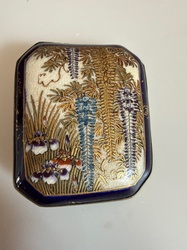
Submitted item photo
Submitted photo · June 6, 2026

User's notes

Signed Vera Burt 1969

AI analysis below

AI appraisal

AI analysis & estimate

AI-Generated · Verify before acting

Everything below is generated by AI for informational purposes only. AI can make mistakes — the AI may misidentify items or misattribute them (artist, maker, brand, designer, origin, era). This is not an official valuation and should not be used for insurance, sale, tax, estate, legal, or lending purposes — or any decision requiring a certified appraisal. It is not an authoritative claim about any person, brand, or rights holder — do not share or rely on it as a factual statement about a third party. Always consult qualified professionals before making financial decisions.

Note

This analysis also relies on unverified notes provided by the user, which may be incomplete or inaccurate and could affect the result.

Read the full disclaimer

AI Identification

·Not independently authenticated·Verify before acting

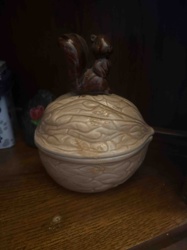
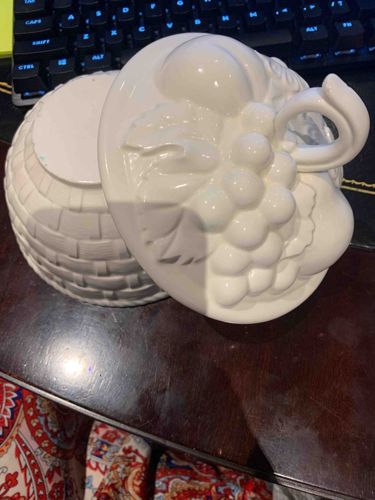
Vera Burt 1969 White Ceramic Basket-Weave Lidded Container with Fruit Motif

Decorative Container

AI Estimated Value

·Not an official valuation·Verify before acting

$60-90

As of June 6, 2026

AI Item Analysis

·AI can make mistakes·Verify before acting
This is a ceramic lidded container, likely a cookie jar or candy dish, crafted from white glazed ceramic. The body of the container is circular and designed to mimic the texture of a woven basket, featuring raised horizontal and vertical bands that create a basket-weave pattern. The surface of the basket-weave is smooth and uniformly white, indicating a consistent glaze application. The lid is also white ceramic, adorned with a ثلاثي الأبعاد (3D) relief of fruit and foliage, specifically a prominent cluster of grapes with leaves, and what appears to be other fruits like peaches or apples. A stylized, curved handle extends from the side of the lid, resembling a vine or stem. The overall aesthetic is classical and somewhat provincial, suggesting a kitchen or dining room accent piece. The white glaze is bright and reflective, showing no obvious signs of discoloration or significant wear from use. The craftsmanship appears to be good, with clear, defined details in the fruit and basket-weave patterns. Visible condition is excellent with no chips, cracks, or repairs evident in the provided image. There is no visible manufacturing mark on the exterior, but it is stated to be signed 'Vera Burt 1969', suggesting a handcrafted or studio pottery piece from the late 1960s. This signature indicates a specific maker and date, which is a significant distinguishing feature for an appraisal and suggests it is not a mass-produced item.
AI Appraisal Report

·AI can make mistakes·Verify before acting
Upon examination of the provided images and description, this lidded container is identified as a piece of studio pottery signed 'Vera Burt 1969'. The item is in excellent condition, with no visible chips, cracks, or crazing to the white glaze. The basket-weave texture and the 3D fruit motif on the lid are well-executed, indicative of competent craftsmanship. The signature and date are critical to its valuation, establishing it as a unique, dated work by a specific artist rather than a mass-produced item. Market comparables for mid-century studio pottery vary widely depending on the artist's recognition. Vera Burt is not a widely documented potter, which limits market precedent. Therefore, the value is based on its decorative quality, condition, and nature as a handcrafted vintage piece. Similar unsigned decorative ceramic jars from the era typically sell in the $25-$50 range. The signature adds a layer of interest and uniqueness, increasing its appeal to collectors of studio pottery or vintage kitchenware. The 1960s aesthetic is currently in moderate demand. However, this appraisal is limited by the inability to conduct a physical inspection. Final authentication would require hands-on examination of the signature for consistency with known examples (if any exist), inspection under UV light to rule out professional repairs, and verification of the clay body and glaze composition. Without documented provenance or a more established record for the artist, authenticity is based solely on the visual representation, which carries inherent risks. The value reflects its merits as a decorative object with an attribution that warrants further research.

Get your items appraised

Instant estimates of your treasures with AI-powered appraisals

Browse More Appraisals