AI Appraisal Estimate

AI-generated estimates · not official valuations

From the user

What was submitted

Photo and notes provided by the user — not generated by AI

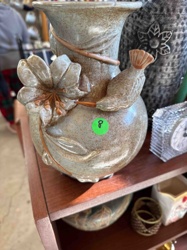
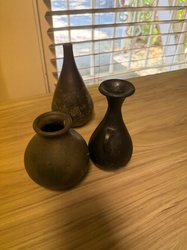
Submitted item photo
Submitted photo · June 21, 2026

User's notes

Unknown Artist, Untitled original artwork

AI analysis below

AI appraisal

AI analysis & estimate

AI-Generated · Verify before acting

Everything below is generated by AI for informational purposes only. AI can make mistakes — the AI may misidentify items or misattribute them (artist, maker, brand, designer, origin, era). This is not an official valuation and should not be used for insurance, sale, tax, estate, legal, or lending purposes — or any decision requiring a certified appraisal. It is not an authoritative claim about any person, brand, or rights holder — do not share or rely on it as a factual statement about a third party. Always consult qualified professionals before making financial decisions.

Note

This analysis also relies on unverified notes provided by the user, which may be incomplete or inaccurate and could affect the result.

Read the full disclaimer

AI Identification

·Not independently authenticated·Verify before acting

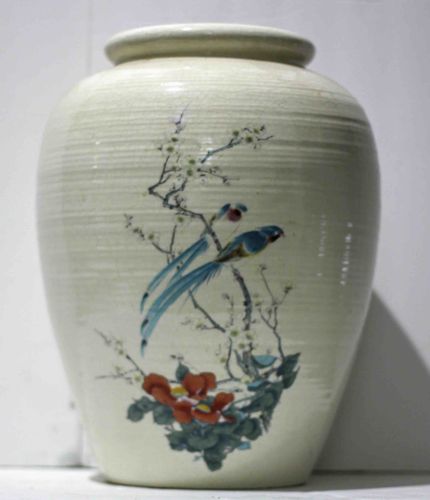
Japanese-Style Ovoid Ceramic Vase with Avian and Floral Motifs

Decorative Arts - Ceramics and Pottery

AI Estimated Value

·Not an official valuation·Verify before acting

$40 - $80

As of June 21, 2026

AI Item Analysis

·AI can make mistakes·Verify before acting
This item is a wheel-thrown ceramic vase, characterized by an ovoid or ginger jar-shaped body with a short, rounded rim and a flat, unglazed base. The body is finished in a light cream or off-white glaze that displays a subtle horizontal ribbed texture from the throwing process, covered under a fine crazing or crackle pattern throughout the surface. The central decorative focus is a hand-painted polychrome scene featuring two long-tailed blue birds perched upon a delicate flowering plum or cherry blossom branch. At the base of the floral arrangement are several large, vibrant ochre-red flowers with green leaves. The aesthetic is heavily influenced by Traditional Japanese Satsuma or Kyo-yaki styles, likely dating from the mid-20th century. The paint application shows fine detailing in the feathers and petals, though some fading or minor surface abrasions are visible. The overall condition appears fair to good, with no evident structural cracks or chips, though the pronounced crazing suggests natural aging of the glaze. No visible maker's mark is present on the front, suggesting any identifying stamps would be located on the underside of the base.
AI Appraisal Report

·AI can make mistakes·Verify before acting
Based on my visual examination of this ceramic vase, it appears to be a mid-20th-century decorative piece heavily influenced by Japanese Satsuma or Kyo-yaki aesthetics, though likely produced for the export market. The ovoid form features a cream crackle glaze which serves as a canvas for the hand-painted polychrome avian and floral motifs. The execution of the blue long-tailed birds and the ochre-red blossoms shows competent brushwork, yet lacks the refined precision and gilding typically associated with high-value Meiji-period Satsuma ware. The condition presents as fair to good; the pronounced crazing mentioned is characteristic of this glaze type but can mask hairline fractures without tactile inspection. The horizontal ribbing from the wheel-throwing process adds texture but suggests a more rapid production method common in post-war export ware. The absence of a visible maker's mark on the body implies it may be unsigned or marked simply with a generic country of origin stamp on the base. Market demand for mid-century Japanese export ceramics is generally soft, with saturation in the secondary market keeping prices modest. These pieces are valued primarily for their decorative appeal rather than as serious collector's items. Similar unbranded or generic export vases typically sell in the $40 to $80 range at local auctions or online marketplaces. A higher valuation would require the discovery of a prestigious maker's mark (such as Kinkozan or Yabu Meizan) on the underside, which cannot be verified from the current images. Physical inspection would be necessary to confirm the integrity of the glaze and ensure the crazing is stable and not harboring deep staining.

Get your items appraised

Instant estimates of your treasures with AI-powered appraisals

Browse More Appraisals