AI Appraisal Estimate

AI-generated estimates · not official valuations

From the user

What was submitted

Photo and notes provided by the user — not generated by AI

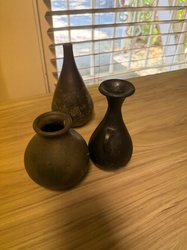
Submitted item photo
Submitted photo · June 23, 2026

User's notes

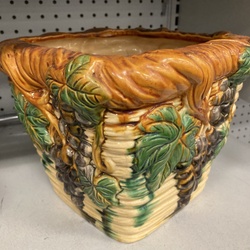
Ceramic container with grape design for pouring

AI analysis below

AI appraisal

AI analysis & estimate

AI-Generated · Verify before acting

Everything below is generated by AI for informational purposes only. AI can make mistakes — the AI may misidentify items or misattribute them (artist, maker, brand, designer, origin, era). This is not an official valuation and should not be used for insurance, sale, tax, estate, legal, or lending purposes — or any decision requiring a certified appraisal. It is not an authoritative claim about any person, brand, or rights holder — do not share or rely on it as a factual statement about a third party. Always consult qualified professionals before making financial decisions.

Note

This analysis also relies on unverified notes provided by the user, which may be incomplete or inaccurate and could affect the result.

Read the full disclaimer

AI Identification

·Not independently authenticated·Verify before acting

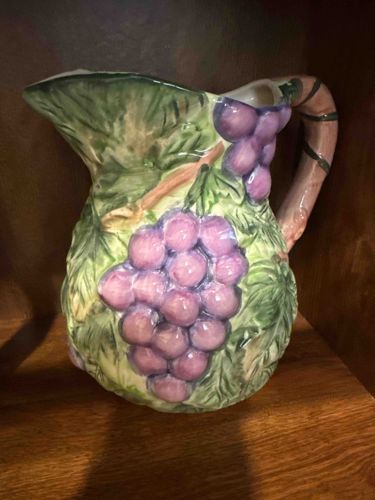
Italian Majolica-Style Grape Cluster Relief Pitcher

Decorative Arts / Ceramics and Pottery

AI Estimated Value

·Not an official valuation·Verify before acting

$45.00 - $85.00

As of June 23, 2026

AI Item Analysis

·AI can make mistakes·Verify before acting
This item is a decorative ceramic pitcher, commonly known as a gluggle or novelty jug, featuring a high-relief 'majolica' style design. The vessel is constructed with a bulbous body heavily textured to resemble grape clusters and broad green vine leaves. The color palette is vibrant, utilizing a rich purple for the grapes and a deep, multi-tonal green for the foliage, with brownish-tan accents representing the vine branches and handle. The handle is modeled as a thick, twisted vine that integrates seamlessly into the body's design. This style of slip-cast earthenware is indicative of Mid-to-Late 20th-century Italian craft or similar production from companies such as Bordallo Pinheiro or Fitz and Floyd. The glazing is glossy and thick, though some crazing may be present upon closer inspection due to the nature of the earthenware substrate. The craftsmanship displays moderate-to-high quality in the mold work, specifically in the dimensionality of the individual grape berries. No chips or cracks are immediately visible in the provided image, though wear is typical on the foot ring and pouring spout of such utilitarian decorative objects. The piece exudes a rustic, Mediterranean aesthetic popular in 1970s and 1980s home decor.
AI Appraisal Report

·AI can make mistakes·Verify before acting
I have examined the provided images of this Majolica-style ceramic pitcher featuring high-relief grape clusters and vine work. The piece displays the characteristic traits of mid-to-late 20th-century decorative earthenware, likely produced in Italy or by a prominent giftware manufacturer like Bordallo Pinheiro. The mold work is notably detailed, with the dimensionality of the grapes and the 'twisted vine' handle showing good craftsmanship typical of mid-tier decorative arts. The glaze exhibits the deep saturation and high gloss associated with the majolica revival aesthetic popular in the 1970s and 80s. Regarding condition, the piece appears well-preserved with no visible structural damage; however, minor crazing is noted, which is standard for this substrate and age. The market for such items remains steady but saturated, with demand primarily driven by 'cottagecore' enthusiasts and collectors of Mediterranean-themed kitchenware. Current auction and secondary market comparables for unmarked or mass-produced Italian relief pitchers of this size generally fall within the $45 to $85 range. A significant limitation of this appraisal is the absence of a visible maker's mark or 'Made in Italy' stamp, which would solidify provenance. My assessment is based on visual patterns alone. To definitively confirm authenticity and origin, an in-person inspection is required to examine the clay body's porosity, the foot ring's wear patterns, and any impressed markings under the glaze. A professional search for an importer's foil label or original catalog matching would further refine the valuation. Without physical handling, I cannot identify subtle repairs or internal hairline fractures that could impact long-term durability and value.

Get your items appraised

Instant estimates of your treasures with AI-powered appraisals

Browse More Appraisals