AI Appraisal Estimate

AI-generated estimates · not official valuations

From the user

What was submitted

Photo and notes provided by the user — not generated by AI

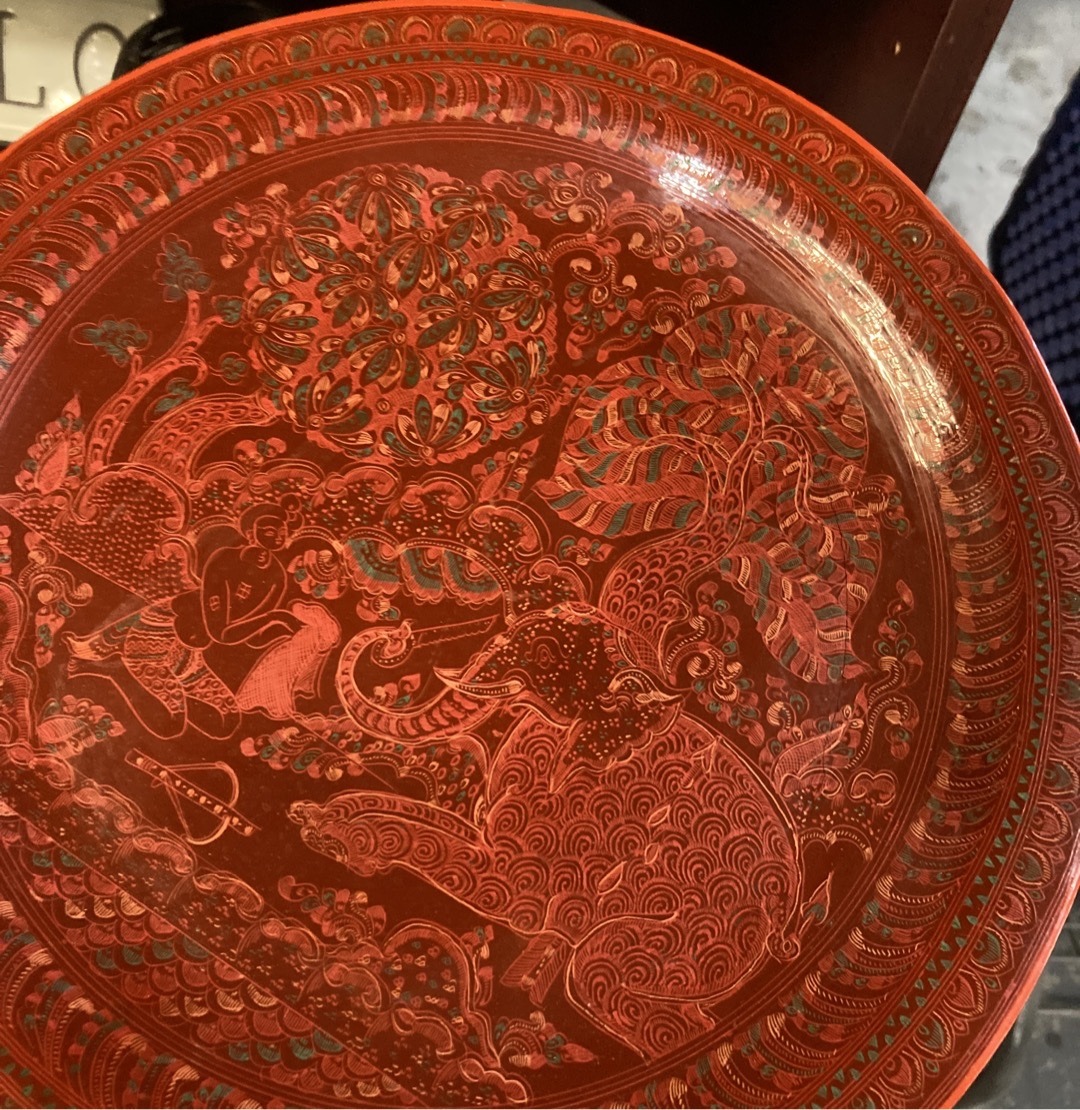
Submitted item photo
Submitted photo · July 2, 2026

User's notes

No additional notes provided.

AI analysis below

AI appraisal

AI analysis & estimate

AI-Generated · Verify before acting

Everything below is generated by AI for informational purposes only. AI can make mistakes — the AI may misidentify items or misattribute them (artist, maker, brand, designer, origin, era). This is not an official valuation and should not be used for insurance, sale, tax, estate, legal, or lending purposes — or any decision requiring a certified appraisal. It is not an authoritative claim about any person, brand, or rights holder — do not share or rely on it as a factual statement about a third party. Always consult qualified professionals before making financial decisions.

Read the full disclaimer

AI Identification

·Not independently authenticated·Verify before acting

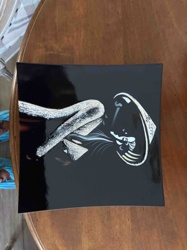
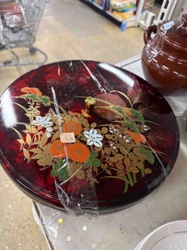
Red cinnabar-style or lacquerware-style plate with elephant motif

Decorative Arts and Lacquerware

AI Estimated Value

·Not an official valuation·Verify before acting

$150-$300

As of July 2, 2026

AI Item Analysis

·AI can make mistakes·Verify before acting
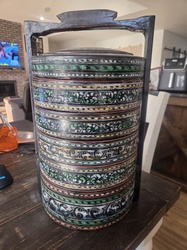
This circular tray or plate features a deep reddish-orange surface adorned with intricate incisions and green pigment accents, stylistically consistent with Southeast Asian yun lacquerware, particularly the Burmese (Myanmar) tradition. The central composition depicts a large, caparisoned elephant accompanied by a human figure in traditional attire, set amidst a dense landscape of stylized floral patterns and foliage. The borders are decorated with multiple concentric bands of repeating geometric and scale-like motifs. The craftsmanship appears to involve the 'yun' technique, where designs are etched into the surface and filled with colored pigments. The plate displays minor surface abrasions and fine linear scratches consistent with pre-owned utilitarian or decorative objects. While the intricate dense patterning suggests a high level of traditional skill, no maker's mark or signature is visible in the provided image to verify origin or specific artisan. The identification as Southeast Asian style is a hypothesis based on the figurative subject matter and decorative grammar. Without physical inspection, the substrate—which could be wood, bamboo, or a composite—cannot be determined.
AI Appraisal Report

·AI can make mistakes·Verify before acting
Based on my visual analysis of the provided image, this plate appears to be a contemporary or mid-20th-century example of Southeast Asian yun lacquerware, likely from the Myanmar tradition. The intricate central motif of a caparisoned elephant and the dense geometric borders are consistent with regional decorative grammars. However, I cannot verify the substrate—whether bamboo, wood, or composite—without a physical inspection, nor can I confirm the nature of the pigments used. The surface displays minor abrasions and scratches, which are typical for decorative objects of this type but do not appear to significantly detract from its aesthetic appeal. The value estimate of $150-$300 assumes the piece is a high-quality handcrafted item from the regions associated with this style. If this were determined to be a mass-produced resin or plastic replica rather than traditional lacquerware, the value would likely fall below $50. Conversely, if it were documented as the work of a recognized master artisan, the value could exceed the current estimate. A physical examination by a specialist is necessary to confirm the materials and construction techniques. Market demand for Southeast Asian decorative lacquer remains steady among collectors of ethnographica, though unauthenticated pieces without provenance typically sell at the lower end of the valuation spectrum. To reach a more certain valuation, I recommend verifying the provenance and conducting a microscopic analysis of the etched incisions to confirm the 'yun' technique was employed rather than modern surface printing or molding.

Get your items appraised

Instant estimates of your treasures with AI-powered appraisals

Browse More Appraisals