Japanese Lacquerware Incense Burner or Kogo Box
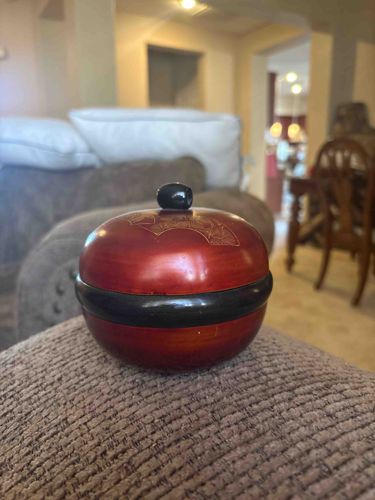
This is a small, spherical decorative container, likely a Japanese kogo (incense box) or a small 'natsume' tea caddy, finished in a traditional cinnabar-red and black lacquer. The item features a three-part construction with a rounded base, a matching domed lid, and a prominent black central band or inner lip. The lid is topped with a black spherical finial and is adorned with fine gold-line (makie) etchings of traditional fan patterns or floral motifs. The overall color is a deep, warm reddish-brown with a satin-to-glossy finish. In terms of condition, there are visible surface abrasions and minor paint loss along the central black rim and high points of the base, suggesting regular handling and use. The construction appears to be lathe-turned wood or molded resin, characteristic of mid-20th-century 'Showa' period decorative arts. The craftsmanship is evident in the symmetrical proportions and the delicate application of the metallic decorative elements on the lid. No visible maker's marks are identifiable in the exterior view, but the style is consistent with regional Japanese lacquerware traditions like Wajima or Yamanaka.
AI-Generated Appraisal Disclaimer
Estimated Value
$150 - $250
Basic Information
Category
Asian Antiques & Decorative Arts
Appraised On
March 24, 2026
Estimated Value
$150 - $250
Item Description
This is a small, spherical decorative container, likely a Japanese kogo (incense box) or a small 'natsume' tea caddy, finished in a traditional cinnabar-red and black lacquer. The item features a three-part construction with a rounded base, a matching domed lid, and a prominent black central band or inner lip. The lid is topped with a black spherical finial and is adorned with fine gold-line (makie) etchings of traditional fan patterns or floral motifs. The overall color is a deep, warm reddish-brown with a satin-to-glossy finish. In terms of condition, there are visible surface abrasions and minor paint loss along the central black rim and high points of the base, suggesting regular handling and use. The construction appears to be lathe-turned wood or molded resin, characteristic of mid-20th-century 'Showa' period decorative arts. The craftsmanship is evident in the symmetrical proportions and the delicate application of the metallic decorative elements on the lid. No visible maker's marks are identifiable in the exterior view, but the style is consistent with regional Japanese lacquerware traditions like Wajima or Yamanaka.
Get Your Items Appraised
Instant estimates of your treasures with AI-powered instant appraisals