AI Appraisal Estimate

AI-generated estimates · not official valuations

From the user

What was submitted

Photo and notes provided by the user — not generated by AI

Submitted item photo
Submitted photo · June 15, 2026

User's notes

No additional notes provided.

AI analysis below

AI appraisal

AI analysis & estimate

AI-Generated · Verify before acting

Everything below is generated by AI for informational purposes only. AI can make mistakes — the AI may misidentify items or misattribute them (artist, maker, brand, designer, origin, era). This is not an official valuation and should not be used for insurance, sale, tax, estate, legal, or lending purposes — or any decision requiring a certified appraisal. It is not an authoritative claim about any person, brand, or rights holder — do not share or rely on it as a factual statement about a third party. Always consult qualified professionals before making financial decisions.

Read the full disclaimer

AI Identification

·Not independently authenticated·Verify before acting

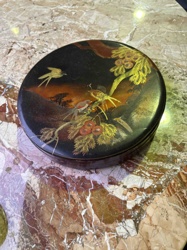
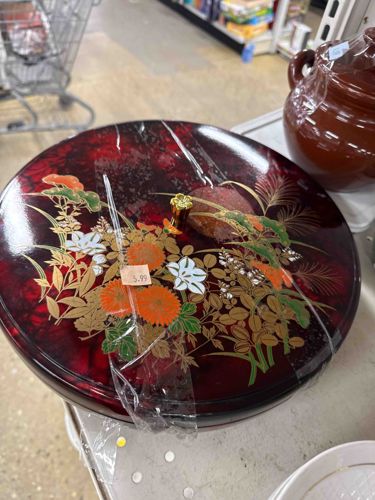
Japanese Lacquerware Round Candy Dish (Kashiki) with Floral Motif

Asian Decorative Arts / Lacquerware

AI Estimated Value

·Not an official valuation·Verify before acting

$10 - $20

As of June 15, 2026

AI Item Analysis

·AI can make mistakes·Verify before acting
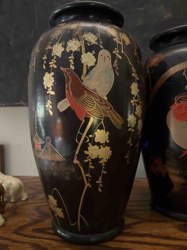
This is a circular, lidded kashiki (a container used for serving sweets, often in a tea ceremony context), likely made of lacquered resin or wood. The exterior features a rich, deep red marbled or 'nebula' style lacquer finish that creates a sense of depth beneath a high-gloss topcoat. The lid is Ornately decorated with a traditional polychrome floral arrangement, specifically showcasing chrysanthemums (kiku), bellflowers, and various autumn grasses in vibrant orange, white, and green tones. Gold-metallic line work highlights the leaves and stems, suggesting a maki-e inspired aesthetic. A notable feature is the small, gold-toned metallic knob at the center of the lid, shaped like a stylized cherry blossom. The item appears to be of mid-to-late 20th-century manufacture, typical of high-quality Japanese giftware or souvenir ware. While it is currently wrapped in protective plastic film, no major chips or cracks are immediately visible, though minor surface scuffs may exist hidden by the film. A retail price sticker of 3.99 is adhered directly to the surface of the lid, which may leave adhesive residue. The craftsmanship reflects mass-produced but high-standard Japanese cabinetry and lacquer application techniques.
AI Appraisal Report

·AI can make mistakes·Verify before acting
Based on my examination of the images provided, this item is a modern Japanese-style kashiki (sweet meat container), likely dating from the mid-to-late 20th century (circa 1970s-1990s). The piece features a deep red, marbled lacquer-style finish—often referred to as 'un-ryū' or cloud dragon style—decorated with screen-printed or transfer-applied floral motifs of chrysanthemums and autumn grasses with hand-finished gold highlights. While visually striking, the materials appear to be synthetic resin (often phenol or urea formaldehyde) rather than traditional wood and urushi lacquer. The high gloss and perfect uniformity suggest mass manufacturing typical of high-quality giftware rather than artisanal craftsmanship. The condition appears technically 'new old stock' as it remains sealed in protective plastic film. However, the presence of a retail price sticker ($3.99) directly on the surface raises concerns about potential adhesive residue or surface marring upon removal. The gold-tone metal finial is intact. Market demand for synthetic lacquerware of this period is generally low, as it is plentiful and lacks the historical significance or material value of genuine wood and urushi pieces. Comparable pieces are frequently found in thrift stores or estate sales for nominal amounts. The value is largely decorative and utilitarian. To upgrade this valuation, an in-person physical inspection would be required to test density (distinguishing wood from resin) and to use loop magnification to confirm if the gold decoration is hand-painted maki-e or a transfer print, though visual evidence strongly points to the latter. As it stands, it is a charming, durable serving piece with modest secondary market value.

Get your items appraised

Instant estimates of your treasures with AI-powered appraisals

Browse More Appraisals