AI Appraisal Estimate

AI-generated estimates · not official valuations

From the user

What was submitted

Photo and notes provided by the user — not generated by AI

Submitted item photo
Submitted photo · June 10, 2026

User's notes

No additional notes provided.

AI analysis below

AI appraisal

AI analysis & estimate

AI-Generated · Verify before acting

Everything below is generated by AI for informational purposes only. AI can make mistakes — the AI may misidentify items or misattribute them (artist, maker, brand, designer, origin, era). This is not an official valuation and should not be used for insurance, sale, tax, estate, legal, or lending purposes — or any decision requiring a certified appraisal. It is not an authoritative claim about any person, brand, or rights holder — do not share or rely on it as a factual statement about a third party. Always consult qualified professionals before making financial decisions.

Read the full disclaimer

AI Identification

·Not independently authenticated·Verify before acting

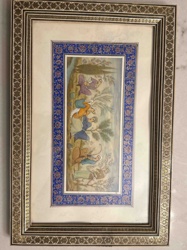
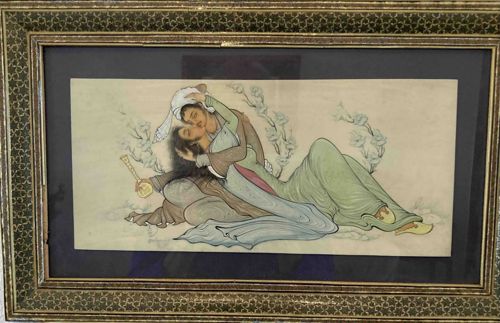
Framed Persian Miniature Painting of Lovers with Khatamkari Frame

Asian Art & Antiques / Persian Artwork

AI Estimated Value

·Not an official valuation·Verify before acting

$400 - $650

As of June 10, 2026

AI Item Analysis

·AI can make mistakes·Verify before acting
This item is a Persian miniature painting, likely originating from Iran and executed in the Safavid style, depicting a tender scene of two lovers in an embrace. The artwork features delicate line work and a soft color palette dominated by sage greens, pale blues, and earthy browns against a neutral, off-white background with subtle floral motifs. The figures are dressed in traditional Persian robes, with the male figure wearing a white turban and the female figure adorned with flowing drapery. The craftsmanship displays fine detail in the folds of the clothing and the facial features, characteristic of 20th-century revivalist miniatures. A small golden lute or instrument is visible to the left. The painting is housed behind a dark blue matboard inside a highly decorative 'Khatam' or Khatamkari frame. This frame is a traditional Iranian technique of marquetry, composed of tiny geometric patterns made from wood, bone, and metal (typically brass). The condition shows some visible wear on the frame, including minor chipping of the lacquer and loss of the intricate inlay on the left edge. The paper shows slight undulation, suggesting it may not be fully adhered to a backing, but no major foxing or staining is immediately apparent. The overall aesthetic suggests an age of mid-to-late 20th century, serving as a decorative example of classical Persian artistic traditions.

AI Appraisal Report

·AI can make mistakes·Verify before acting
I have carefully examined the provided description and image of this Persian miniature painting. The work is executed in the classic Safavid revivalist style, likely dating to the mid-20th century. The quality of the 'Khatamkari' frame, featuring intricate bone and brass inlay, is indicative of traditional craftsmanship, though the visible loss of inlay on the left edge and minor lacquer chipping moderately impacts the value. The painting itself shows fine brushwork and characteristic iconography of a courting couple, a popular theme for decorative export and domestic markets in Iran. The global market for 20th-century revivalist miniatures remains steady, though these pieces are more common than early Safavid or Qajar originals. Demand is driven primarily by the decorative appeal of the Khatam frame and the traditional aesthetic. The slight undulation of the paper suggests it is likely a work on paper rather than ivory or bone, which is typical for this period. A primary limitation of this appraisal is the inability to examine the verso for hidden signatures, margins, or paper consistency. To provide a definitive authentication and potentially increase the valuation, I would require an in-person inspection to confirm the pigments (checking for modern synthetics vs. mineral bases) and examine the stability of the inlay. Verification of provenance or a gallery receipt from Isfahan or Tehran would further solidify its history. Currently, the value reflects its status as a high-quality decorative object rather than a rare museum-grade antiquity.

Get your items appraised

Instant estimates of your treasures with AI-powered appraisals

Browse More Appraisals