AI Appraisal Estimate

AI-generated estimates · not official valuations

From the user

What was submitted

Photo and notes provided by the user — not generated by AI

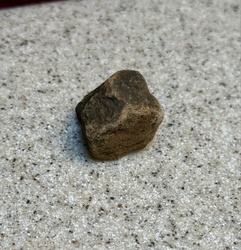
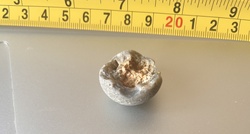
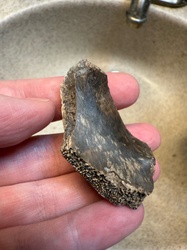
Submitted item photo
Submitted photo · June 25, 2026

User's notes

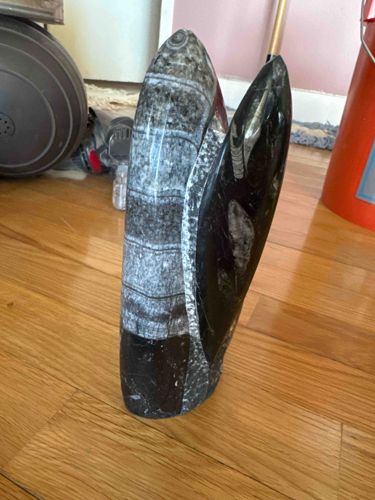
Heavy stone that looks to be melted together with other stone, polished, upright

AI analysis below

AI appraisal

AI analysis & estimate

AI-Generated · Verify before acting

Everything below is generated by AI for informational purposes only. AI can make mistakes — the AI may misidentify items or misattribute them (artist, maker, brand, designer, origin, era). This is not an official valuation and should not be used for insurance, sale, tax, estate, legal, or lending purposes — or any decision requiring a certified appraisal. It is not an authoritative claim about any person, brand, or rights holder — do not share or rely on it as a factual statement about a third party. Always consult qualified professionals before making financial decisions.

Note

This analysis also relies on unverified notes provided by the user, which may be incomplete or inaccurate and could affect the result.

Read the full disclaimer

AI Identification

·Not independently authenticated·Verify before acting

Polished Orthoceras Fossil Sculpture

Paleontology / Decorative Fossils

AI Estimated Value

·Not an official valuation·Verify before acting

$150 - $225

As of June 25, 2026

AI Item Analysis

·AI can make mistakes·Verify before acting
This item is an upright, free-standing sculpture composed of multiple fossilized Orthoceras cephalopods embedded in a dark limestone matrix. The piece originates from Morocco and dates back to the Devonian Period, approximately 360 to 400 million years ago. Physically, the sculpture features two prominent, elongated fossil shells protruding from a central base. The fossils themselves appear in a striking silvery-grey to white color, displaying well-defined internal chambers (septa) and a central siphuncle tube. The surrounding matrix has been polished to a deep black, high-gloss finish, creating a dramatic contrast against the calcified remains of the prehistoric marine creatures. Each fossil is roughly conical or bullet-shaped, with the largest specimen dominating the left side of the composition. In terms of condition, the piece shows excellent preservation of the fossilized structures with a professional lapidary polish. There are no obvious fractures or repairs visible from the primary angle, though the natural stone base is likely left in a rough, unpolished state to provide stability for the upright display. The craftsmanship is typical of Moroccan fossil prep-work, where the matrix is selectively carved away and polished to highlight the natural geometry of the specimens. Quality indicators include the clarity of the chamber walls and the uniformity of the polish across the dark limestone surface.
AI Appraisal Report

·AI can make mistakes·Verify before acting
I have examined the digital representations of this polished Orthoceras fossil sculpture from the Erfoud region of Morocco. The specimens are authentic prehistoric cephalopods from the Devonian Period, approximately 370 million years ago. My visual inspection confirms high-quality lapidary work; the contrast between the white calcite replacement of the fossilized chambers and the dark, carbonaceous limestone matrix is excellent. The siphuncle and septa are clearly visible, indicating a well-preserved primary structure. Moroccan Orthoceras material is abundant in the current market, which keeps price points accessible. This specific item is valued higher than smaller palm stones due to its prepared upright stance and the multiple large specimens present in the single matrix. The market for decorative paleontology remains stable, though these are considered decor pieces rather than museum-grade rarities. Major value drivers for this piece include the size of the largest cone and the lack of visible composite repairs, which are common in lower-grade Moroccan exports. Verification of authenticity via image is highly reliable for this material, as it is more economical to mine than to counterfeit. However, a physical inspection would be required to ensure that the fossils are not 'composites' (different fossils glued into a new matrix) and to verify the absence of synthetic fillers used to mask cracks. No further scientific testing is required beyond a physical inspection for adhesive seams. Documentation of provenance, while helpful for historical context, does not significantly alter the market value of these specific specimens.

Get your items appraised

Instant estimates of your treasures with AI-powered appraisals

Browse More Appraisals