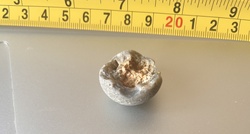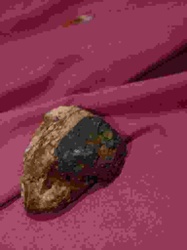
Fossilized Turtle Osteoderm Fragments (Late Jurassic)
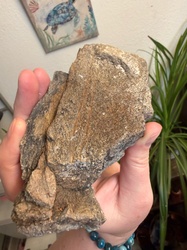
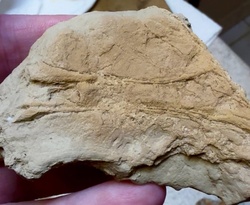
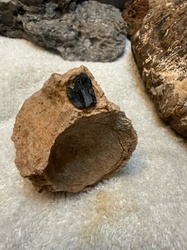
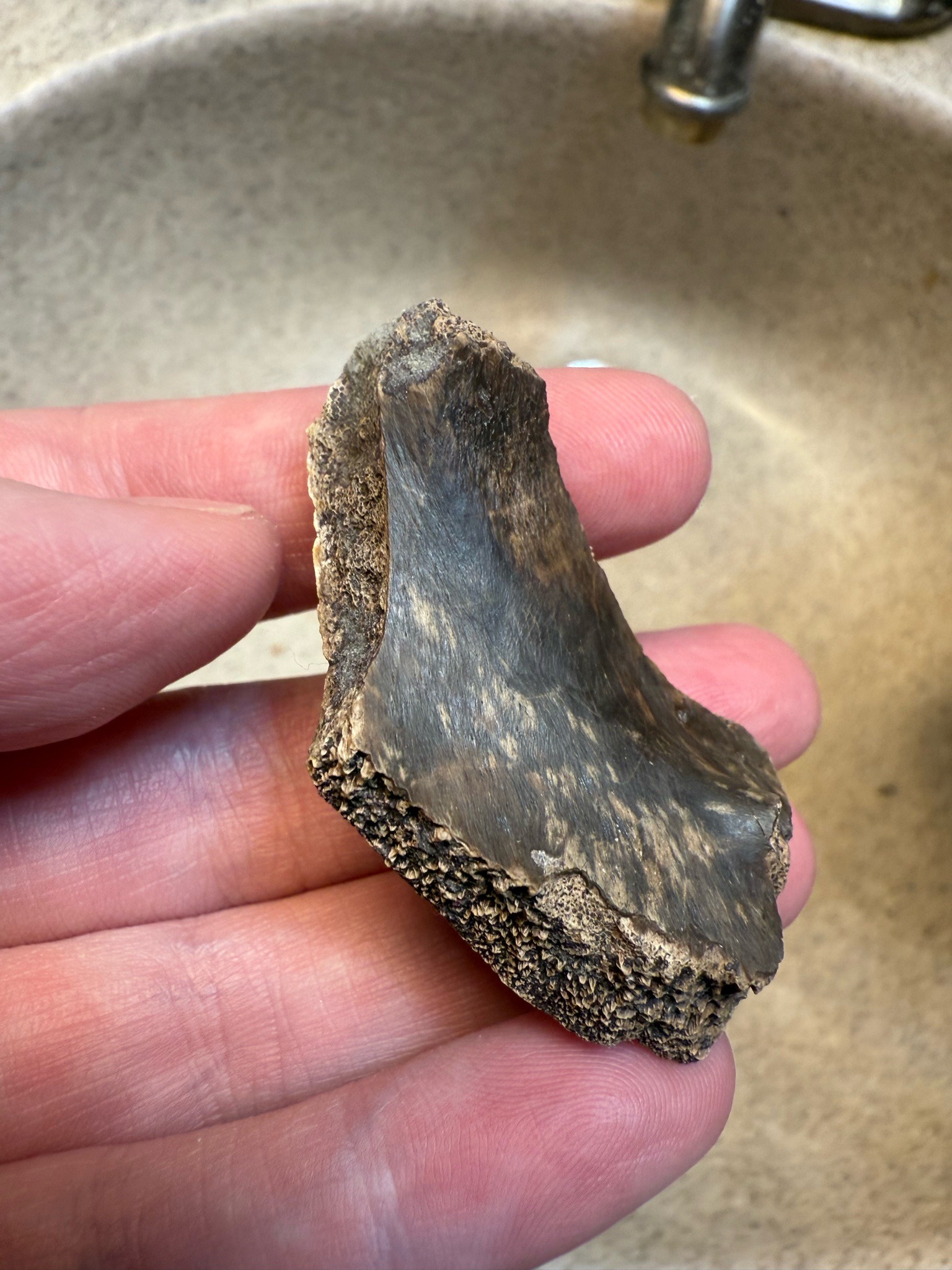
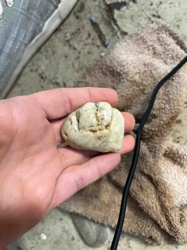
This specimen is a fossilized fragment of a turtle osteoderm (scute) originating from the Morrison Formation, dating to approximately 150 million years ago (Late Jurassic period). The item measures roughly 2.5 to 3 inches in length and displays a distinctive bi-tonal appearance. The dorsal surface features a smooth, dark brown to charcoal gray mineralized cortex with subtle linear striations and a waxy luster characteristic of high-quality permineralization. Conversely, the broken edges reveal a highly porous, light tan to cream-colored internal cancellous (spongy) bone structure. This interior lattice is exceptionally well-preserved, showing the intricate trabecular network that provided structural strength and blood flow to the living turtle. The specimen shows natural prehistoric fractures and some modern-day weathering at the margins, creating a jagged but stable perimeter. No man-made markings or restorations are evident, showcasing the natural raw state of the fossil. The craftsmanship of nature is visible in the transition between the dense outer armor and the buoyant inner bone, a hallmark of Mesozoic testudines. This combination of the smooth outer scute and the detailed internal marrow structure makes it a valuable diagnostic piece for paleontological study.
AI-Generated Appraisal Disclaimer
Estimated Value
$45.00 - $75.00
Basic Information
Category
Paleontological Specimen / Fossils
Appraised On
May 13, 2026
Estimated Value
$45.00 - $75.00
Additional Details Provided By Owner
User Provided Information
Turtle osteoderm from Morrison formation
Item Description
This specimen is a fossilized fragment of a turtle osteoderm (scute) originating from the Morrison Formation, dating to approximately 150 million years ago (Late Jurassic period). The item measures roughly 2.5 to 3 inches in length and displays a distinctive bi-tonal appearance. The dorsal surface features a smooth, dark brown to charcoal gray mineralized cortex with subtle linear striations and a waxy luster characteristic of high-quality permineralization. Conversely, the broken edges reveal a highly porous, light tan to cream-colored internal cancellous (spongy) bone structure. This interior lattice is exceptionally well-preserved, showing the intricate trabecular network that provided structural strength and blood flow to the living turtle. The specimen shows natural prehistoric fractures and some modern-day weathering at the margins, creating a jagged but stable perimeter. No man-made markings or restorations are evident, showcasing the natural raw state of the fossil. The craftsmanship of nature is visible in the transition between the dense outer armor and the buoyant inner bone, a hallmark of Mesozoic testudines. This combination of the smooth outer scute and the detailed internal marrow structure makes it a valuable diagnostic piece for paleontological study.
Related Tags
Explore similar items and categories:
Get Your Items Appraised
Instant estimates of your treasures with AI-powered instant appraisals