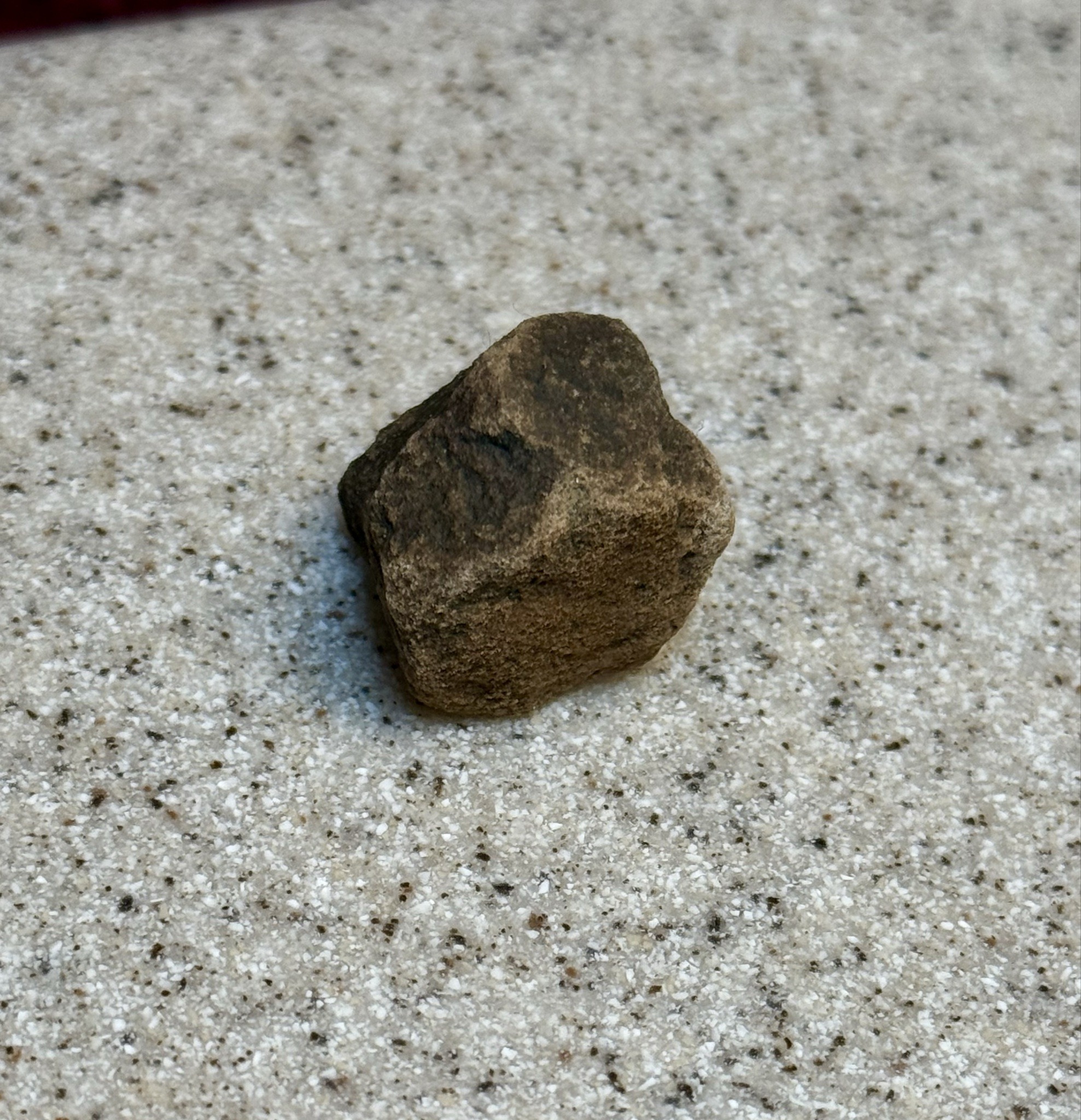
Fossilized Vertebral Centrum
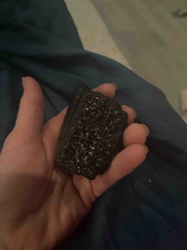
This specimen is a small fossilized vertebral centrum, likely originating from a small prehistoric reptile or mammal. Physically, the item exhibits the compressed, cylindrical geometry characteristic of a vertebral body, though it shows significant signs of erosion and weathering. The material is heavily permineralized, having a dense, rock-like texture with a dark earthy brown to tan coloration and distinct charcoal-colored mineral inclusions on the upper surface. The surface displays a porous, cancellous bone structure visible under magnification, indicative of its organic origin. Its construction suggests a high degree of petrification, where original bone material was replaced by silicate or calcium carbonate minerals over millions of years. Notable features include the flat articular surfaces where adjacent vertebrae would have connected, although these are now rounded due to environmental abrasion. There are no discernible maker's marks, as this is a natural paleontological specimen. The condition is considered 'weathered' or 'worn,' with minor chipping along the margins and surface pitting typical of fossils found in fluvial or alluvial deposits. Its age is estimated to be prehistoric, potentially spanning from the Mesozoic to the Cenozoic era depending on the locality of the find. The craftsmanship is entirely natural, resulting from the geological process of fossilization which has preserved the coarse structural anatomy of the bone while converting it into a stable mineral form.
AI-Generated Appraisal Disclaimer
Estimated Value
$45.00 - $75.00
Basic Information
Category
Paleontological Artifacts and Fossils
Appraised On
May 13, 2026
Estimated Value
$45.00 - $75.00
Additional Details Provided By Owner
User Provided Information
Small fossil vertebra
Item Description
This specimen is a small fossilized vertebral centrum, likely originating from a small prehistoric reptile or mammal. Physically, the item exhibits the compressed, cylindrical geometry characteristic of a vertebral body, though it shows significant signs of erosion and weathering. The material is heavily permineralized, having a dense, rock-like texture with a dark earthy brown to tan coloration and distinct charcoal-colored mineral inclusions on the upper surface. The surface displays a porous, cancellous bone structure visible under magnification, indicative of its organic origin. Its construction suggests a high degree of petrification, where original bone material was replaced by silicate or calcium carbonate minerals over millions of years. Notable features include the flat articular surfaces where adjacent vertebrae would have connected, although these are now rounded due to environmental abrasion. There are no discernible maker's marks, as this is a natural paleontological specimen. The condition is considered 'weathered' or 'worn,' with minor chipping along the margins and surface pitting typical of fossils found in fluvial or alluvial deposits. Its age is estimated to be prehistoric, potentially spanning from the Mesozoic to the Cenozoic era depending on the locality of the find. The craftsmanship is entirely natural, resulting from the geological process of fossilization which has preserved the coarse structural anatomy of the bone while converting it into a stable mineral form.
Get Your Items Appraised
Instant estimates of your treasures with AI-powered instant appraisals