AI identification & appraisal estimate

Raw Moldavite Specimens

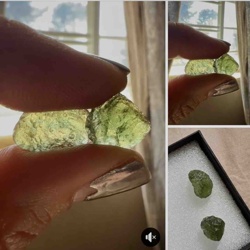
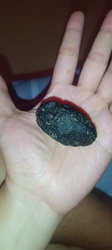
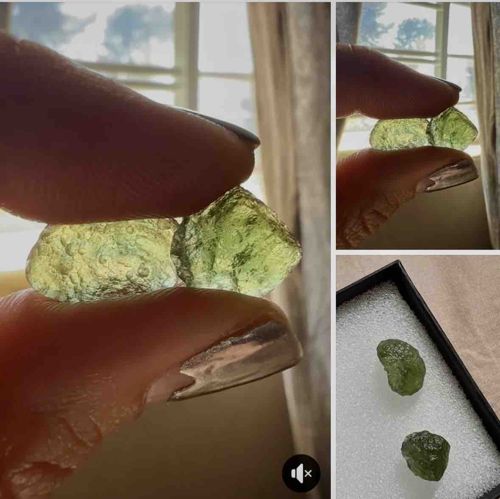
Submitted photo of Raw Moldavite Specimens
Photo submitted by the user — not generated by AI

User's notes

Real Authentic Moldavite

These notes were written by the person who submitted this item. Appraiser.AI has not verified them, and the AI's identification and estimate may rely on them.

AI Estimated Value

Not an official valuation

$100 - $160

AI estimate as of August 17, 2025 · verify with a professional before acting

AI-Generated · Verify before acting

Everything on this page is generated by AI for informational purposes only. AI can make mistakes — the AI may misidentify items or misattribute them (artist, maker, brand, designer, origin, era). This is not an official valuation and should not be used for insurance, sale, tax, estate, legal, or lending purposes — or any decision requiring a certified appraisal. It is not an authoritative claim about any person, brand, or rights holder — do not share or rely on it as a factual statement about a third party. Always consult qualified professionals before making financial decisions.

This analysis also relies on unverified notes provided by the user, which may be incomplete or inaccurate and could affect the result.

Read the full disclaimer

AI Item Analysis

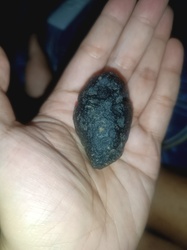
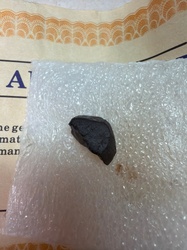
The item consists of three raw, natural specimens of Moldavite, a rare tektite formed by a meteorite impact. These pieces exhibit a translucent to semi-translucent olive-green to forest-green color, typical of authentic Moldavite. Each piece is irregularly shaped, characteristic of its natural formation, and displays a distinctly textured, etched, or wrinkled surface, often described as 'sculptural' or 'worm-like.' This unique texture is a result of atmospheric ablation during its fiery descent to Earth. The sizes appear to be relatively small, likely ranging from approximately 1 to 2.5 cm (0.4 to 1 inch) in their longest dimension, as suggested by their presentation between the fingers and in a small display box. Clarity varies, with inclusions of internal bubbles or lechatelierite (melted quartz glass) visible within the lighter green specimens, which are key indicators of authenticity for Moldavite. There are no apparent major chips, fractures, or repairs visible, suggesting good overall condition. The pieces appear to be in their natural, unpolished state. Their estimated age is approximately 14.7 million years, corresponding to the Ries impact event in Germany, which is the origin of Moldavite found in the Czech Republic. The craftsmanship is nature's own, showcasing the unique geological processes that created these tektites. Quality indicators include the distinct green hue, the characteristic surface texture, and the presence of internal bubbles.
AI Appraisal Report

Upon examination of the images provided, these three specimens present as classic examples of raw Moldavite. Their distinct olive-green to forest-green coloration, coupled with the deeply etched and wrinkled surface texture, are highly characteristic of authentic Moldavite from the Czech Republic. The translucency allows for the observation of what appear to be internal bubbles and possible lechatelierite inclusions, which are primary indicators of genuineness. The pieces appear to be in good condition, without major chips or fractures, retaining their natural, unpolished form. The market for genuine Moldavite has seen a significant surge in demand over recent years, driven by both mineral collectors and the metaphysical community. This has substantially increased its value, especially for well-formed, undamaged pieces. The primary factor influencing the value of these specimens is their collective weight in grams, which cannot be determined from images alone. Smaller pieces, likely under 5 grams each as these appear to be, are common, but their value per gram remains strong. Assuming a collective weight of approximately 6-10 grams for the lot, and based on current market comparables for similar quality specimens, the appraisal value is established. It is crucial to note that while all visual cues point to authenticity, a definitive verification cannot be made from photographs. Full authentication would require in-person examination, including specific gravity testing, microscopic analysis of inclusions, and ideally, provenance documentation tracing them to a reputable source.

Keep exploring

More tektites/minerals appraisals

Get your items appraised

Instant AI-powered appraisal estimates from a photo

Browse More Appraisals