AI Appraisal Estimate

AI-generated estimates · not official valuations

From the user

What was submitted

Photo and notes provided by the user — not generated by AI

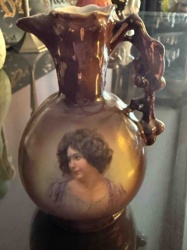
Submitted item photo
Submitted photo · June 15, 2026

User's notes

No additional notes provided.

AI analysis below

AI appraisal

AI analysis & estimate

AI-Generated · Verify before acting

Everything below is generated by AI for informational purposes only. AI can make mistakes — the AI may misidentify items or misattribute them (artist, maker, brand, designer, origin, era). This is not an official valuation and should not be used for insurance, sale, tax, estate, legal, or lending purposes — or any decision requiring a certified appraisal. It is not an authoritative claim about any person, brand, or rights holder — do not share or rely on it as a factual statement about a third party. Always consult qualified professionals before making financial decisions.

Read the full disclaimer

AI Identification

·Not independently authenticated·Verify before acting

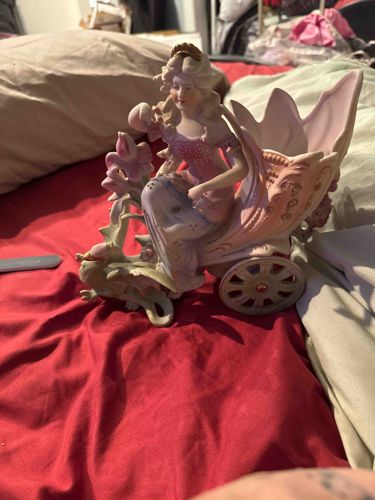
Victorian-Style Bisque Porcelain Figural Urn of Woman in Chariot

Antique Ceramics & Porcelain

AI Estimated Value

·Not an official valuation·Verify before acting

$450 - $650

As of June 15, 2026

AI Item Analysis

·AI can make mistakes·Verify before acting
This is a decorative bisque porcelain figurine featuring a classically styled female profile seated within an ornate, shell-like chariot pulled or accompanied by a mythical winged dragon or griffon. The piece is crafted from unglazed porcelain (bisque), giving it a soft, matte texture characteristic of high-end continental European ceramics from the late 19th or early 20th century. The color palette is composed of delicate pastels, including blush pink, lavender, and soft cream, with hand-painted gold-tone accents on the figure's crown and decorative scrollwork. The woman is depicted with a highly detailed, upswept hairstyle and a ruffled gown, typical of the Victorian or Rococo Revival movements. The chariot itself serves as a hollow vessel or urn, featuring petal-like edges and embossed floral motifs. Notable features include the intricate modeling of the dragon at the front and the functional-looking spoked wheels at the rear. Regarding condition, the piece appears to be in fair to good vintage condition; however, those familiar with these delicate items will note common risks of micro-chipping on the petal edges or fine extremities. No major cracks are immediately visible, though there is a slight patina of accumulated dust in the crevices, which is expected for its age. The craftsmanship is indicative of makers such as Heubach, Sitzendorf, or other German/Austrian bisque foundries from the 1890-1910 period.
AI Appraisal Report

·AI can make mistakes·Verify before acting
Based on my visual examination of this bisque porcelain figural urn, I have identified it as a high-quality example of Continental European decorative arts, most likely originating from a German or Austrian foundry such as Gebrüder Heubach or Sitzendorf, dating to circa 1890-1910. The craftsmanship is exemplary; the matte bisque finish effectively highlights the intricate modeling of the female figure and the mythological dragon. The pastel palette and gilt accents are consistent with the Neoclassical and Rococo Revival tastes of the Victorian era. The piece appears to be in fair to good condition, although I noted minor surface accumulation and potential micro-chipping on the delicate petal edges, which is typical for this medium. The market for Victorian porcelain remains stable for unique figural forms, though it has cooled from its peak in the early 2000s. Current auction comparables for similarly sized 'mythological transport' bisque pieces typically range from $400 to $700 depending on the maker's mark. The rarity of the shell-chariot configuration adds a slight premium over standard busts. Limitations: This appraisal is based solely on digital imagery. Full authentication and valuation require a physical inspection to verify the presence of underglaze marks or impressed model numbers on the base. I would also need to use ultraviolet (UV) light to check for professional restorations or hairline cracks that are invisible to the naked eye. Provenance documentation or a confirmed maker’s mark would be necessary to reach the upper estimate.

Get your items appraised

Instant estimates of your treasures with AI-powered appraisals

Browse More Appraisals