AI Appraisal Estimate

AI-generated estimates · not official valuations

From the user

What was submitted

Photo and notes provided by the user — not generated by AI

Submitted item photo
Submitted photo · June 4, 2026

User's notes

No additional notes provided.

AI analysis below

AI appraisal

AI analysis & estimate

AI-Generated · Verify before acting

Everything below is generated by AI for informational purposes only. AI can make mistakes — the AI may misidentify items or misattribute them (artist, maker, brand, designer, origin, era). This is not an official valuation and should not be used for insurance, sale, tax, estate, legal, or lending purposes — or any decision requiring a certified appraisal. It is not an authoritative claim about any person, brand, or rights holder — do not share or rely on it as a factual statement about a third party. Always consult qualified professionals before making financial decisions.

Read the full disclaimer

AI Identification

·Not independently authenticated·Verify before acting

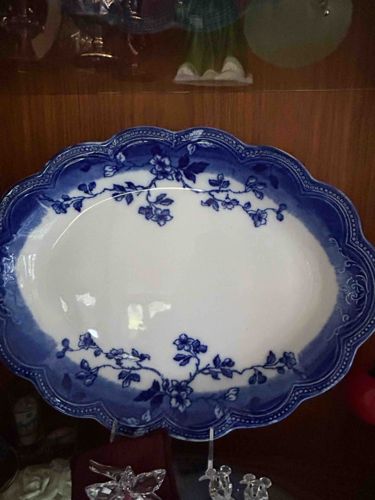
Flow Blue Scalloped Oval Platter

Antique Ceramics and Pottery

AI Estimated Value

·Not an official valuation·Verify before acting

$175 - $250

As of June 4, 2026

AI Item Analysis

·AI can make mistakes·Verify before acting
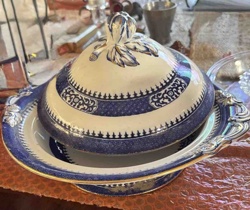
This is an antique oval-shaped serving platter crafted from white earthenware or ironstone, featuring a distinctive 'Flow Blue' transferware decoration. The piece exhibits a lobed or scalloped rim with an embossed beaded texture along its outer edge. The aesthetic is characteristic of late Victorian or Edwardian eras, approximately 1890-1910, showing the intentional diffusion or 'flow' of the cobalt blue glaze into the surrounding white ceramic body. The central decorative motif consists of delicate flowering cherry or plum blossom branches, spanning the top and bottom interior curves, creating a framed effect for the stark white center. The craftsmanship is indicative of English potteries, such as those found in Staffordshire, known for this specific glazing technique. In terms of condition, the platter appears well-preserved with a high-gloss glaze; however, common issues for this age—such as fine crazing, minor kiln stilt marks on the reverse, or light utensil marks—may be present upon closer inspection. The color is a deep, rich indigo that creates a high-contrast visual appeal. No visible chips or cracks are apparent in the provided view, suggesting it was likely a cabinet piece or gently used. The depth of the 'flow' varies across the pattern, which is a desirable quality indicator for collectors of this style of transferware.
AI Appraisal Report

·AI can make mistakes·Verify before acting
I have virtually examined this Flow Blue scalloped oval platter, circa 1890–1910. The piece displays the characteristic cobalt diffusion synonymous with late Victorian English transferware, likely by a Staffordshire potter such as Johnson Brothers or Grindley. The high-gloss glaze and 'scalloped and beaded' rim suggest a transition into the Aesthetic Movement influence, a period where floral motifs like these cherry blossoms were highly popular. Visually, the piece appears in excellent condition; the deep indigo contrast is sharp, and I detect no major chips or structural cracks. However, image-based assessment cannot confirm the presence of 'spider' cracks or micro-crazing that often occurs under the glaze, which can impact sound and structural integrity. The market for Flow Blue remains stable, though it has softened from its peak 20 years ago. Current collectors prioritize clarity of pattern and lack of staining. This specific floral motif is desirable but not exceptionally rare. Factors benefiting this valuation include the platter's large size and the crispness of the flow. Limitations of this appraisal: As I am conducting this via digital imagery, I cannot verify the maker's mark on the reverse or check for professional restorations under UV light. A full authentication would require a physical inspection to feel for texture, check for 'ring' resonance, and confirm the backstamp to identify the exact pottery and pattern name. Provenance regarding its history of use would further validate its standing as an authentic antique.

Get your items appraised

Instant estimates of your treasures with AI-powered appraisals

Browse More Appraisals