AI estimate as of October 27, 2025 · verify with a professional before acting
AI-Generated · Verify before acting
Everything on this page is generated by AI for informational purposes only. AI can make mistakes — the AI may misidentify items or misattribute them (artist, maker, brand, designer, origin, era). This is not an official valuation and should not be used for insurance, sale, tax, estate, legal, or lending purposes — or any decision requiring a certified appraisal. It is not an authoritative claim about any person, brand, or rights holder — do not share or rely on it as a factual statement about a third party. Always consult qualified professionals before making financial decisions.
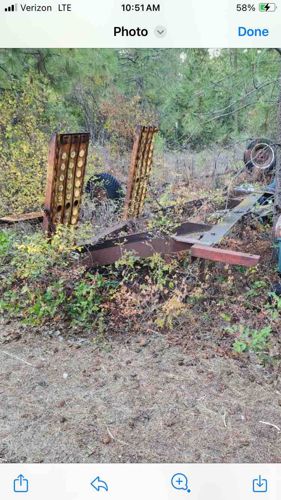
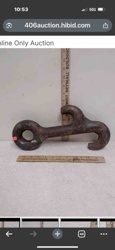
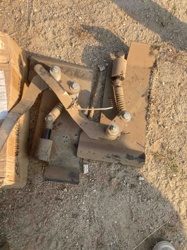
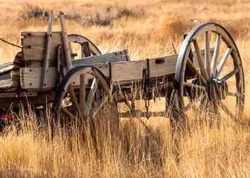
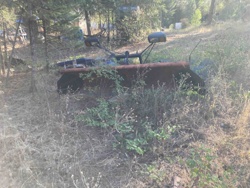
The image displays the weathered and disassembled remains of what appears to be an old agricultural implement, most likely a cultivator harrow due to the discernible tines. The dominant materials are heavily rusted metal components, suggesting steel or cast iron construction. The color palette is primarily an oxidized reddish-brown from the extensive rust, with some residual darker paint or grime visible in shielded areas, though the original color is largely obscured. Two prominent vertical sections in the foreground feature multiple rows of rounded, possibly disc-shaped or blunt, tines or teeth, indicative of ground-working implements. These sections appear to be the 'wings' or extension frames of a larger machine. Below these upright sections, various flat and angled metal plates and beams lie on the ground, further corroded. One more identifiable part is a wheel, partially visible on the right side, suggesting mobility at some point. The overall condition is extremely poor, characterized by significant corrosion across all metal surfaces, evident in the advanced state of surface rust and potential pitting. There are no clear manufacturer's marks, signatures, or stamps visible, likely due to the degradation. This item likely dates from the early to mid-20th century, given the apparent construction and level of deterioration, consistent with older farm equipment left exposed to the elements. The pieces are scattered in an overgrown, forested area, indicating long-term disuse and neglect. There are no visible repairs, and the craftsmanship, while heavy-duty for agricultural use, is now obscured by decay. The unique aspect is its state of abandonment and advanced elemental exposure, turning what was once functional machinery into industrial archaeological remains.
AI Appraisal Report
Based on my visual examination of the provided image, this item consists of the severely deteriorated remains of what I assess to be an older agricultural implement, likely a cultivator harrow. The authenticity as an agricultural implement is plausible due to the discernible tines and heavy metal construction, consistent with farm machinery from the early to mid-20th century. However, definitive authenticity regarding its original function or manufacturer cannot be established from images alone.
The condition is extremely poor; the metal components are heavily rusted, disassembled, and scattered, indicating long-term outdoor exposure and neglect. This severely limits its salvage value to scrap metal or decorative architectural salvage. Market conditions for such heavily degraded items are very low. Comparables would be other farm implement scrap piles or decorative metal elements. Demand is minimal, primarily from artists seeking weathered industrial pieces or individuals interested in very low-cost scrap. Rarity is not a factor here; while the exact configuration might be unique, the material (rusted scrap metal) is common.
Factors significantly impacting value include its advanced state of corrosion, dismemberment, lack of original paint/finish, and absence of identifiable manufacturer's marks. These factors reduce its value to primarily raw material weight.
Limitations in authenticity verification are substantial. Without in-person examination, it's impossible to verify the type of metal, extent of pitting, or structural integrity. Provenance documentation (e.g., historical farm records, sales receipts) would be needed to precisely identify the model or manufacturer. A physical examination would allow me to assess the weight for scrap value, investigate any hidden markings, and determine if any small, less-degraded components possess niche collector value. Chemical testing could confirm metal composition and age, but this would be disproportionate to the item's current low value.