AI estimate as of July 22, 2025 · verify with a professional before acting
AI-Generated · Verify before acting
Everything on this page is generated by AI for informational purposes only. AI can make mistakes — the AI may misidentify items or misattribute them (artist, maker, brand, designer, origin, era). This is not an official valuation and should not be used for insurance, sale, tax, estate, legal, or lending purposes — or any decision requiring a certified appraisal. It is not an authoritative claim about any person, brand, or rights holder — do not share or rely on it as a factual statement about a third party. Always consult qualified professionals before making financial decisions.
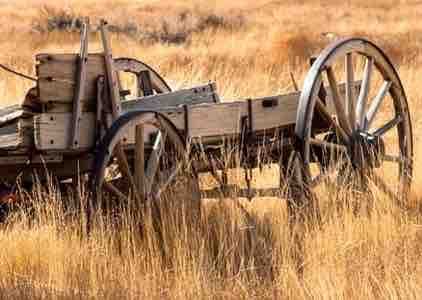
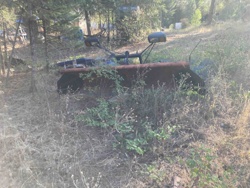
The item depicted is a vintage or antique wooden wagon, likely a farm wagon or a utility wagon, set in a field of dry, tall grass. Its primary construction material is wood, visible in its large spoked wheels, chassis, and body panels. The wood appears to be heavily weathered, exhibiting a natural light grey or bleached tone, indicative of prolonged exposure to the elements. The wagon features four wheels, two of which are clearly visible and appear to be of different sizes; a larger rear wheel and a smaller front wheel are discernible. Each wheel is constructed with multiple wooden spokes radiating from a central hub and is reinforced with a metal band or tire around the circumference, which shows dark patination or rust. The wagon bed is rectangular, with visible wooden side panels that show signs of damage, specifically missing or broken planks towards the front section on the left side. The overall structure appears robust but heavily aged, with joints and fasteners likely distressed over time. There are no clear discernible maker's marks or signatures from the given image. The style suggests an early 20th-century or late 19th-century origin, typical of horse-drawn vehicles used for transport or agriculture. The condition is clearly unrestored, with significant wear, deterioration of wood, and metal oxidation. This indicates a long period of disuse and outdoor storage, contributing to its rustic, weathered patina. The craftsmanship appears functional, built for durability rather than intricate aesthetics, reflective of its utilitarian purpose. The quality is consistent with historical farm equipment designed for heavy-duty use.
AI Appraisal Report
Upon visual examination of the provided image, I assess this antique wooden farm wagon to be in 'poor' to 'fair' condition, consistent with prolonged exposure to the elements and significant disuse. Authenticity, based solely on visual cues, appears high for an item of this type and age; it exhibits all characteristic wear and construction methods of late 19th or early 20th-century agricultural or utility wagons. The heavily weathered wood and rusted metal bands are indicators of its age and lack of restoration. The missing and broken planks in the wagon bed are notable damage points.
The market for antique farm equipment and rustic decor is niche but consistent. Comparables would include similar horse-drawn wagons, often found at rural auctions, antique shows, or specialized dealers. The value is significantly impacted by its unrestored state and the damage, which makes it less desirable for immediate display without substantial restoration. Its primary appeal would be for decorative purposes (e.g., garden ornament, farm museum display) rather than functional use. Rarity is moderate; while not unique, well-preserved examples are less common than heavily deteriorated ones. Demand is limited to specific collectors, landscapers seeking rustic elements, or individuals undertaking significant restoration projects.
Factors significantly impacting value include its deteriorated condition, the extent of wood rot (which cannot be fully assessed from an image), and the absence of any identifying maker's marks, which could elevate its historical significance. Limitations in authenticity verification from an image alone are considerable. A physical examination would be crucial to assess the structural integrity of the wood, the extent of hidden rot or insect damage, the condition of joints and fasteners, and to search for any faint, obscured manufacturer's stamps or unique construction details. Provenance documentation, if available, linking it to a specific farm or manufacturer, would significantly enhance its historical value. Scientific testing, such as wood dating, would typically be cost-prohibitive for an item of this value unless a significant historical claim were attached to it.