AI Appraisal Estimate

AI-generated estimates · not official valuations

From the user

What was submitted

Photo and notes provided by the user — not generated by AI

Submitted item photo
Submitted photo · June 12, 2026

User's notes

No additional notes provided.

AI analysis below

AI appraisal

AI analysis & estimate

AI-Generated · Verify before acting

Everything below is generated by AI for informational purposes only. AI can make mistakes — the AI may misidentify items or misattribute them (artist, maker, brand, designer, origin, era). This is not an official valuation and should not be used for insurance, sale, tax, estate, legal, or lending purposes — or any decision requiring a certified appraisal. It is not an authoritative claim about any person, brand, or rights holder — do not share or rely on it as a factual statement about a third party. Always consult qualified professionals before making financial decisions.

Read the full disclaimer

AI Identification

·Not independently authenticated·Verify before acting

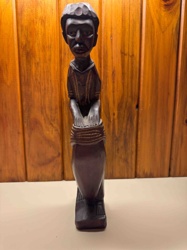
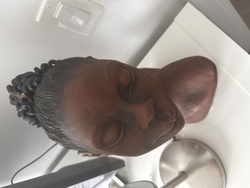
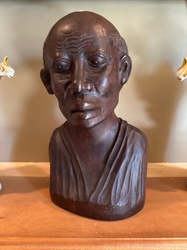
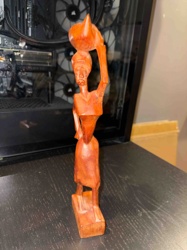
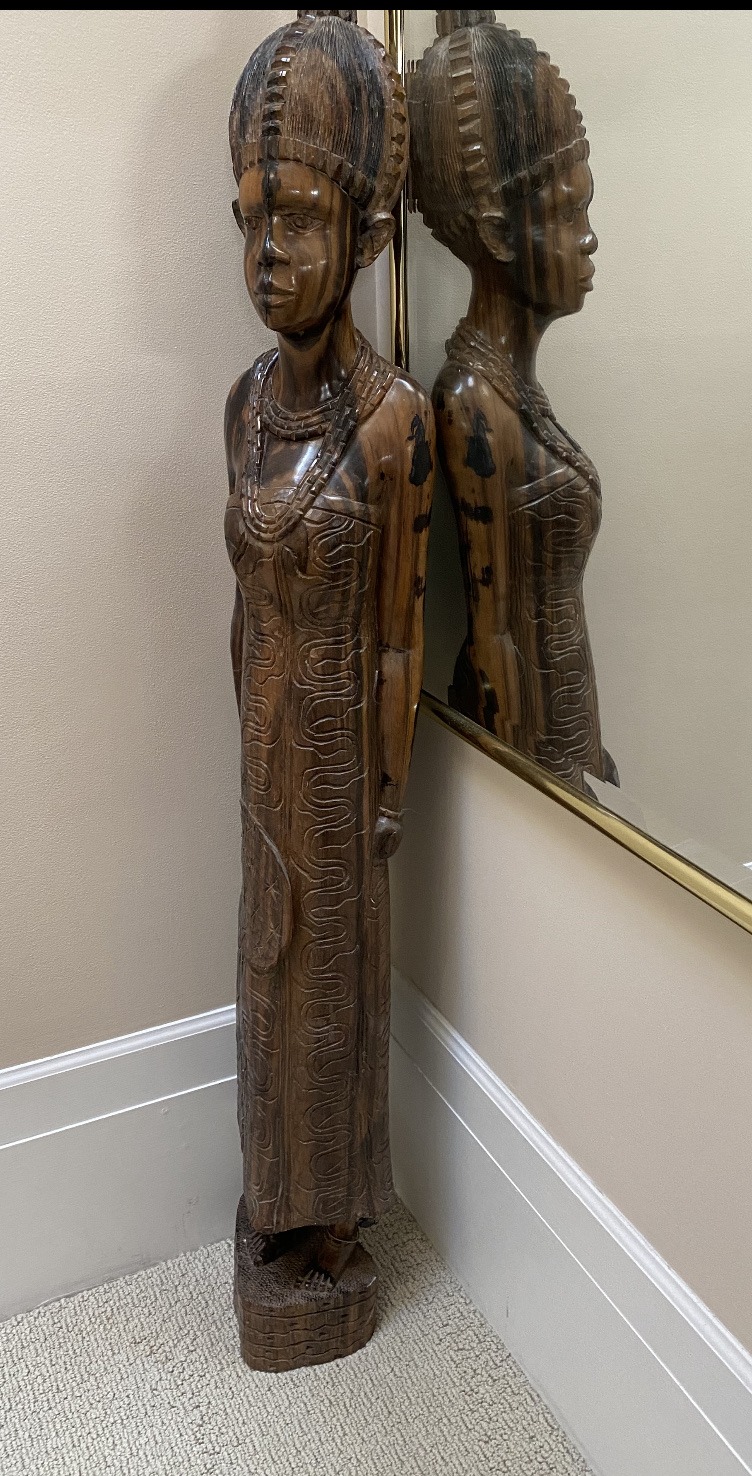
Large Hand-Carved African Ebony Wood Female Figure

Antique & Vintage Ethnographic Art / African Sculpture

AI Estimated Value

·Not an official valuation·Verify before acting

$1,200 - $1,800

As of June 12, 2026

AI Item Analysis

·AI can make mistakes·Verify before acting
This is a significant, large-scale floor sculpture of an African woman, hand-carved from a single block of dense, variegated hardwood, likely ebony or a similar exotic timber common to East Africa (Makonde style influence). The figure stands approximately 3 to 4 feet tall, exhibiting a striking natural grain with high-contrast blond and dark ebony streaks. The subject is depicted in traditional attire, featuring an elaborate, tall crested headdress with vertical incised lines and a tiered necklace. The floor-length garment is meticulously decorated with a repeating incised S-curve or wavy pattern, demonstrating consistent hand-tooling. The facial features are classically rendered with large almond-shaped eyes, a strong nose, and a vertical scarification mark or decorative line running down the forehead and nose. The craftsmanship is evident in the polished finish and the anatomical proportions, which follow a stylized, elongated aesthetic. Condition-wise, the piece shows a rich, age-appropriate honey-and-ink patina with typical surface dust in the deeper recesses of the carving. There are no obvious major cracks or structural repairs visible in the image, though minor dessication lines may be present beneath the finish as is common with tropical hardwoods. This piece likely dates to the mid-to-late 20th century, specifically produced for the export art market as a high-quality decorative ethnic piece.
AI Appraisal Report

·AI can make mistakes·Verify before acting
I have examined the digital representation of this Large Hand-Carved African Ebony Wood Female Figure. The sculpture exhibits characteristic hallmarks of mid-to-late 20th-century Makonde-influenced craftsmanship from East Africa. The use of variegated heartwood and sapwood indicates a large, mature ebony tree, which is increasingly rare due to conservation regulations. The technical execution of the S-curve incised patterns and the polished finish suggests a master carver rather than a mass-production workshop. The condition appears excellent with a well-developed patina; however, I note minor terminal checking at the base, which is standard for dense tropical hardwoods transitioning climates. Current market demand for 'Large Scale Floor Sculptures' remains strong in the interior design sector, where these pieces transition from ethnographic artifacts to high-end decorative focal points. Comparables for 3-4 foot carvings of this density and detail typically hammer between $1,000 and $2,000 at specialized auction houses. The primary value drivers here are the scale and the high-contrast graining. Please note that this appraisal is based on image analysis only. A physical inspection is required to definitively distinguish between Diospyros crassiflora (genuine ebony) and chemically stained lighter woods. Furthermore, I cannot verify internal structural integrity or the presence of stabilization fillers without a tactile exam. Final authentication would require provenance documentation or a certificate of origin to confirm it was not produced under modern mass-export conditions, which would slightly lower the valuation.

Get your items appraised

Instant estimates of your treasures with AI-powered appraisals

Browse More Appraisals