AI Appraisal Estimate

AI-generated estimates · not official valuations

From the user

What was submitted

Photo and notes provided by the user — not generated by AI

Submitted item photo
Submitted photo · June 13, 2026

User's notes

No additional notes provided.

AI analysis below

AI appraisal

AI analysis & estimate

AI-Generated · Verify before acting

Everything below is generated by AI for informational purposes only. AI can make mistakes — the AI may misidentify items or misattribute them (artist, maker, brand, designer, origin, era). This is not an official valuation and should not be used for insurance, sale, tax, estate, legal, or lending purposes — or any decision requiring a certified appraisal. It is not an authoritative claim about any person, brand, or rights holder — do not share or rely on it as a factual statement about a third party. Always consult qualified professionals before making financial decisions.

Read the full disclaimer

AI Identification

·Not independently authenticated·Verify before acting

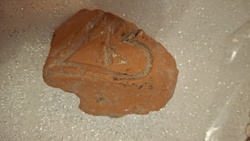
Pre-Columbian Style Terracotta Relief Disk

Archaeological Artifacts & Antiquities (or Cultural Reproductions)

AI Estimated Value

·Not an official valuation·Verify before acting

$40 - $75

As of June 13, 2026

AI Item Analysis

·AI can make mistakes·Verify before acting
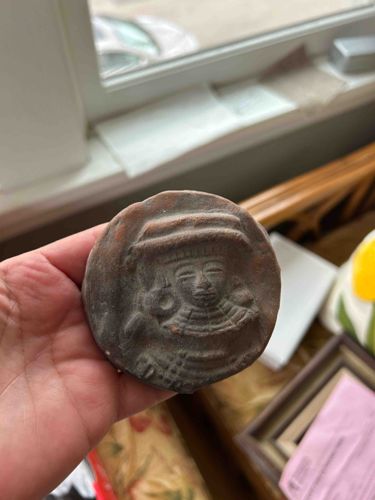
This item is a circular relief plaque or disk, likely crafted from reddish-brown terracotta or earthenware clay. It measures approximately 3 to 4 inches in diameter and fits comfortably within the palm of a hand. The central motif features a low-relief carving of a human figure, possibly a deity or an individual of high status, rendered in a style reminiscent of Mesoamerican Pre-Columbian art, such as Maya or Aztec traditions. The figure is depicted wearing an elaborate headdress, large ear spools, and a wide, tiered collar or necklace. The facial features are stylized with almond-shaped eyes and a stoic expression. The construction appears to be molded or hand-carved, with visible tool marks in the recessed areas. The material shows a dark, earthy patina with lighter red-clay undertones visible in areas of higher relief. Notable condition issues include irregular, chipped edges and surface abrasions consistent with age or simulated weathering. The texture of the clay appears porous and matte, without any visible glazing. While it mimics ancient artifacts, the lack of a formal provenance or specific maker's marks makes it difficult to distinguish between an authentic archaeological find and a 20th-century artisan reproduction intended for the tourist trade or decorative use. The craftsmanship demonstrates attention to iconographic detail, particularly in the symmetrical rendering of the traditional garments and accessories.
AI Appraisal Report

·AI can make mistakes·Verify before acting
Based on my visual examination of this terracotta relief disk, I have assessed it as a high-quality decorative reproduction of a Pre-Columbian artifact, likely produced in the mid-to-late 20th century. The piece features iconographic elements common in Maya or Western Mexican traditions—specifically the elaborate headdress and ear spools—but the execution lacks the characteristic 'spirit' and mineral stratification typically found in genuine archaeological finds. The surface patina appears to be a topical wash rather than deep-seated mineral encrustation or authentic burial oxidation. The market for authenticated Pre-Columbian antiquities is highly regulated and requires rigorous provenance dating pre-1970 to comply with UNESCO conventions. Without such documentation, and given the abundance of 'tourist trade' ceramics from regions like Mexico and Peru, the value of this piece is relegated to its decorative merit. Comparable items sold in estate sales or secondary markets typically fetch between $40 and $75. Critically, a definitive determination of age cannot be made through images alone. To elevate this item from a decorative reproduction to a potentially authentic artifact, an in-person examination by a lithics expert is required. Furthermore, scientific Thermoluminescence (TL) testing would be necessary to determine the last time the clay was fired. Without a clear chain of custody or evidence of age through TL testing, the piece must be valued as 'in the style of' rather than an original antiquity. The chipped edges and abrasions appear consistent with intentional distressing to simulate age for the souvenir market.

Get your items appraised

Instant estimates of your treasures with AI-powered appraisals

Browse More Appraisals