Lower Paleolithic Lithic Core or Chopper-Scraper
Archaeological Artifacts & Antiquities

Lower Paleolithic Lithic Core or Chopper-Scraper

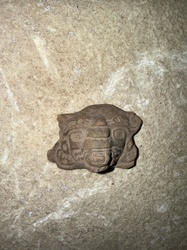
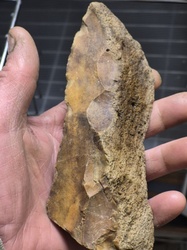
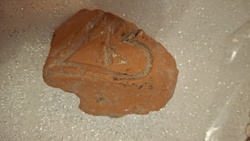
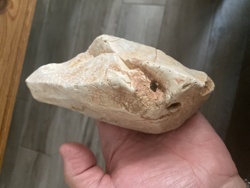
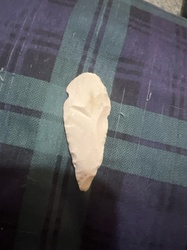
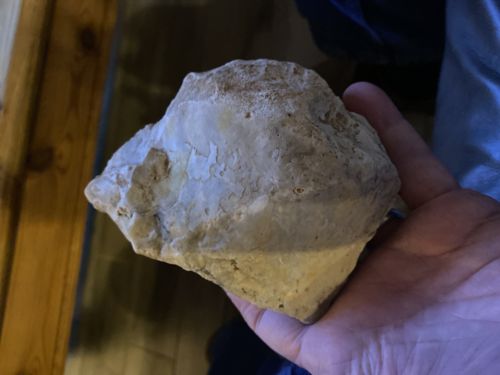
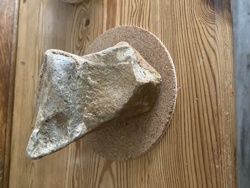
This is a robust lithic specimen measuring approximately 5 inches by 4 inches, discovered in Guthrie, Oklahoma. The item is composed of a dense, silica-rich stone, appearing to be a high-quality chert or flint with a mottled light-tan to grayish-white patina. Geologically, it exhibits characteristics of a prehistoric stone tool, potentially utilized as a hand axe or heavy scraper. The object shows evidence of intentional percussion flaking along its edges, creating a bifacial or unifacial working margin used for chopping or hideworking. The surface displays significant weathering and 'desert varnish' consistent with extreme age, featuring rounded ridges and shallow concavities where flakes were struck. There is a distinct 'bulb of percussion' on one face, a key indicator of human craftsmanship rather than natural geological fracturing. The texture is varied, with some cortex (original outer rind of the rock) still present on the proximal end, which would have served as a comfortable grip for the user. Its condition is remarkably stable for a Paleolithic-style artifact, though it shows ancient edge-wear and micro-nicks from use. From an appraisal perspective, the size and weight suggest a heavy-duty utilitarian scraper or core tool, representing archaic tool-making traditions.
Estimated Value

$150 - $350

Basic Information

Category

Archaeological Artifacts & Antiquities

Appraised On

February 18, 2026

Estimated Value

$150 - $350

Additional Details Provided By Owner

User Provided Information

Prospect Lower Paleolithic hand axe scraper stone tool found in Guthrie OK measuring 5" x 4"

Item Description

This is a robust lithic specimen measuring approximately 5 inches by 4 inches, discovered in Guthrie, Oklahoma. The item is composed of a dense, silica-rich stone, appearing to be a high-quality chert or flint with a mottled light-tan to grayish-white patina. Geologically, it exhibits characteristics of a prehistoric stone tool, potentially utilized as a hand axe or heavy scraper. The object shows evidence of intentional percussion flaking along its edges, creating a bifacial or unifacial working margin used for chopping or hideworking. The surface displays significant weathering and 'desert varnish' consistent with extreme age, featuring rounded ridges and shallow concavities where flakes were struck. There is a distinct 'bulb of percussion' on one face, a key indicator of human craftsmanship rather than natural geological fracturing. The texture is varied, with some cortex (original outer rind of the rock) still present on the proximal end, which would have served as a comfortable grip for the user. Its condition is remarkably stable for a Paleolithic-style artifact, though it shows ancient edge-wear and micro-nicks from use. From an appraisal perspective, the size and weight suggest a heavy-duty utilitarian scraper or core tool, representing archaic tool-making traditions.
Get Your Items Appraised

Instant estimates of your treasures with AI-powered instant appraisals

Browse More Appraisals