AI Appraisal Estimate

AI-generated estimates · not official valuations

From the user

What was submitted

Photo and notes provided by the user — not generated by AI

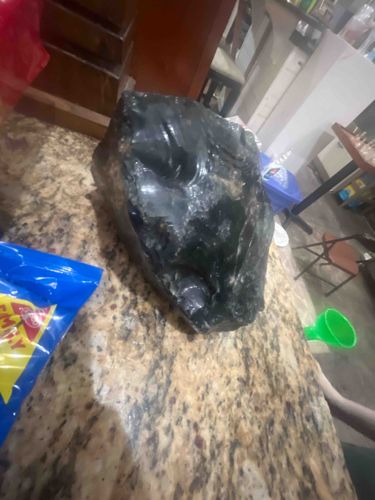
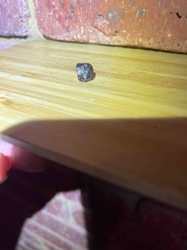
Submitted item photo
Submitted photo · June 25, 2026

User's notes

No additional notes provided.

AI analysis below

AI appraisal

AI analysis & estimate

AI-Generated · Verify before acting

Everything below is generated by AI for informational purposes only. AI can make mistakes — the AI may misidentify items or misattribute them (artist, maker, brand, designer, origin, era). This is not an official valuation and should not be used for insurance, sale, tax, estate, legal, or lending purposes — or any decision requiring a certified appraisal. It is not an authoritative claim about any person, brand, or rights holder — do not share or rely on it as a factual statement about a third party. Always consult qualified professionals before making financial decisions.

Read the full disclaimer

AI Identification

·Not independently authenticated·Verify before acting

Large Black Obsidian Specimen

Minerals & Geological Specimens

AI Estimated Value

·Not an official valuation·Verify before acting

$40-80

As of June 25, 2026

AI Item Analysis

·AI can make mistakes·Verify before acting
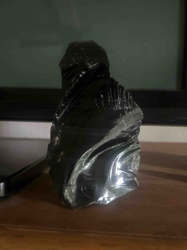
This is a substantial specimen of natural black obsidian, a volcanic glass formed by the rapid cooling of silica-rich lava. The piece displays a deep, lustrous jet-black color with a glassy, vitreous surface that reflects light significantly. It features classic conchoidal fracturing, characterized by smooth, curved, shell-like surfaces with sharp edges, indicating its high silica content and lack of crystalline structure. The specimen is irregularly shaped and appears to be an unworked, raw nodule or large chunk. It shows several deep indentations and ridges formed during its natural cooling or extraction. Based on its appearance on a standard countertop, this is a heavy, large-scale piece, likely several kilograms in weight. There are visible surface scuffs and minor chipping on some of the sharper edges, likely from handling or transport, which is common for such brittle material. No specific maker’s marks or signatures are present as it is a natural geological object. The specimen's high gloss and deep opacity suggest a high-quality mineral example, potentially suitable for lapidary work, decorative display, or metaphysical use. Its age is geological, though it was likely collected in the modern era.
AI Appraisal Report

·AI can make mistakes·Verify before acting
I have examined the images of this large black obsidian specimen, and based on its visual characteristics, it appears to be a genuine, substantial piece of natural volcanic glass. The deep, jet-black coloration and high-gloss vitreous luster are textbook indicators of high-silica obsidian. The prominent conchoidal fracturing—those smooth, curved, shell-like breakages along the edges—strongly supports its identification as natural obsidian rather than industrial slag glass or an artificial simulant. The condition is consistent with a raw, unworked geological specimen; while there are minor scuffs and chips along the sharper ridges, these are typical for such brittle material during extraction and transport and do not significantly detract from its value as a display piece or lapidary rough. In the current market, obsidian is abundant and widely available globally, with significant deposits in the United States, Mexico, and Armenia. While this is a large, attractive chunk potentially weighing several kilograms, it is not considered rare. Value is primarily determined by weight and size rather than scarcity. Similar large 'garden rock' or lapidary-grade nodules typically retail between $5 to $10 per pound, occasionally higher for pieces with exceptional sheen or specific provenance (e.g., Davis Creek Rainbow Obsidian), though this piece appears to be standard black. Therefore, the value is modest, serving more as a decorative object or material stock. While high-resolution images strongly suggest this is natural obsidian, a definitive confirmation would require a physical inspection to check for density/specific gravity and to ensure it is not 'black glass' slag, which can mimic obsidian's appearance. However, the fracture patterns seen here are highly indicative of natural formation.

Get your items appraised

Instant estimates of your treasures with AI-powered appraisals

Browse More Appraisals