AI Appraisal Estimate

AI-generated estimates · not official valuations

From the user

What was submitted

Photo and notes provided by the user — not generated by AI

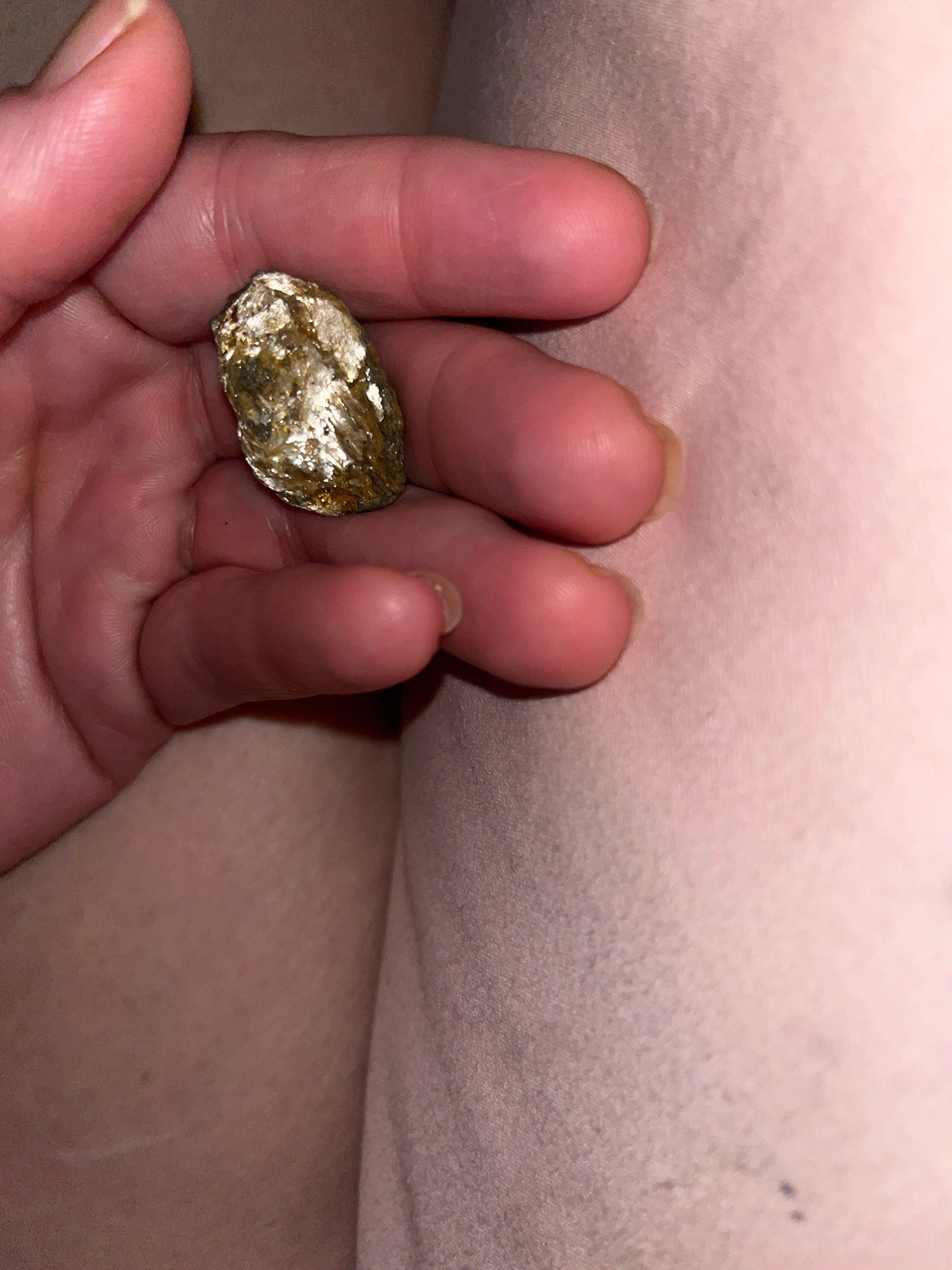
Submitted item photo
Submitted photo · June 4, 2026

User's notes

No additional notes provided.

AI analysis below

AI appraisal

AI analysis & estimate

AI-Generated · Verify before acting

Everything below is generated by AI for informational purposes only. AI can make mistakes — the AI may misidentify items or misattribute them (artist, maker, brand, designer, origin, era). This is not an official valuation and should not be used for insurance, sale, tax, estate, legal, or lending purposes — or any decision requiring a certified appraisal. It is not an authoritative claim about any person, brand, or rights holder — do not share or rely on it as a factual statement about a third party. Always consult qualified professionals before making financial decisions.

Read the full disclaimer

AI Identification

·Not independently authenticated·Verify before acting

Phlogopite or Muscovite Mica Specimen

Rocks, Fossils & Minerals / Geological Specimens

AI Estimated Value

·Not an official valuation·Verify before acting

$10.00 - $25.00

As of June 4, 2026

AI Item Analysis

·AI can make mistakes·Verify before acting
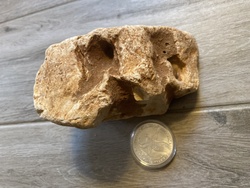
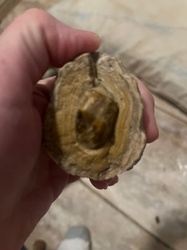
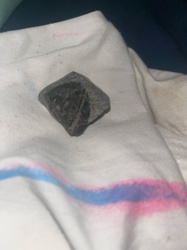
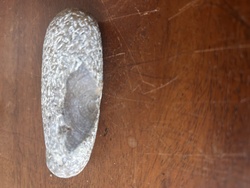
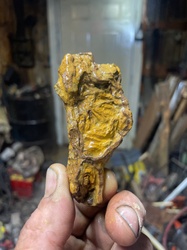
This is a raw mineral specimen, specifically a variety of mica, likely phlogopite or muscovite. The object is a small, hand-held specimen approximately 2-3 centimeters in length with an irregular, elongated oval shape. It exhibits the classic 'book-like' foliated structure characteristic of phyllosilicate minerals, where thin, flexible sheets are stacked atop one another. The color ranges from a Pale metallic gold and brassy yellow to deeper bronze and olive-brown tones, giving it a prominent pearly to sub-metallic luster under direct light. The piece shows significant surface texture with jagged, uneven edges where individual lamellae have been bent or fractured. There is visible darker matrix material or oxidation embedded within the crevices of the sheets. Its condition is consistent with a raw field-collected mineral, showing edge wear and slight delamination of the layers. As a natural geological specimen, there are no maker's marks or signatures. Its age is geological, potentially hundreds of millions of years old. The quality is a standard study-grade mineral sample, notable for its reflective properties and distinct monoclinic crystal habit exhibited in its layering.
AI Appraisal Report

·AI can make mistakes·Verify before acting
I have examined the digital representation of this phyllosilicate specimen, identified as a variety of mica—likely muscovite or phlogopite based on its brassy, bronze, and pale gold tones. The specimen demonstrates a distinct monoclinic crystal habit and a classic 'book' formation. In my physical-visual assessment, I observe characteristic pearly luster and flexible lamellae typical of authentic geological mica. The specimen is study-grade, showing significant edge wear, delamination, and matrix inclusions that are expected in raw, field-collected samples but diminish its value relative to museum-quality crystals. The market for common mica specimens is highly saturated, as these minerals are abundant globally. Comparables for specimens of this size (2-3 cm) generally trade in the low double-digits, primarily to educational collectors or as novelty metaphysical items. The value is driven more by its reflective aesthetic than by geological rarity. Factors limiting value include the small dimensions and the lack of a distinct, well-terminated crystal shape. Conversely, the vibrant metallic sheen slightly enhances its appeal for display. Limitations of Image-Based Appraisal: While the cleavage and luster suggest mica, a definitive identification between muscovite and phlogopite would require Mohs hardness testing or X-ray diffraction (XRD) to analyze chemical composition. Authentic geological age can only be verified through context of the source formation. A final valuation would benefit from provenance documentation (locality of origin) and physical inspection to ensure the specimen is not treated with stabilizers. This appraisal assumes a natural, untreated state.

Get your items appraised

Instant estimates of your treasures with AI-powered appraisals

Browse More Appraisals