AI Appraisal Estimate

AI-generated estimates · not official valuations

From the user

What was submitted

Photo and notes provided by the user — not generated by AI

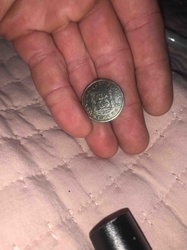
Submitted item photo
Submitted photo · May 31, 2026

User's notes

No additional notes provided.

AI analysis below

AI appraisal

AI analysis & estimate

AI-Generated · Verify before acting

Everything below is generated by AI for informational purposes only. AI can make mistakes — the AI may misidentify items or misattribute them (artist, maker, brand, designer, origin, era). This is not an official valuation and should not be used for insurance, sale, tax, estate, legal, or lending purposes — or any decision requiring a certified appraisal. It is not an authoritative claim about any person, brand, or rights holder — do not share or rely on it as a factual statement about a third party. Always consult qualified professionals before making financial decisions.

Read the full disclaimer

AI Identification

·Not independently authenticated·Verify before acting

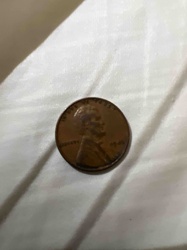
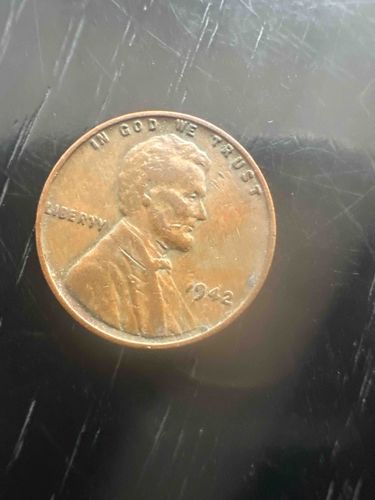
1942 Lincoln Wheat Cent

Coinage - Numismatic

AI Estimated Value

·Not an official valuation·Verify before acting

$0.50-1.50

As of May 31, 2026

AI Item Analysis

·AI can make mistakes·Verify before acting
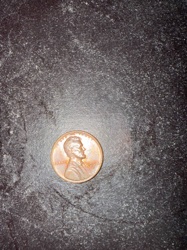
The item is a copper-colored United States one-cent coin, commonly known as a penny. The obverse side is clearly visible, featuring a right-facing profile of Abraham Lincoln, as designed by Victor David Brenner. The color of the coin is a reddish-brown, indicative of its copper composition, though there are darker areas and some surface irregularities suggesting oxidation or environmental exposure. The phrase "IN GOD WE TRUST" curves along the top rim of the coin, while "LIBERTY" is inscribed to the left of Lincoln's bust. Below his profile, the minting year "1942" is clearly stamped. The details of Lincoln's portrait, including the facial features and the folds of his coat, are reasonably well-preserved, suggesting moderate circulation, but not heavy wear. There is a general surface patina consistent with age, and some lighter scratches or abrasions are visible across the surface, particularly noticeable against the darker areas of the background field. The rim appears intact, though its precise condition around the entire circumference cannot be fully assessed from the single image. There are no immediate signs of severe damage such as bends, holes, or significant corrosion, however, the surface shows minor areas of discoloration and what might be residue from handling. The overall craftsmanship is typical of US coinage from this period, with clear, raised lettering and a well-defined portrait. The coin likely measures approximately 19 mm in diameter, standard for a Lincoln cent.
AI Appraisal Report

·AI can make mistakes·Verify before acting
I have examined the provided image of the 1942 Lincoln Wheat Cent. Based on the visual evidence, the coin appears authentic. The key design elements, including Lincoln's portrait, the "IN GOD WE TRUST" and "LIBERTY" inscriptions, and the "1942" date, are consistent with known examples of this mintage. The reddish-brown coloration and surface patina indicate its copper composition and age. The level of detail in Lincoln's features suggests a condition in the Fine (F) to Very Fine (VF) range, indicating moderate circulation but without significant obliteration of design elements. Minor scratches and discoloration are present, which are typical for circulated coinage and do not severely detract from its general appearance. The rim appears intact, though a full 360-degree assessment isn't possible. Regarding market conditions, 1942 Lincoln Cents are very common. Millions were minted and many survive. Therefore, rarity is not a significant factor here. Demand exists primarily among casual collectors or those filling sets. Comparables in similar circulated condition typically sell for modest amounts. Factors that significantly impact value for this date include uncirculated condition, rare mint errors (none visible here), or unique provenance, none of which are evident. My primary limitation in this appraisal is the absence of a physical examination. I cannot verify authenticity with absolute certainty from images alone. A hands-on inspection would allow me to accurately grade the coin, detect subtle damage, identify any potential alterations, assess the true luster, and confirm the weight and diameter. Furthermore, specific provenance documentation would add to its historical value, though it rarely impacts the market value of common circulated coins. Scientific testing, such as XRF analysis, could confirm metallic composition if authenticity were genuinely in doubt, but is not typically required for common circulated issues.

Get your items appraised

Instant estimates of your treasures with AI-powered appraisals

Browse More Appraisals