AI Appraisal Estimate

AI-generated estimates · not official valuations

From the user

What was submitted

Photo and notes provided by the user — not generated by AI

Submitted item photo
Submitted photo · June 25, 2026

User's notes

No additional notes provided.

AI analysis below

AI appraisal

AI analysis & estimate

AI-Generated · Verify before acting

Everything below is generated by AI for informational purposes only. AI can make mistakes — the AI may misidentify items or misattribute them (artist, maker, brand, designer, origin, era). This is not an official valuation and should not be used for insurance, sale, tax, estate, legal, or lending purposes — or any decision requiring a certified appraisal. It is not an authoritative claim about any person, brand, or rights holder — do not share or rely on it as a factual statement about a third party. Always consult qualified professionals before making financial decisions.

Read the full disclaimer

AI Identification

·Not independently authenticated·Verify before acting

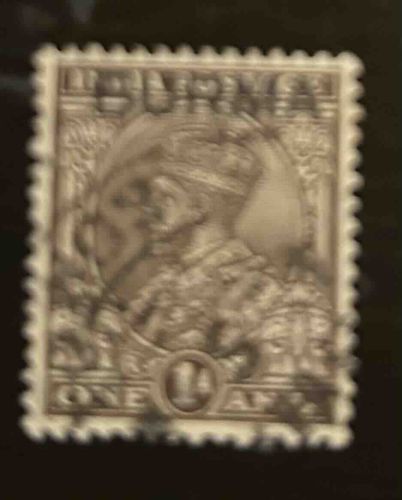
Burma King George VI One Anna Stamp

Postage Stamp

AI Estimated Value

·Not an official valuation·Verify before acting

$0.50 - $2.00

As of June 25, 2026

AI Item Analysis

·AI can make mistakes·Verify before acting
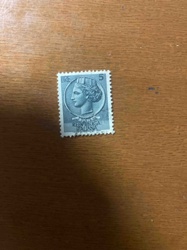
This item is a postage stamp from Burma, featuring the portrait of King George VI. The stamp is rectangular with perforated edges, typical of early to mid-20th-century philatelic items. The dominant color scheme appears to be monochromatic, likely a sepia tone or a faded brown/grey, suggesting the use of a single-color ink in its production. The central motif is a detailed bust portrait of King George VI, facing left, adorned with regal attire and a crown or headdress. Above the portrait, the word 'BURMA' is visible in capital letters, signifying its country of origin. Below the portrait, across the bottom edge, the denomination 'ONE ANNA' is clearly inscribed, with '1 An' or '1 A' also visible within a circular or oval cartouche, indicating its postal value. The background behind the portrait consists of intricate, possibly floral or scrolled, decorative elements, characteristic of the ornate designs often found on stamps of this era. The overall condition appears to be relatively good, with the perforations seemingly intact, though the image quality is somewhat blurry, making precise assessment of minute details difficult. There are no immediately obvious signs of major tears, creases, or significant staining, but a slight fading of the ink or minor discoloration from age is possible. The craftsmanship appears to be of standard quality for government-issued postage stamps of the period.
AI Appraisal Report

·AI can make mistakes·Verify before acting
Based on my visual examination of the provided image of the Burma King George VI One Anna stamp, I assess its condition as good-to-fine used. The perforations appear largely intact, and there are no immediately obvious significant flaws like tears or major creases. However, the image quality makes it impossible to definitively rule out minor thinning, small pinholes, or minor creasing. The dominant color suggests a used example, and the clarity of the postmark, if present, is obscured. From a market perspective, King George VI stamps from Burma are generally common. Many denominations and varieties were produced in large quantities. While the specific shade or plate variety could theoretically impact value, determining such nuances from an image alone is impossible. Comparables for common used examples of this stamp typically fall into the sub-$5 range. This particular stamp does not appear to possess characteristics that would elevate it into higher valuation tiers. Demand for common KGVI issues is moderate, driven primarily by general collectors rather than specialist investors. Rarity in this specific context would typically derive from imperforate errors, rare shades, plate flaws, or unusual cancellations, none of which are discernible here. Factors significantly impacting value would be any hidden faults (such as thins or repairs), which cannot be detected in an image, or a particularly rare postmark, which is not clear. The main limitation with this appraisal is the absolute inability to verify authenticity or detect subtle flaws without a physical, in-person examination. For full authentication and a definitive condition assessment, the stamp would need to be physically inspected under magnification, and ideally, its paper type and printing characteristics verified.

Get your items appraised

Instant estimates of your treasures with AI-powered appraisals

Browse More Appraisals