AI Appraisal Estimate

AI-generated estimates · not official valuations

From the user

What was submitted

Photo and notes provided by the user — not generated by AI

Submitted item photo
Submitted photo · June 10, 2026

User's notes

No additional notes provided.

AI analysis below

AI appraisal

AI analysis & estimate

AI-Generated · Verify before acting

Everything below is generated by AI for informational purposes only. AI can make mistakes — the AI may misidentify items or misattribute them (artist, maker, brand, designer, origin, era). This is not an official valuation and should not be used for insurance, sale, tax, estate, legal, or lending purposes — or any decision requiring a certified appraisal. It is not an authoritative claim about any person, brand, or rights holder — do not share or rely on it as a factual statement about a third party. Always consult qualified professionals before making financial decisions.

Read the full disclaimer

AI Identification

·Not independently authenticated·Verify before acting

Vintage Hand-Carved African Ebony Female Maternity Statue

Ethnographic Art / African Wood Carvings

AI Estimated Value

·Not an official valuation·Verify before acting

$150 - $250

As of June 10, 2026

AI Item Analysis

·AI can make mistakes·Verify before acting
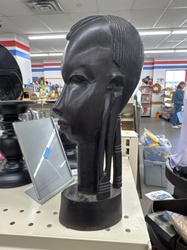
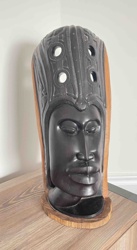
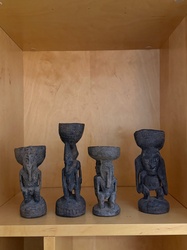
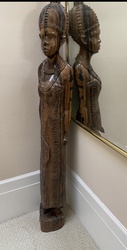
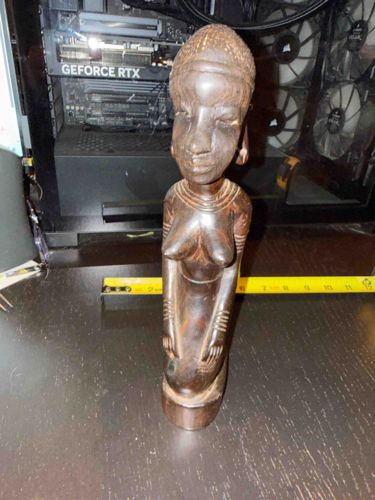
This is a hand-carved wooden statue depicting a female figure, likely of East African origin (possibly Makonde or Kamba tribal influence), carved from a dense, dark hardwood such as Macassar Ebony or Dalbergia melanoxylon. The figure stands approximately 10-12 inches high, positioned in a traditional kneeling or seated pose. The physical characteristics include a highly stylized head featuring a textured coiffure or braided hairstyle, elongated facial features, and large, hoop-style earrings. Around the neck are several carved concentric rings representing traditional beaded necklaces. The torso displays prominent anatomical features consistent with maternity or fertility figures, and the arms are carved with banded bracelets near the wrists and biceps. The wood exhibits a deep chocolate brown to charcoal black color with a smooth, polished finish that highlights a rich, natural luster. Small vertical striations from the carving tools are visible upon close inspection, particularly in the recessed areas. The condition appears fair to good; there is visible white residue in the crevices, likely old polish or dust, and some superficial scuffs along the base and shoulders. No major structural cracks or repairs are visible in the photograph, though a natural age patina is present. This piece likely dates from the mid-to-late 20th century, produced during the height of the African ethnographic art export market. The craftsmanship shows high attention to detail in the anatomical proportions and decorative scarification-like banding on the limbs.

AI Appraisal Report

·AI can make mistakes·Verify before acting
I have examined the digital representation of the Hand-Carved African Ebony Female Maternity Statue. The piece exhibits characteristic traits of East African craftsmanship, specifically the Makonde or Kamba traditions. Carved from Dalbergia melanoxylon, the statue shows a high level of technical proficiency, particularly in the detailed coiffure and anatomical proportions. The presence of white residue in decorative recesses suggests the use of a wax-based polish or accumulated household dust, which is typical for mid-20th-century export pieces. The surface luster indicates a well-maintained wood grain, though superficial scuffs on the base slightly temper the value. While aesthetically striking, this item belongs to the high-volume export period (1950-1980), which affects its rarity. Comparable statues of this size and quality typically realize between $150 and $250 at auction or specialized ethnographic retailers. Demand for mid-century African carvings remains steady for home decor but lacks the premium prices of older, ritual-use artifacts. Limitations of this appraisal include the inability to verify wood density, internal structural integrity, or the presence of non-organic fillers in cracks via photograph alone. A full authentication would require hands-on inspection to confirm the weight, scent (characteristic of true ebony), and provenance documentation to trace its origin prior to the 1970s. Scientific testing such as carbon dating is not recommended as the cost would exceed the fair market value of the object.

Get your items appraised

Instant estimates of your treasures with AI-powered appraisals

Browse More Appraisals