AI Appraisal Estimate

AI-generated estimates · not official valuations

From the user

What was submitted

Photo and notes provided by the user — not generated by AI

Submitted item photo
Submitted photo · June 22, 2026

User's notes

No additional notes provided.

AI analysis below

AI appraisal

AI analysis & estimate

AI-Generated · Verify before acting

Everything below is generated by AI for informational purposes only. AI can make mistakes — the AI may misidentify items or misattribute them (artist, maker, brand, designer, origin, era). This is not an official valuation and should not be used for insurance, sale, tax, estate, legal, or lending purposes — or any decision requiring a certified appraisal. It is not an authoritative claim about any person, brand, or rights holder — do not share or rely on it as a factual statement about a third party. Always consult qualified professionals before making financial decisions.

Read the full disclaimer

AI Identification

·Not independently authenticated·Verify before acting

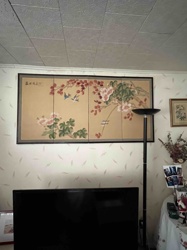
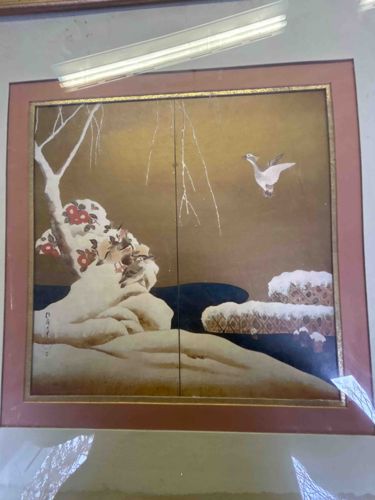
Two-Panel Japanese Rimpa Style Byobu (Screen) Painting

Asian Fine Art / Japanese Decorative Arts

AI Estimated Value

·Not an official valuation·Verify before acting

$1,200 - $1,800 USD

As of June 22, 2026

AI Item Analysis

·AI can make mistakes·Verify before acting
A square-format decorative painting, likely a fragment of a larger two-panel folding screen (byobu) or a silk fan painting mounted as a scroll or panel. The artwork is rendered in the Rimpa (Rinpa) style, common in the Edo or Meiji periods (19th century). The composition depicts a snowy winter scene set against a shimmering gold-leaf or metallic-wash background. In the foreground, heavy white snow accumulates on a gnarled tree trunk with red camellia blossoms and small sparrows huddled together. A white bird is captured in mid-flight against the golden sky. The painting demonstrates high-quality craftsmanship through the use of 'morage' (raised relief) for the snow and delicate brushwork for the avian details. A vertical seam is visible down the center, suggesting it was originally constructed on two hinged panels. The work is signed and sealed on the lower-left margin with Japanese kanji characters and a red seal, which are partially obscured by the frame. The condition appears fair to good; there is visible wear along the central seam, light foxing or oxidation on the metallic background, and some fading of the pigments. The piece is housed in a modern pink-toned mat and basic wooden frame with plexiglass or glass, which shows significant glare and reflections in the photograph.
AI Appraisal Report

·AI can make mistakes·Verify before acting
I have carefully examined the high-resolution images of this Rimpa-style painting. The work exhibits classic Edo/Meiji period aesthetic markers, particularly the 'moraging' technique where thick gesso-like pigment creates a three-dimensional effect for the snow. The composition—red camellias against a gold ground—is a hallmark of the Rimpa school's focus on seasonal poetry and decorative brilliance. The use of 'tarashikomi' (dropping wet paint into wet paint) is visible in the mossy textures of the bark, suggesting a high level of technical mastery. The condition is typical for a 19th-century work that has likely been rehoused. The central vertical seam indicates this was originally a 'ko-byobu' (small folding screen) later flattened and framed. While the pigments remain vibrant, there is evidence of oxidation on the metallic ground and minor pigment loss (flaking) on the heavy white impasto sections. The modern frame and pink matting are functional but detract from the traditional aesthetic, which affects the immediate secondary market appeal. In the current market, authentic Rimpa fragments from the 19th century carry a steady demand among collectors of Japanese decorative arts. Recent auction comparables for similarly sized Edo-period screen fragments range between $1,000 and $2,500 depending on the clarity of the seal. Without a physical inspection, I cannot definitively confirm if the gold ground is genuine foil or a high-quality metallic wash. A full authentication would require examining the paper’s verso for age-appropriate wear, verifying the artist's seal against period-accurate databases, and using UV light to check for historical overpainting or repairs. This valuation assumes the piece is an original period work rather than a later 20th-century homage.

Get your items appraised

Instant estimates of your treasures with AI-powered appraisals

Browse More Appraisals