AI Appraisal Estimate

AI-generated estimates · not official valuations

From the user

What was submitted

Photo and notes provided by the user — not generated by AI

Submitted item photo
Submitted photo · June 14, 2026

User's notes

Tapestry

AI analysis below

AI appraisal

AI analysis & estimate

AI-Generated · Verify before acting

Everything below is generated by AI for informational purposes only. AI can make mistakes — the AI may misidentify items or misattribute them (artist, maker, brand, designer, origin, era). This is not an official valuation and should not be used for insurance, sale, tax, estate, legal, or lending purposes — or any decision requiring a certified appraisal. It is not an authoritative claim about any person, brand, or rights holder — do not share or rely on it as a factual statement about a third party. Always consult qualified professionals before making financial decisions.

Note

This analysis also relies on unverified notes provided by the user, which may be incomplete or inaccurate and could affect the result.

Read the full disclaimer

AI Identification

·Not independently authenticated·Verify before acting

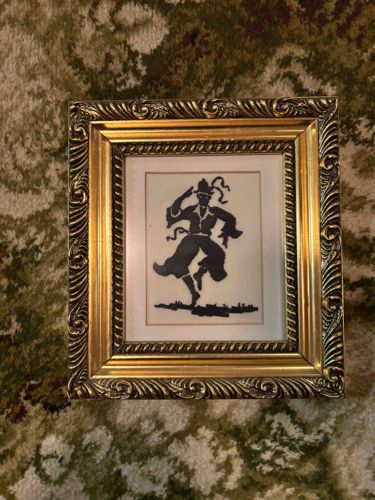
Framed Petit Point Silhouette Tapestry of a Folk Dancer

Antique & Vintage Textile Arts

AI Estimated Value

·Not an official valuation·Verify before acting

$125 - $175

As of June 14, 2026

AI Item Analysis

·AI can make mistakes·Verify before acting
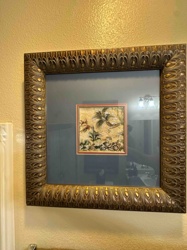
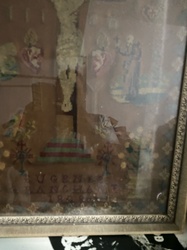
This item is a small-scale textile artwork, specifically a petit point embroidery or miniature tapestry, depicting a silhouetted figure in traditional folk attire. The central figure is shown mid-motion in a dynamic dancing pose, wearing a hat with a plume, a broad-waisted tunic, and flared trousers characteristic of European folk costumes. The silhouette is rendered in a deep black or dark indigo thread against a neutral, off-white background. The textile is housed in a prominent, ornate gold-toned frame featuring heavy rococo-style scrollwork and a secondary inner beaded border. The frame appears to be made of molded wood or resin with a metallic gilt finish. The artwork is set behind glass with a thin cream-colored matting. Regarding condition, the textile appears well-preserved with no visible staining or fraying from the front view, though there is a slight yellowing consistent with age. The frame shows minor surface dust and light patina but lacks significant chipping. This piece likely dates to the mid-20th century, a period when needlepoint silhouettes were a popular decorative craft. The level of detail in the embroidery suggests a skilled hand-stitched execution, particularly visible in the fine lines of the hat's feather and the dancer's limbs.
AI Appraisal Report

·AI can make mistakes·Verify before acting
Upon my visual examination of this petit point silhouette, I find it to be a charming example of mid-20th-century needlework. The artistry is commendable; the use of 'petit point' (a smaller, finer stitch than standard needlepoint) allows for the crisp, fluid lines seen in the dancer’s dynamic pose and the intricate plume of the hat. The high contrast of the dark thread against the neutral linen ground remains sharp, with only expected light tonal shifts (patina) due to age. The ornate gilt frame, while likely a composite molded material rather than hand-carved wood, significantly enhances the item's presence and decorative appeal. Market demand for mid-century folk-art silhouettes is currently stable, primarily driven by interior design trends rather than high-stakes textile collecting. Similar pieces found in antique malls and online auctions typically realize prices between $75 and $200 depending on the quality of the frame and the complexity of the stitch. This specimen sits at the higher end of that range due to the vibrancy of the thread and the excellent preservation of the textile. Limitations: My assessment is based on high-resolution images. To confirm the date and material, an in-person inspection would involve examining the reverse side of the textile for hand-tying and fiber source (silk vs. cotton). I would also inspect the frame’s backing for original labels or provenance marks that could link it to a specific studio or region. For full authentication, one would need to verify that the textile is not a machine-loomed mass-market copy popular in the 1960s, though the stitch tension observed here strongly suggests hand-execution.

Get your items appraised

Instant estimates of your treasures with AI-powered appraisals

Browse More Appraisals