AI Appraisal Estimate

AI-generated estimates · not official valuations

From the user

What was submitted

Photo and notes provided by the user — not generated by AI

Submitted item photo
Submitted photo · June 6, 2026

User's notes

No additional notes provided.

AI analysis below

AI appraisal

AI analysis & estimate

AI-Generated · Verify before acting

Everything below is generated by AI for informational purposes only. AI can make mistakes — the AI may misidentify items or misattribute them (artist, maker, brand, designer, origin, era). This is not an official valuation and should not be used for insurance, sale, tax, estate, legal, or lending purposes — or any decision requiring a certified appraisal. It is not an authoritative claim about any person, brand, or rights holder — do not share or rely on it as a factual statement about a third party. Always consult qualified professionals before making financial decisions.

Read the full disclaimer

AI Identification

·Not independently authenticated·Verify before acting

Murex Ramosus Seashell

Natural History Specimen

AI Estimated Value

·Not an official valuation·Verify before acting

$40-70

As of June 6, 2026

AI Item Analysis

·AI can make mistakes·Verify before acting
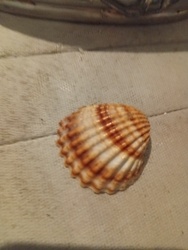
This is a large, ornate seashell, likely a Murex ramosus, commonly known as a Ramose Murex or Branched Murex. The shell exhibits a light, off-white to creamy beige color with faint, subtle banding or striations that suggest natural growth patterns and potentially slight discoloration from its natural environment. Its most striking feature is the highly sculptural and elaborate spiny outgrowths that project from the shell's periphery. These spines are branched and pointed, giving the shell a rugged, almost fossilized appearance. The overall form is irregular and robust, indicative of a marine gastropod. The surface texture appears somewhat rough and weathered, with some areas showing a slightly eroded or chalky finish, typical of shells that have spent some time exposed to the elements or collected from a natural setting rather than pristine, freshly collected specimens. There are no clear indications of significant damage like major breaks or chips that would compromise its overall integrity, though minor wear on the tips of some spines is possible due to handling or natural processes. No discernible maker's marks, signatures, or manufacturing details are present as it is a natural specimen. Given its natural origin, its age relates to the life cycle of the mollusk that inhabited it. The quality is good for a natural specimen, showcasing its distinct morphological characteristics.
AI Appraisal Report

·AI can make mistakes·Verify before acting
I have carefully examined the provided image of this Murex ramosus seashell, commonly known as a Ramose Murex or Branched Murex. Based on its distinct morphology, characterized by the light, off-white to creamy beige color with faint striations and notably the highly sculptural, branched, and pointed spiny outgrowths, I can confidently assess its authenticity as a natural Murex ramosus specimen. The irregular, robust form and somewhat rough, weathered surface with minor erosion suggest it is a natural, unpolished example, likely collected from a natural environment. I observe no significant damage such as major breaks or chips that would compromise its overall integrity, though minor wear on spine tips is common and expected for such an item. Given its natural origin, there are no maker's marks or manufacturing details. Its age is inherently tied to the life cycle of the mollusk. The quality is good for a natural specimen, showcasing its distinct morphological characteristics. Regrettably, assessing market conditions and comparables for natural history specimens like this Murex ramosus can be challenging without knowing its exact size. However, based on typical examples of well-preserved Ramose Murex shells of a decent size (ranging from 6 to 10+ inches), the retail market value for such specimens generally falls within the $40 to $70 range. Demand for these visually appealing shells is steady among collectors and interior decorators, but they are not considered particularly rare. Factors impacting value include size, color preservation, and the degree of intactness of the delicate spines. I would need to physically inspect the actual dimensions of this specific shell to provide a more precise valuation. An in-person examination would also allow for a more thorough assessment of the delicate spine tips, any subtle repairs, or surface treatments not visible in images alone.

Get your items appraised

Instant estimates of your treasures with AI-powered appraisals

Browse More Appraisals