AI identification & appraisal estimate

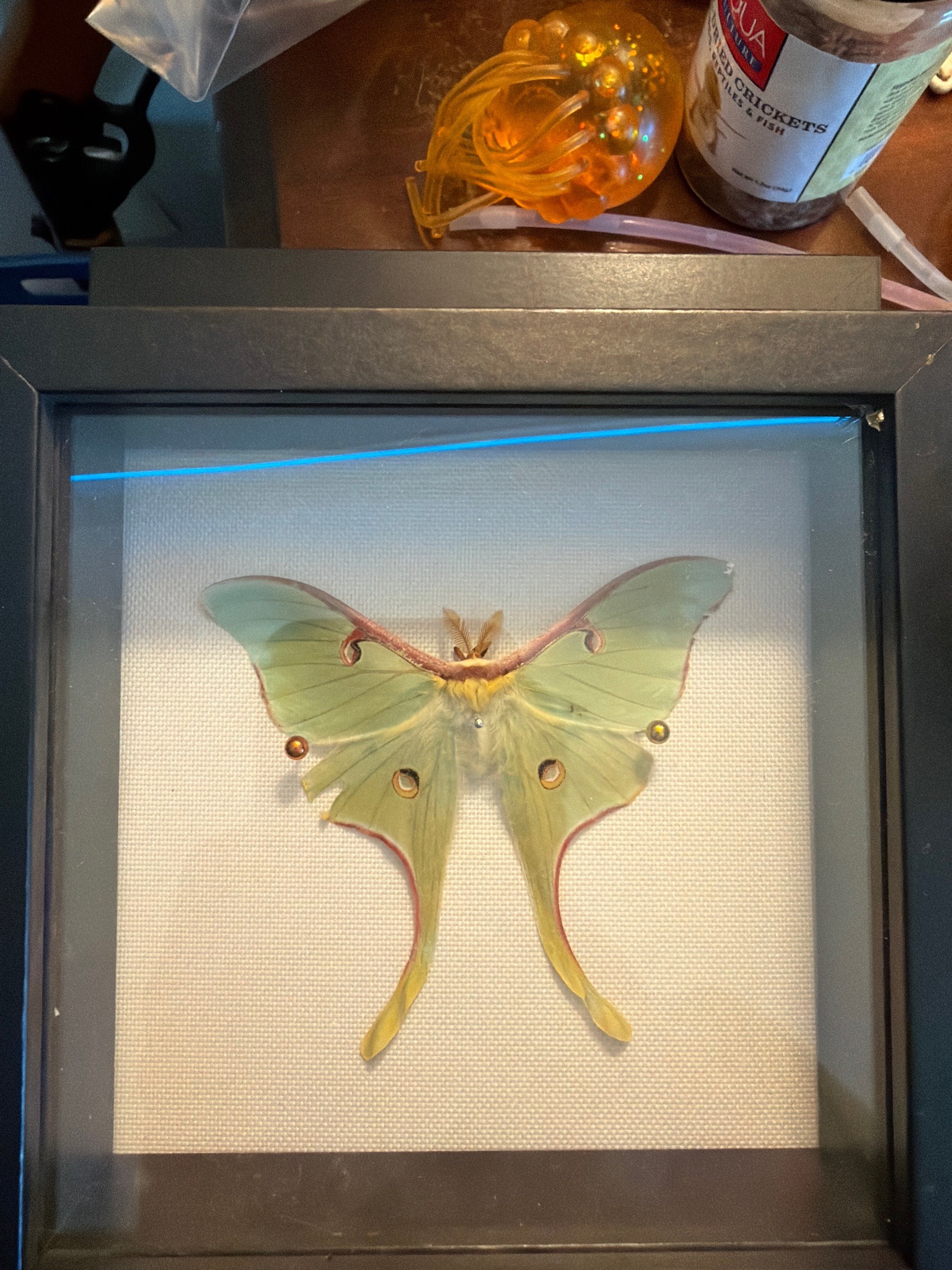
Framed moth specimen, stylistically consistent with Actias luna

Submitted photo of Framed moth specimen, stylistically consistent with Actias luna
Photo submitted by the user — not generated by AI

AI Estimated Value

Not an official valuation

$45 - $80

AI estimate as of July 16, 2026 · verify with a professional before acting

AI-Generated · Verify before acting

Everything on this page is generated by AI for informational purposes only. AI can make mistakes — the AI may misidentify items or misattribute them (artist, maker, brand, designer, origin, era). This is not an official valuation and should not be used for insurance, sale, tax, estate, legal, or lending purposes — or any decision requiring a certified appraisal. It is not an authoritative claim about any person, brand, or rights holder — do not share or rely on it as a factual statement about a third party. Always consult qualified professionals before making financial decisions.

Read the full disclaimer

AI Item Analysis

This item is a framed lepidoptera specimen, appearing to be a Luna moth (Actias luna) or a closely related species within the Saturniidae family. The specimen features prominent pale green wings with reddish-brown leading edges on the forewings and eye-like markings (eyespots) on both forewings and hindwings. The hindwings terminate in long, elegant tails characteristic of the genus. Centrally, the body is thick and covered in white fuzz, complemented by two feathered antennae. The moth is mounted using entomological pins—three are visible: one through the thorax and two bracing the wings. It is set against a white, textured fabric or paper background within a dark, rectangular shadowbox frame. While the specimen appears mostly intact, there are visible signs of damage, specifically a significant jagged tear or missing section on the left hindwing near the eyespot. No labels, signatures, or collection data are visible in the photograph to provide a origin or date; thus, its identification as a natural specimen or a high-quality replica remains as a hypothesis subject to physical inspection. The presentation is consistent with modern taxidermy or decorative natural history displays.
AI Appraisal Report

Based on the high-resolution image provided, I have examined this framed lepidoptera specimen, which appears stylistically consistent with an Actias luna (Luna moth). From what I can see, the specimen is mounted in a modern shadowbox frame with visible entomological pinning. My valuation assumes this is a natural specimen, as is typical for the decorative natural history market, though I cannot verify from a photo whether this is a biological organism or a high-quality synthetic replica without a physical inspection to examine the chitinous structure and scales. The value is significantly impacted by the visible condition: there is a noticeable tear or loss of material on the left hindwing. In the market for natural history specimens, collectors prioritize 'A1' or 'near-mint' quality; consequently, damaged specimens typically trade at a lower price point. Based on my observations, comparable framed Saturniidae specimens in similar condition generally sell within the $45 to $80 range at retail or specialty auctions. If the item were shown to be a modern resin or silk replica rather than a preserved specimen, the value would likely decrease to a purely decorative range of $20 to $40. Market demand for such items is currently stable, driven by the 'curiosity cabinet' aesthetic. To increase confidence in this appraisal, an in-person examination by a professional entomologist or taxidermy expert would be necessary to confirm the species and the extent of the wing damage, as well as to verify that the specimen has been properly treated for pest prevention.

Keep exploring

More natural history specimens appraisals

Get your items appraised

Instant AI-powered appraisal estimates from a photo

Browse More Appraisals