AI identification & appraisal estimate

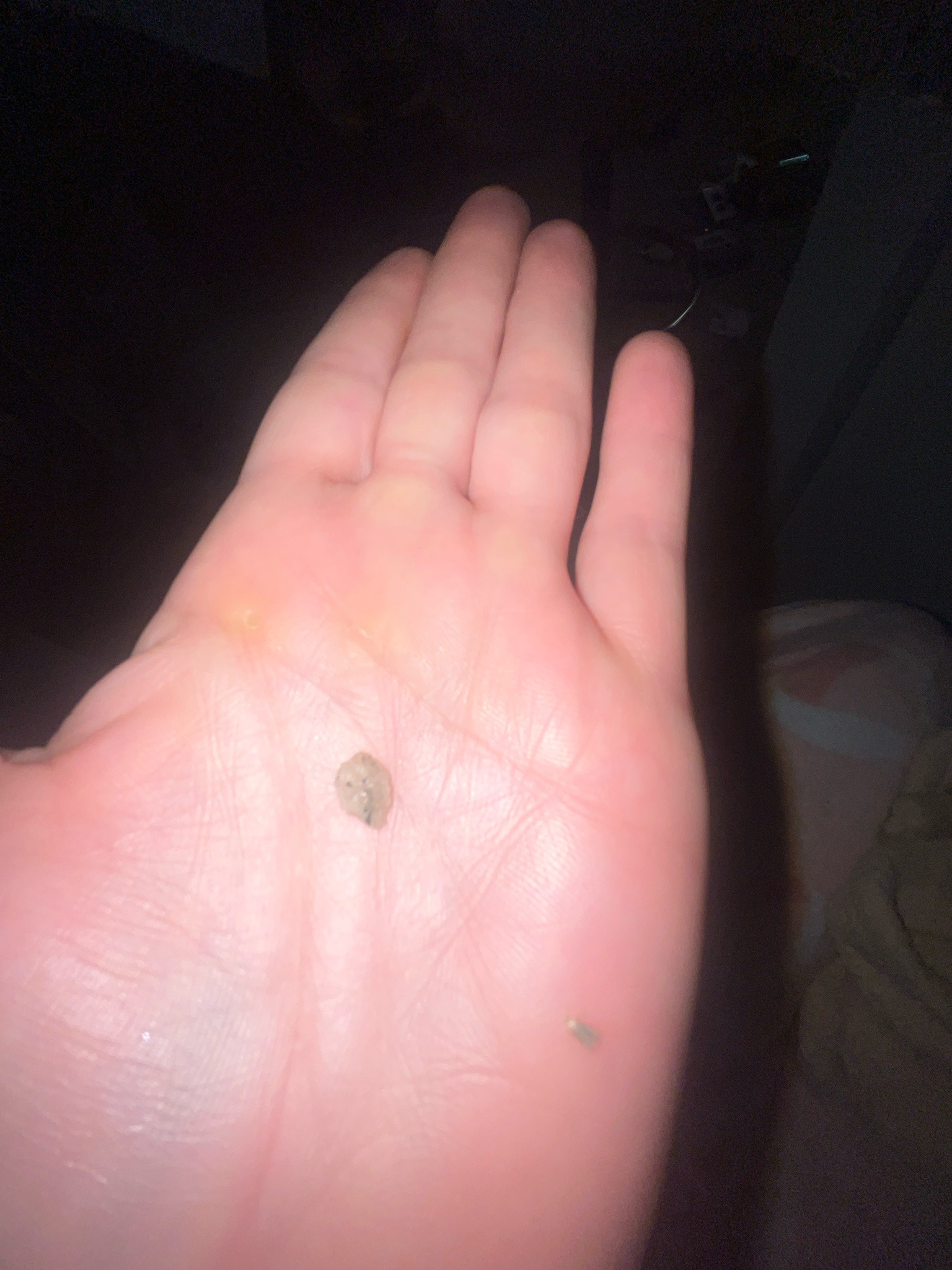
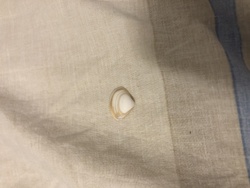
Small irregular organic or mineral specimen

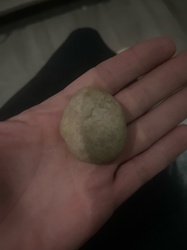
Submitted photo of Small irregular organic or mineral specimen
Photo submitted by the user — not generated by AI

AI Estimated Value

Not an official valuation

$5 - $25

AI estimate as of June 4, 2026 · verify with a professional before acting

AI-Generated · Verify before acting

Everything on this page is generated by AI for informational purposes only. AI can make mistakes — the AI may misidentify items or misattribute them (artist, maker, brand, designer, origin, era). This is not an official valuation and should not be used for insurance, sale, tax, estate, legal, or lending purposes — or any decision requiring a certified appraisal. It is not an authoritative claim about any person, brand, or rights holder — do not share or rely on it as a factual statement about a third party. Always consult qualified professionals before making financial decisions.

Read the full disclaimer

AI Item Analysis

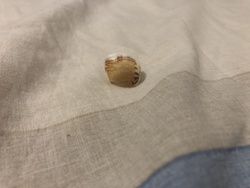
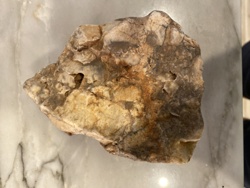
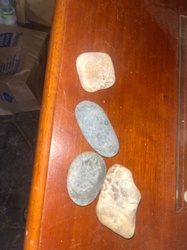
A single, very small irregular object resting in the center of a human palm. The object appears to be a few millimeters in diameter and exhibits a textured, somewhat pitted, and uneven surface. Its coloration is a muted, pale brownish-gray or tan hue, with subtle dark spots or inclusions visible upon close inspection. The item lacks any discernible symmetrical structure, markings, or manufacturer labels, suggesting it is either a piece of natural mineral, a fragment of stone, or an organic byproduct such as a small pebble or physiological secretion. Without physical testing or microscopic analysis, its material composition remains speculative. The surface quality appears dry and matte. The scale is established solely by its position on the hand, indicating a very diminutive size. Hedged language is utilized because the image lacks sufficient detail or diagnostic markers to identify the specific biological or geological origin of the object. Identification as a specific mineral or biological material would require in-person examination.
AI Appraisal Report

Based on my visual examination of the provided image, I am observing a small, irregular specimen approximately 3-5mm in diameter. The object possesses a matte, pitted surface and a neutral tan-gray coloration. From what I can see, there are no diagnostic features, crystalline structures, or fossilized patterns that would allow for a specific geological or biological classification. Without physical inspection, I cannot determine if this is a common terrestrial pebble, a mineral fragment, or an organic byproduct. The value of $5-$25 is assigned to this item as a curiosity or generic natural specimen. This estimate assumes the item lacks significant rare mineral content or extraterrestrial origin, such as meteoritic material. If subsequent scientific testing, such as XRD or electron microscopy, were to identify this as a rare meteorite (e.g., a lunar or Martian fragment), the market value would increase significantly to several hundred or even thousands of dollars per gram depending on the specific classification. Conversely, if it is confirmed to be a common igneous rock or a physiological secretion like a small calculus, the value would be negligible or primarily of academic interest. Market demand for unidentified small specimens is generally low, typically limited to entry-level collectors or those purchasing for scientific curiosity. To provide a more accurate valuation, an in-person examination by a mineralogist or gemologist is required to determine density, hardness, and chemical composition. Until such time, the attribution remains speculative and the value is reflective of an unidentified natural object.

Keep exploring

More natural specimens appraisals

Get your items appraised

Instant AI-powered appraisal estimates from a photo

Browse More Appraisals