Staffordshire Style Majolica Duck Figural Pitcher
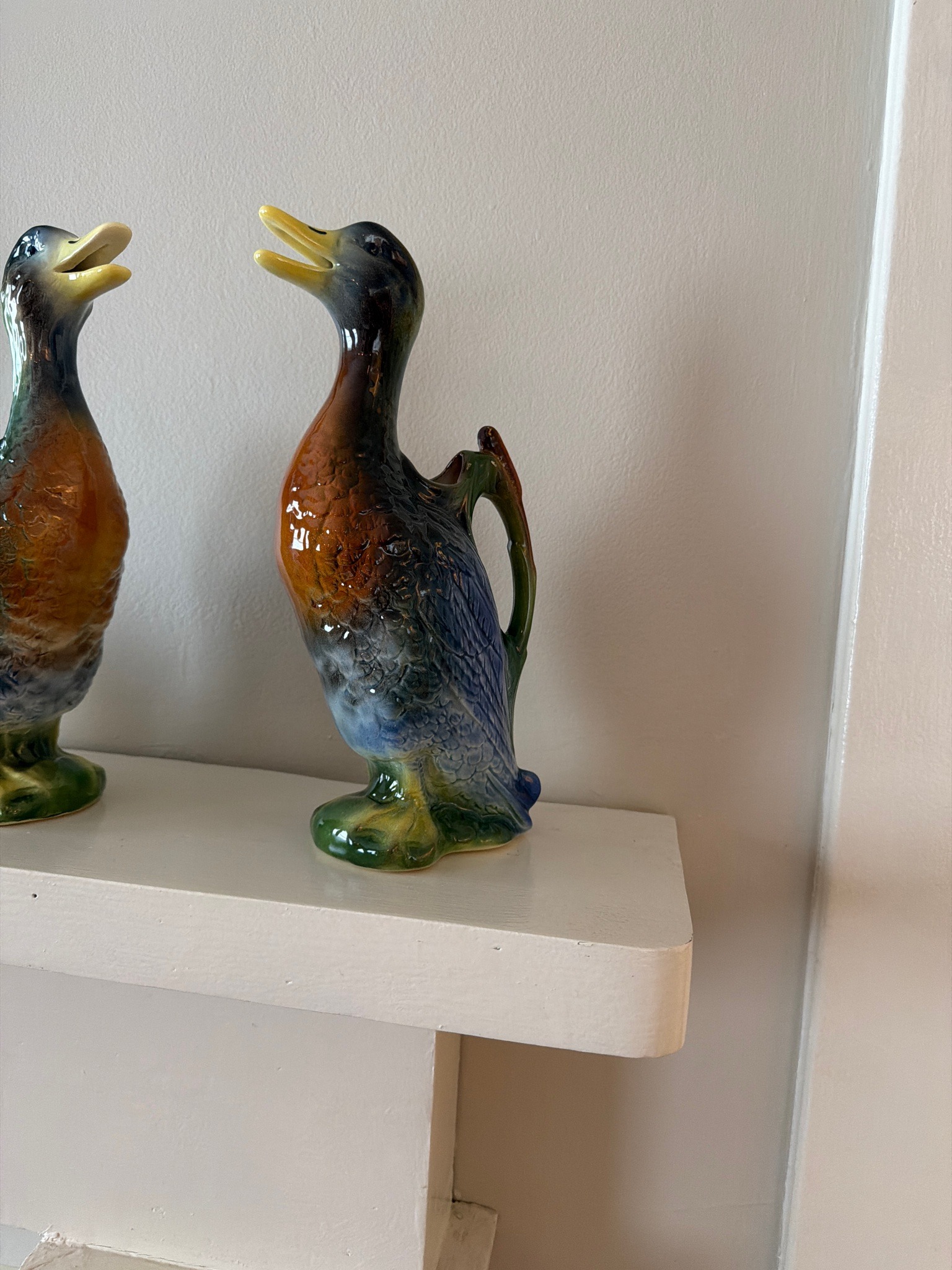
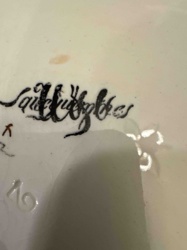
This item is a decorative figural pitcher or jug crafted in the form of a standing duck, designed in a style reminiscent of 19th-century Victorian Staffordshire or Continental Majolica. The piece is constructed from molded earthenware with a vibrant, lead-based polychrome glaze. Its physical characteristics include a high-gloss finish with a blended palette of cobalt blue, russet orange, forest green, and yellow ochre highlights. The duck is depicted in an upright, vocalizing pose with an open beak that serves as the pouring spout. The handle on the reverse is integrated into the bird's back, styled as a curved tail or branch element. Fine molded details simulate feather textures across the breast and wings. The base is an organic, rounded form colored in green to represent a grassy ground or aquatic vegetation. There are no immediately visible maker's marks or signatures in this view, common for pieces in this style produced between the late 19th and mid-20th centuries. The condition appears sound with excellent glaze retention, showing no obvious structural cracks or significant chips, though typical crazing consistent with age may be present upon closer tactile inspection. The craftsmanship displays a blend of utilitarian function and whimsical decorative art characteristic of the period.
AI-Generated Appraisal Disclaimer
Estimated Value
$150 - $275
Basic Information
Category
Antique Ceramics / Pottery
Appraised On
May 10, 2026
Estimated Value
$150 - $275
Item Description
This item is a decorative figural pitcher or jug crafted in the form of a standing duck, designed in a style reminiscent of 19th-century Victorian Staffordshire or Continental Majolica. The piece is constructed from molded earthenware with a vibrant, lead-based polychrome glaze. Its physical characteristics include a high-gloss finish with a blended palette of cobalt blue, russet orange, forest green, and yellow ochre highlights. The duck is depicted in an upright, vocalizing pose with an open beak that serves as the pouring spout. The handle on the reverse is integrated into the bird's back, styled as a curved tail or branch element. Fine molded details simulate feather textures across the breast and wings. The base is an organic, rounded form colored in green to represent a grassy ground or aquatic vegetation. There are no immediately visible maker's marks or signatures in this view, common for pieces in this style produced between the late 19th and mid-20th centuries. The condition appears sound with excellent glaze retention, showing no obvious structural cracks or significant chips, though typical crazing consistent with age may be present upon closer tactile inspection. The craftsmanship displays a blend of utilitarian function and whimsical decorative art characteristic of the period.
Get Your Items Appraised
Instant estimates of your treasures with AI-powered instant appraisals