Vintage Japanese Majolica Style Biscuit Jar
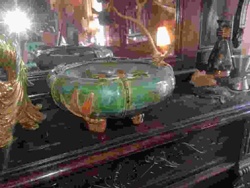
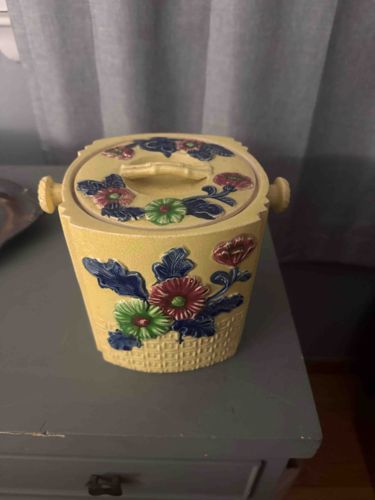
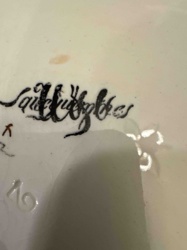
This is a vintage ceramic biscuit jar, likely of Japanese origin, featuring a cream or pale yellow background with a textured finish. The jar is designed with high-relief (majolica-style) floral ornamentation, including zinnia or poppy-like flowers in shades of deep red, green, and blue with dark cobalt foliage. The body of the jar is approximately cylindrical but with slightly squared, notched corners. The base of the vessel features an embossed basket-weave pattern. It includes a matching lid with a horizontal 'bamboo' style handle and two small circular handles on either side of the body. The glaze shows heavy crazing throughout, which is characteristic of earthenware of this age, likely dating to the early to mid-20th century (C. 1920-1950). While no maker's mark is visible from this angle, it closely resembles export ware from the Showa era. The condition appears fair, with visible discoloration in the glaze crackle and some minor surface wear consistent with age, though no major chips or structural cracks are immediately apparent from the primary view. The craftsmanship displays typical mass-produced decorative artistry of the period, emphasizing vibrant colors and tactile surface details.
AI-Generated Appraisal Disclaimer
Estimated Value
$45.00 - $75.00
Basic Information
Category
Antique Ceramics & Pottery
Appraised On
March 7, 2026
Estimated Value
$45.00 - $75.00
Item Description
This is a vintage ceramic biscuit jar, likely of Japanese origin, featuring a cream or pale yellow background with a textured finish. The jar is designed with high-relief (majolica-style) floral ornamentation, including zinnia or poppy-like flowers in shades of deep red, green, and blue with dark cobalt foliage. The body of the jar is approximately cylindrical but with slightly squared, notched corners. The base of the vessel features an embossed basket-weave pattern. It includes a matching lid with a horizontal 'bamboo' style handle and two small circular handles on either side of the body. The glaze shows heavy crazing throughout, which is characteristic of earthenware of this age, likely dating to the early to mid-20th century (C. 1920-1950). While no maker's mark is visible from this angle, it closely resembles export ware from the Showa era. The condition appears fair, with visible discoloration in the glaze crackle and some minor surface wear consistent with age, though no major chips or structural cracks are immediately apparent from the primary view. The craftsmanship displays typical mass-produced decorative artistry of the period, emphasizing vibrant colors and tactile surface details.
Related Tags
Explore similar items and categories:
Get Your Items Appraised
Instant estimates of your treasures with AI-powered instant appraisals