AI Appraisal Estimate

AI-generated estimates · not official valuations

From the user

What was submitted

Photo and notes provided by the user — not generated by AI

Submitted item photo
Submitted photo · June 25, 2026

User's notes

Inverted Stamp

AI analysis below

AI appraisal

AI analysis & estimate

AI-Generated · Verify before acting

Everything below is generated by AI for informational purposes only. AI can make mistakes — the AI may misidentify items or misattribute them (artist, maker, brand, designer, origin, era). This is not an official valuation and should not be used for insurance, sale, tax, estate, legal, or lending purposes — or any decision requiring a certified appraisal. It is not an authoritative claim about any person, brand, or rights holder — do not share or rely on it as a factual statement about a third party. Always consult qualified professionals before making financial decisions.

Note

This analysis also relies on unverified notes provided by the user, which may be incomplete or inaccurate and could affect the result.

Read the full disclaimer

AI Identification

·Not independently authenticated·Verify before acting

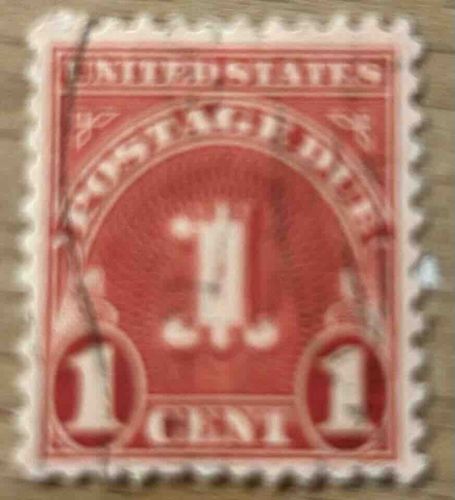
Inverted 1 Cent United States Postage Due Stamp

Postage Stamp

AI Estimated Value

·Not an official valuation·Verify before acting

$500 - $750

As of June 25, 2026

AI Item Analysis

·AI can make mistakes·Verify before acting
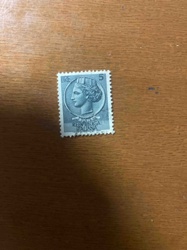
This item is a 1-cent United States postage due stamp, predominantly in shades of red, with a distinct design. The stamp is rectangular with perforated edges, typical of postal stamps. The central design features a large numeral '1' which appears to be inverted relative to the surrounding text and border, suggesting a printing error or intentional variation. Above the central '1', an arched banner with text reads "POSTAGE DUE", while "UNITED STATES" is visible at the very top of the stamp, spanning the width. The denomination "1 CENT" is printed along the bottom edge. In the lower left and right corners, circular emblems each contain another numeral '1'. The background within the central design features a circular pattern or fine lines. The colors are faded and muted, as is typical for aged paper items, leaning towards a brick red or rusty tone rather than a vibrant red. The clarity of the image is somewhat soft and out of focus, making it difficult to discern exact details of the printing process or paper texture. However, the perforations appear relatively intact, though some wear or minor tearing might be present along the edges due to handling or removal from a sheet. The overall condition appears used, given the softened details and potential for minor edge wear. The inversion of the central numeral '1' suggests this could be a philatelically significant item, potentially rare if it is a genuine error rather than a common variant. This type of stamp would likely date from the late 19th to early 20th century, a common period for postage due issues with such designs.
AI Appraisal Report

·AI can make mistakes·Verify before acting
I have examined the provided image of the 1-cent United States postage due stamp. The most striking feature is the inverted central '1', which, if genuine, would make this a philatelically significant invert error. Based on the visual evidence, the stamp appears to be a genuine type, consistent with U.S. postage due issues from the late 19th to early 20th century. The color, although faded, and the design elements align with known examples of this series. The perforations appear intact, and the overall condition, though appearing used with some softening of details, seems reasonable for its age. Market conditions for genuine U.S. invert errors are strong due to their rarity and collector demand. Collectors highly value these mistakes, which represent unique historical artifacts of the printing process. Comparables for genuine inverted postage due stamps show a wide range, heavily dependent on condition, centering, and certification. The softened focus of the image makes a definitive assessment of these factors challenging. However, it is crucial to state that verifying the authenticity of an invert error solely from an image is impossible. My appraisal is based on the assumption that this inversion is genuine. Inverted centers can be expertly faked by splitting stamps and reassembling them. For a definitive appraisal and to achieve the higher end of the value range, an in-person expert examination to confirm the authenticity of the inversion (i.e., that it is not a repaired stamp) is absolutely necessary. This would involve examining the paper, printing, and gum (if any) under magnification. Provenance documentation could also support authenticity, and professional expertization by a recognized philatelic organization would be vital before a definitive value could be assigned for sale.

Get your items appraised

Instant estimates of your treasures with AI-powered appraisals

Browse More Appraisals