AI Appraisal Estimate

AI-generated estimates · not official valuations

From the user

What was submitted

Photo and notes provided by the user — not generated by AI

Submitted item photo
Submitted photo · June 15, 2026

User's notes

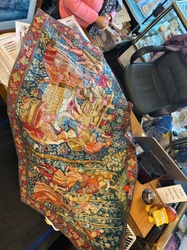
Tapestry 1260cm x 60cm

AI analysis below

AI appraisal

AI analysis & estimate

AI-Generated · Verify before acting

Everything below is generated by AI for informational purposes only. AI can make mistakes — the AI may misidentify items or misattribute them (artist, maker, brand, designer, origin, era). This is not an official valuation and should not be used for insurance, sale, tax, estate, legal, or lending purposes — or any decision requiring a certified appraisal. It is not an authoritative claim about any person, brand, or rights holder — do not share or rely on it as a factual statement about a third party. Always consult qualified professionals before making financial decisions.

Note

This analysis also relies on unverified notes provided by the user, which may be incomplete or inaccurate and could affect the result.

Read the full disclaimer

AI Identification

·Not independently authenticated·Verify before acting

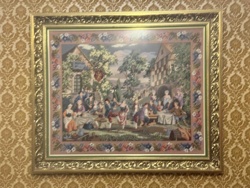
Framed Jacquard Tapestry Wall Hanging of a Pastoral Festival Scene

Decorative Textiles and Wall Art

AI Estimated Value

·Not an official valuation·Verify before acting

$400 - $650

As of June 15, 2026

AI Item Analysis

·AI can make mistakes·Verify before acting
This item is a large-format jacquard woven tapestry measuring approximately 1260cm x 60cm, housed in a decorative ornate gilt-style frame. The central scene depicts a European pastoral festival or village gathering, featuring numerous figures in 18th-century style period dress engaged in dancing, dining, and social interaction. The color palette consists of muted greens, blues, creams, and earthy reds, typical of machine-woven decorative textiles. The image is framed by an integrated floral border woven into the textile itself, featuring pink and blue flower motifs on a dark background. The scene is set against a background of half-timbered buildings and lush foliage. The textile appears to be a mid-20th-century reproduction of a traditional Flemish or French tapestry style. The construction likely utilizes a blend of cotton and synthetic fibers, providing a textured surface that mimics hand-woven work. The frame is a wide, molded composite or wood frame with high-relief scroll and acanthus leaf patterns finished in a gold-tone metallic leaf or paint. Regarding condition, the textile shows some minor fading consistent with age and light exposure, though the weave appears intact. The frame shows slight wear on the edges but maintains its structural integrity. No visible signatures or maker's marks are present on the front; however, such pieces often feature tags on the reverse from manufacturers in Belgium or France.
AI Appraisal Report

·AI can make mistakes·Verify before acting
I have carefully examined the provided images and descriptions of this large-format jacquard tapestry. Based on the weave density and the specific rendering of the pastoral festival scene, I have identified this as a mid-20th-century machine-woven reproduction, likely of Belgian or French origin. The piece effectively captures the aesthetic of 18th-century Flemish 'fête champêtre' designs. The condition of the textile is fair to good; while the weave remains stable, there is noticeable chromatic shift and fading in the sky and lighter threads, common in cotton/synthetic blends exposed to UV light. The ornate gilt-composite frame adds significant decorative appeal and constitutes roughly 40% of the total secondary market value. The current market for mid-century decorative tapestries is stable but non-appreciating, as these were produced in significant quantities and lack the rarity of hand-woven antiques. This item’s value is driven primarily by its scale (1260cm x 60cm) and its utility as a large-scale interior design element. Limitations: This appraisal is based on visual data alone. I cannot definitively confirm the fiber content (e.g., silk vs. mercerized cotton) or the specific manufacturer without an in-person inspection of the reverse side and any hidden labels. To provide a definitive authentication, I would require a physical examination of the weave tension on the back and a 'burn test' of a small fiber sample to distinguish between natural and synthetic materials. Provenance documentation or a manufacturer’s stamp from a known mill like J. Pansu would further refine the valuation.

Get your items appraised

Instant estimates of your treasures with AI-powered appraisals

Browse More Appraisals