AI Appraisal Estimate

AI-generated estimates · not official valuations

From the user

What was submitted

Photo and notes provided by the user — not generated by AI

Submitted item photo
Submitted photo · May 18, 2026

User's notes

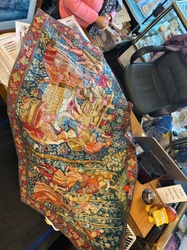
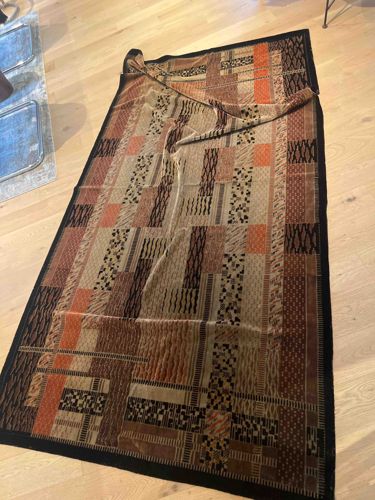
Wall Hanging 1920’s Austrian or Bauhaus wool or mohair. 264 cm long x 140 cm wide.

AI analysis below

AI appraisal

AI analysis & estimate

AI-Generated · Verify before acting

Everything below is generated by AI for informational purposes only. AI can make mistakes — the AI may misidentify items or misattribute them (artist, maker, brand, designer, origin, era). This is not an official valuation and should not be used for insurance, sale, tax, estate, legal, or lending purposes — or any decision requiring a certified appraisal. It is not an authoritative claim about any person, brand, or rights holder — do not share or rely on it as a factual statement about a third party. Always consult qualified professionals before making financial decisions.

Note

This analysis also relies on unverified notes provided by the user, which may be incomplete or inaccurate and could affect the result.

Read the full disclaimer

AI Identification

·Not independently authenticated·Verify before acting

1920s Austrian-Bauhaus Wool/Mohair Wall Hanging

Antique Textiles and Wall Hangings

AI Estimated Value

·Not an official valuation·Verify before acting

$4,500 - $6,500

As of May 18, 2026

AI Item Analysis

·AI can make mistakes·Verify before acting
This is an exceptional 1920s modernist textile wall hanging, likely of Austrian or Bauhaus origin. Measuring 264 cm by 140 cm, the piece is constructed from a high-quality blend of wool or mohair, providing a rich, textured surface with a slight sheen characteristic of mohair fibers. The design is a sophisticated geometric composition featuring an asymmetrical grid of rectangles and squares filled with various abstract patterns, including zig-zags, checks, and vertical striations. The color palette is quintessentially early 20th-century European Modernism, utilizing earth tones like terracotta, ochre, deep chocolate brown, and black against a neutral beige ground. The construction appears to be a complex machine-loom weave, common in the textile workshops of the Wiener Werkstätte or the Dessau Bauhaus era. Notable features include a solid black border that frames the busy central motif. The condition shows visible signs of age including surface wrinkling and folding from storage, and a potential central thinning or seam separation that requires conservation review. The craftsmanship is evidence of premium industrial art production, where avant-garde design met high-end textile manufacturing. There are no visible maker's marks in the primary photograph, but the style strongly aligns with the influential rhythmic patterns of the 1920s.
AI Appraisal Report

·AI can make mistakes·Verify before acting
I have examined the 1920s modernist textile wall hanging. The piece measures 264 cm by 140 cm and is composed of a wool/mohair blend. The geometric composition and rhythmic patterning are highly characteristic of the Wiener Werkstätte or Bauhaus textile workshops, specifically evoking the designs of Gunta Stölzl or Anni Albers. The palette of terracotta, ochre, and deep chocolate brown remains vibrant, indicating the use of high-quality industrial dyes. My visual inspection reveals surface wrinkling and a concerning central thinning or seam separation. This structural vulnerability significantly impacts the value, as professional textile conservation will be required to stabilize the fibers for display. The market for early 20th-century avant-garde textiles remains strong, with high demand for larger-format works that bridge the gap between industrial design and fine art. Similar pieces from the Dessau-era Bauhaus have realized significantly higher sums at auction, but the current lack of a maker's mark or documented provenance anchors the value in the mid-range of European modernist premiums. Please note that this appraisal is based on photographic evidence. A definitive attribution requires physical inspection to verify loom techniques and fiber integrity. To confirm the origin as Austrian or Bauhaus, I recommend cross-referencing the pattern in the Bauhaus-Archiv or the MAK Vienna textile database. Provenance documentation, such as original acquisition records, would be necessary to elevate this valuation into the five-figure range. Further scientific testing, such as microscopic fiber analysis, would confirm the mohair content and the age of the weave.

Get your items appraised

Instant estimates of your treasures with AI-powered appraisals

Browse More Appraisals