AI Appraisal Estimate

AI-generated estimates · not official valuations

From the user

What was submitted

Photo and notes provided by the user — not generated by AI

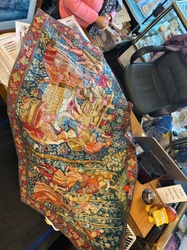
Submitted item photo
Submitted photo · June 15, 2026

User's notes

Tapestry

AI analysis below

AI appraisal

AI analysis & estimate

AI-Generated · Verify before acting

Everything below is generated by AI for informational purposes only. AI can make mistakes — the AI may misidentify items or misattribute them (artist, maker, brand, designer, origin, era). This is not an official valuation and should not be used for insurance, sale, tax, estate, legal, or lending purposes — or any decision requiring a certified appraisal. It is not an authoritative claim about any person, brand, or rights holder — do not share or rely on it as a factual statement about a third party. Always consult qualified professionals before making financial decisions.

Note

This analysis also relies on unverified notes provided by the user, which may be incomplete or inaccurate and could affect the result.

Read the full disclaimer

AI Identification

·Not independently authenticated·Verify before acting

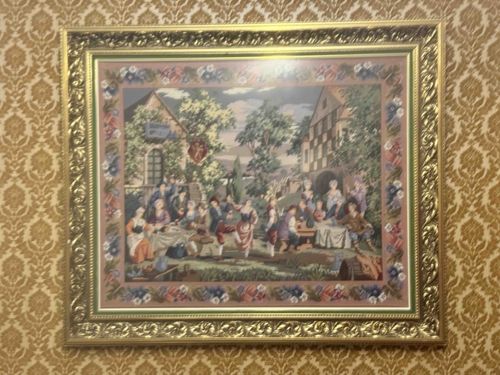
Framed Machine-Woven Gobelin-Style Tapestry 'Village Fete'

Decorative Textiles and Wall Art

AI Estimated Value

·Not an official valuation·Verify before acting

$450 - $650

As of June 15, 2026

AI Item Analysis

·AI can make mistakes·Verify before acting
This item is a large, rectangular machine-woven wall tapestry, likely of mid-20th-century European origin, executed in the traditional Gobelin style. The scene depicts a lively 18th-century European 'Village Fete' or country wedding, featuring a large group of figures in period-appropriate attire engaged in dancing, drinking, and feasting outside a timber-framed tavern. The color palette consists of muted earth tones, forest greens, and blues, with coral and gold highlights typical of mass-produced Jacquard weaves. The textile is enclosed by a wide floral border featuring stylized blossoms and foliage on a dusty rose background. It is professionally mounted in a heavy, ornate Rococo-style gold-gilded frame characterized by high-relief scrollwork and acanthus leaf corner motifs. The construction suggests it was produced by a manufacturer such as those found in Belgium or France during the 1950s-1970s. The condition appears fair to good remains, though there is visible light glare on the surface, potential minor fading from light exposure, and slight tarnish on the gilded frame. No specific maker’s marks are visible without dismantling the frame, but the density of the weave indicates a standard commercial grade of craftsmanship aimed at the interior decor market rather than a unique artisan commission.
AI Appraisal Report

·AI can make mistakes·Verify before acting
I have virtually examined this framed machine-woven tapestry, titled 'Village Fete'. Based on visual analysis, the piece is a mid-20th-century Jacquard loom production, likely Belgian or French, mimicking the 18th-century Flemish Verdure or Brussels styles. The weave density and color palette are consistent with commercial decorative textiles from the 1960s. The condition appears fair; while the textile remains intact, the muted tones suggest UV-related fading (photochromic degradation) and the Rococo-style frame shows minor gilding loss. The primary value driver is the large-scale ornate frame rather than the textile itself, which was mass-produced for the mid-market interior decor industry. Market demand for large tapestries has softened in recent years, as modern interior trends favor minimalist or abstract wall art. However, it retains value as a 'statement piece' for traditional or maximalist decors. Comparables at auction typically hammer between $300 and $700 depending on frame quality. The rarity of this specific weave is low, as these 'Village Fete' scenes were standard catalog items. Limitations: This appraisal is based on photographic evidence only. A physical inspection is necessary to verify the material composition (wool vs. synthetic blends) and to check for hidden dry rot, moth damage, or manufacturer labels on the reverse. I cannot definitively date the frame's gilding (whether gold leaf or metallic paint) without a chemical test or microscopic examination. Provenance documentation would be required to elevate this from a decorative object to a furniture-history collectible.

Get your items appraised

Instant estimates of your treasures with AI-powered appraisals

Browse More Appraisals