AI Appraisal Estimate

AI-generated estimates · not official valuations

From the user

What was submitted

Photo and notes provided by the user — not generated by AI

Submitted item photo
Submitted photo · June 10, 2026

User's notes

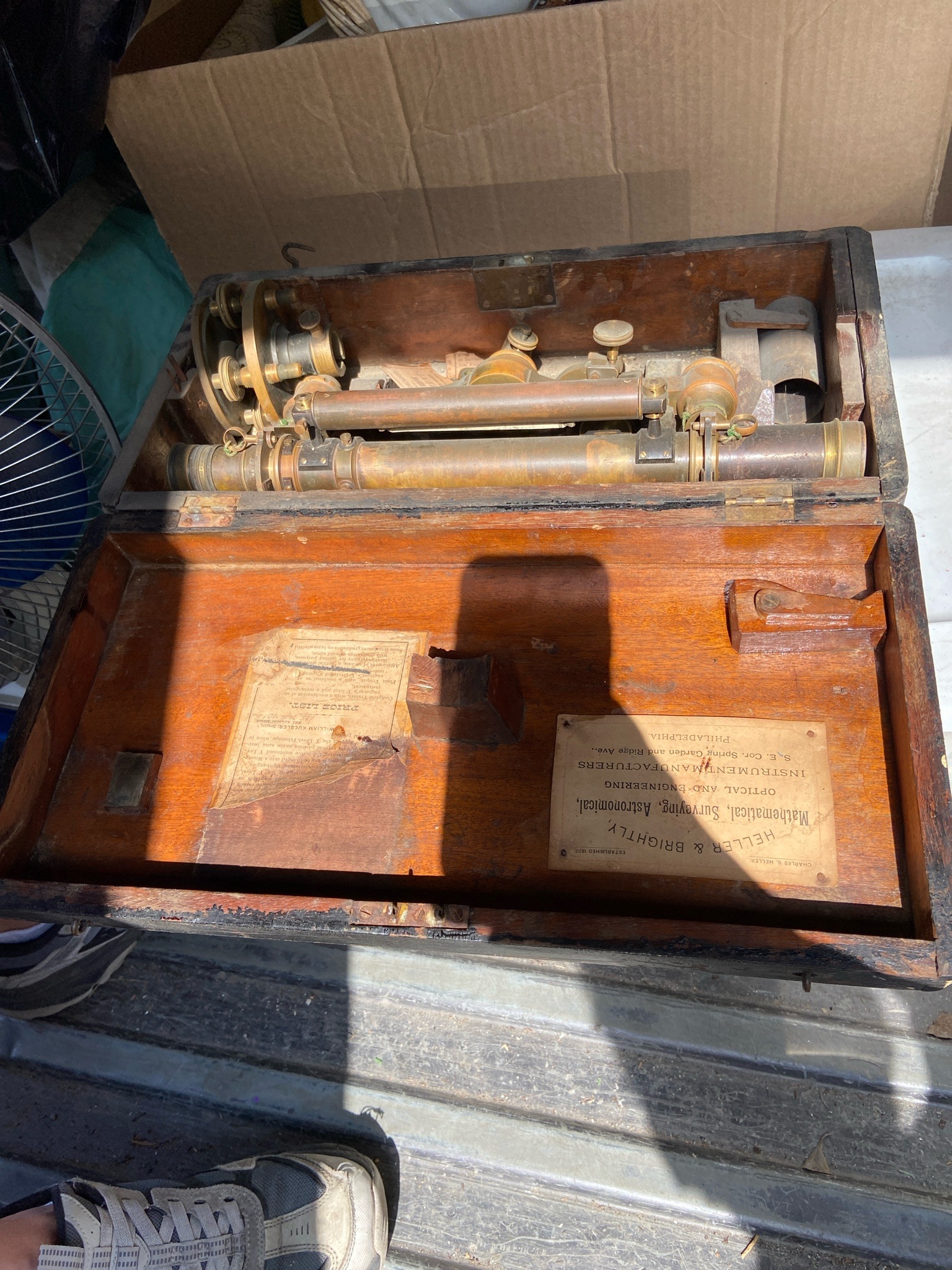
20” high wooden

AI analysis below

AI appraisal

AI analysis & estimate

AI-Generated · Verify before acting

Everything below is generated by AI for informational purposes only. AI can make mistakes — the AI may misidentify items or misattribute them (artist, maker, brand, designer, origin, era). This is not an official valuation and should not be used for insurance, sale, tax, estate, legal, or lending purposes — or any decision requiring a certified appraisal. It is not an authoritative claim about any person, brand, or rights holder — do not share or rely on it as a factual statement about a third party. Always consult qualified professionals before making financial decisions.

Note

This analysis also relies on unverified notes provided by the user, which may be incomplete or inaccurate and could affect the result.

Read the full disclaimer

AI Identification

·Not independently authenticated·Verify before acting

Heller & Brightly Surveyor's Transit with Original Mahogany Case

Antique Scientific Instruments

AI Estimated Value

·Not an official valuation·Verify before acting

$1,800 - $2,500

As of June 10, 2026

AI Item Analysis

·AI can make mistakes·Verify before acting
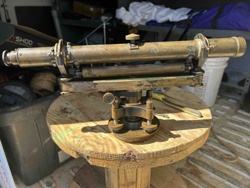
This is a significant 19th-century scientific instrument, specifically a surveyor's transit or theodolite, manufactured by the renowned firm Heller & Brightly of Philadelphia. The instrument is constructed primarily of brass with some blackened components. It features a long longitudinal telescope mounted above a horizontal spirit level, with a vertical graduated circle and vernier scales for precise angular measurement. The brass shows a heavy, dark natural patina and some oxidation consistent with field use in the late 1800s. The instrument is housed in its original fitted mahogany transport case, which stands approximately 20 inches high. The interior of the case lid retains two original paper labels: one is a prominent trade label for 'Heller & Brightly, Mathematical, Surveying, Astronomical, Optical and Engineering Instrument Manufacturers' located at the southeast corner of Spring Garden and Ridge Avenue in Philadelphia; the second is a partial 'Price List' from the same firm. The case shows significant wear, including wood loss on the edges, surface abrasions, and aging of the finish. The interior includes wooden blocks custom-fitted to secure the specific components of the transit. Heller & Brightly was founded in 1870, so this piece likely dates to the final quarter of the 19th century. The presence of the original trade labels and the undisturbed patina on the brass are major quality and provenance indicators that would be vital for museum-grade appraisal.
AI Appraisal Report

·AI can make mistakes·Verify before acting
I have conducted a visual examination of the Heller & Brightly Surveyor’s Transit and its accompanying mahogany case. Founded in 1870, Heller & Brightly were innovators in the 'Philadelphia Style' of instrument making, known for their precision and lightweight designs. This specific example, dating to approximately 1875-1890, retains its original dark oxidized patina on the brass. While some collectors prefer polished surfaces, the undisturbed 'field-used' patina on this specimen is highly desirable for museum-grade collections as it verifies the aged character of the metal. The inclusion of the original mahogany case with two intact trade labels significantly elevates the value. These labels provide crucial provenance and historical context often lost over time. However, the instrument shows signs of heavy field use, and the case has suffered wood loss and surface abrasions. The market for 19th-century scientific instruments remains stable for identified American makers like Heller & Brightly, with comparable specimens sold at specialized auctions generally ranging between $1,500 and $3,000 depending on the completeness of accessories. Limitations: This appraisal is based solely on high-resolution imagery. A physical inspection is required to verify the integrity of the optics (checking for fungus or lens separation) and to ensure the mechanical movements—specifically the leveling screws and vertical arc—operate smoothly without stripping. Full authentication would require a serial number search against surviving company records, if available, and a microscopic examination of the manufacturer’s engraving to rule out later composite assemblies. The value assumes all internal crosshairs (reticles) are intact and that the compass needle is still magnetized and functional.

Get your items appraised

Instant estimates of your treasures with AI-powered appraisals

Browse More Appraisals