AI Appraisal Estimate

AI-generated estimates · not official valuations

From the user

What was submitted

Photo and notes provided by the user — not generated by AI

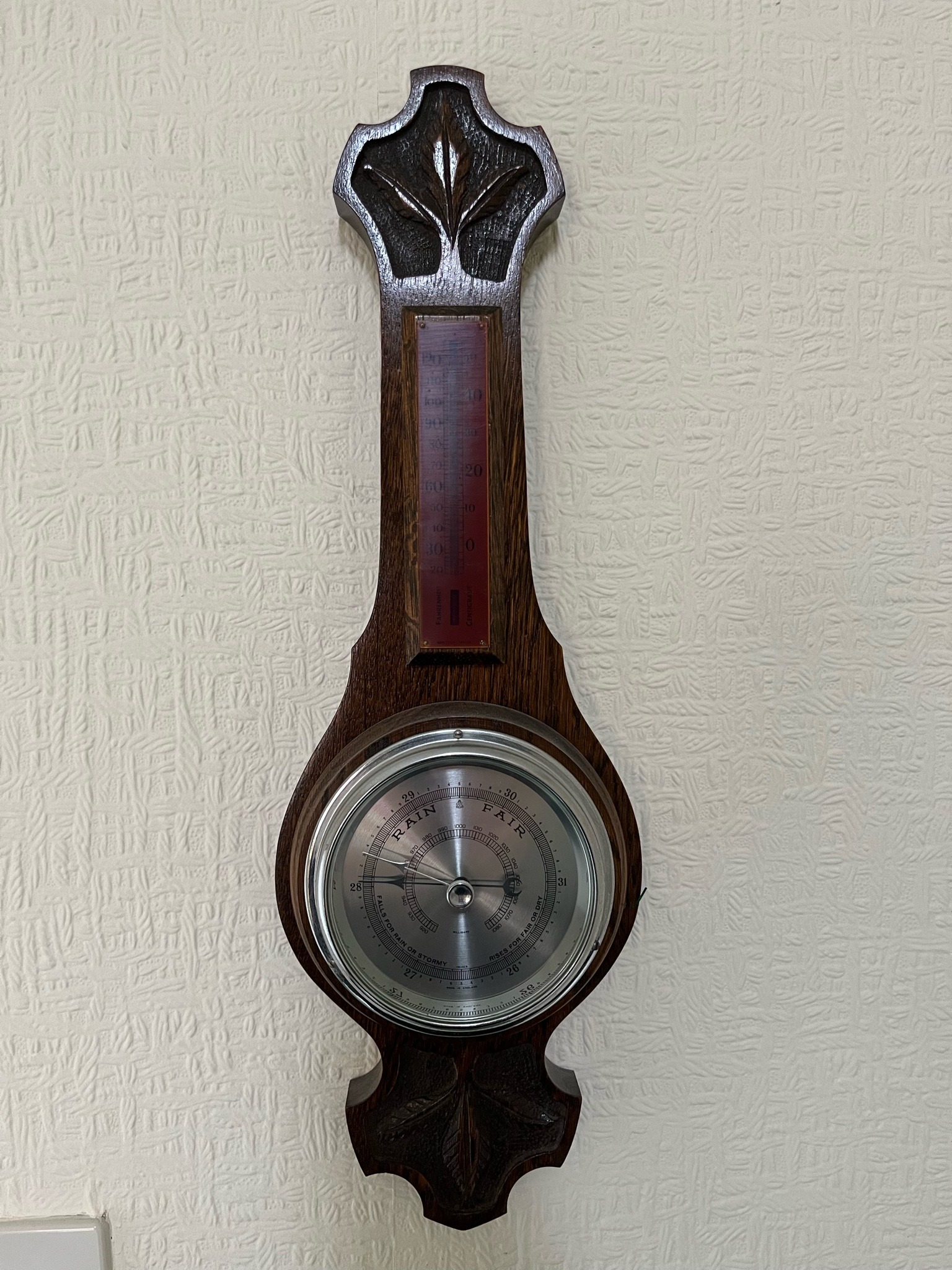
Submitted item photo
Submitted photo · June 3, 2026

User's notes

Antique wooden barometer

AI analysis below

AI appraisal

AI analysis & estimate

AI-Generated · Verify before acting

Everything below is generated by AI for informational purposes only. AI can make mistakes — the AI may misidentify items or misattribute them (artist, maker, brand, designer, origin, era). This is not an official valuation and should not be used for insurance, sale, tax, estate, legal, or lending purposes — or any decision requiring a certified appraisal. It is not an authoritative claim about any person, brand, or rights holder — do not share or rely on it as a factual statement about a third party. Always consult qualified professionals before making financial decisions.

Note

This analysis also relies on unverified notes provided by the user, which may be incomplete or inaccurate and could affect the result.

Read the full disclaimer

AI Identification

·Not independently authenticated·Verify before acting

Edwardian Style Oak Banjo Aneroid Barometer

Antique Scientific Instruments

AI Estimated Value

·Not an official valuation·Verify before acting

$150 - $250

As of June 3, 2026

AI Item Analysis

·AI can make mistakes·Verify before acting
This is a wall-mounted banjo-style anaerobic barometer, likely dating from the early to mid-20th century, specifically the Edwardian era or in that stylistic tradition (circa 1910-1930). The case is constructed from solid oak with a rich, dark-stained finish. It features a carved architectural pediment at the top with a fleur-de-lis or leaf motif set against a textured, stippled background, and a matching carved terminal at the base. The neck of the instrument houses a vertical spirit thermometer behind glass, calibrated in both Fahrenheit and Centigrade on a red-tinted scale. Below the thermometer is a circular aneroid barometer dial protected by a convex glass lens and a silver-toned metal bezel. The dial is silvered with black typography, displaying scales for 'RAIN,' 'CHANGE,' and 'FAIR,' and includes millibar and inch readings. Notable markings include 'Made in England' at the very bottom of the dial. The wood shows a well-preserved grain and a soft patina with minor surface dust, but no significant cracks or deep gouges are visible. The hands on the dial appear to be original, including the setting hand (indicator) controlled by the central brass knob. Overall construction reveals a high level of British mercantile craftsmanship typical of domestic weather instruments of this period.
AI Appraisal Report

·AI can make mistakes·Verify before acting
I have conducted a visual examination of the Edwardian Style Oak Banjo Aneroid Barometer. The piece is a classic example of British domestic scientific instrumentation from the early 20th century (c. 1910-1920). The oak casing exhibits a well-preserved 'tiger' grain with a deep patina, and the carved architectural pediment and terminal are characteristic of the period's preference for neo-classical motifs. The silvered dial remains crisp with minimal oxidation, which is often a primary detractor in these models. While aesthetically pleasing and structurally sound, this specific model is a 'commercial grade' instrument rather than a one-of-a-kind piece by a high-end maker like Negretti & Zambra. Market demand for brown furniture and traditional barometers has softened significantly over the last decade, with supply currently outpacing demand in the estate market. Comparable sales at regional auctions generally fall within the $100-$200 range, while specialized antique retailers may list similar pieces for $350. My valuation assumes the internal aneroid bellows are intact and responsive to atmospheric pressure changes. The primary limitation of this digital assessment is the inability to verify the mechanical functionality or check for internal 'creep' in the vacuum chamber. A full authentication would require an in-person vacuum test to ensure the movement is not 'flat,' as well as an inspection of the thermometer's capillary tube for any separations in the spirit. Provenance documentation, such as original purchase receipts or maker's labels on the reverse, would be necessary to increase the valuation toward the higher end of the market.

Get your items appraised

Instant estimates of your treasures with AI-powered appraisals

Browse More Appraisals