AI Appraisal Estimate

AI-generated estimates · not official valuations

From the user

What was submitted

Photo and notes provided by the user — not generated by AI

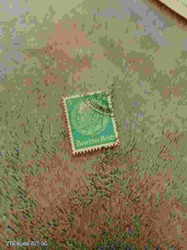
Submitted item photo
Submitted photo · June 18, 2026

User's notes

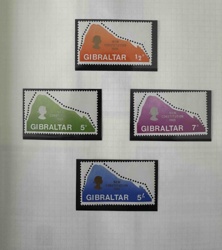
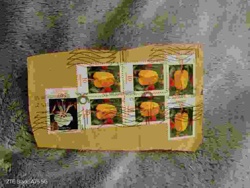
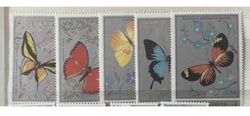
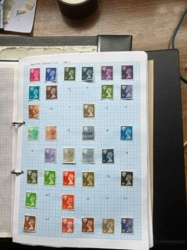
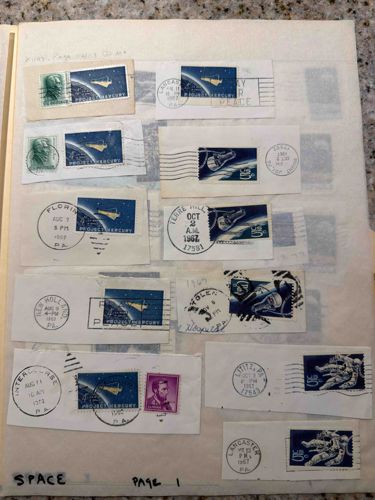
Stamps from 1960’s

AI analysis below

AI appraisal

AI analysis & estimate

AI-Generated · Verify before acting

Everything below is generated by AI for informational purposes only. AI can make mistakes — the AI may misidentify items or misattribute them (artist, maker, brand, designer, origin, era). This is not an official valuation and should not be used for insurance, sale, tax, estate, legal, or lending purposes — or any decision requiring a certified appraisal. It is not an authoritative claim about any person, brand, or rights holder — do not share or rely on it as a factual statement about a third party. Always consult qualified professionals before making financial decisions.

Note

This analysis also relies on unverified notes provided by the user, which may be incomplete or inaccurate and could affect the result.

Read the full disclaimer

AI Identification

·Not independently authenticated·Verify before acting

Collection of 1960s U.S. Space Exploration Postage Stamps on Envelopes

Philately / Collectible Postage Stamps

AI Estimated Value

·Not an official valuation·Verify before acting

$15-25

As of June 18, 2026

AI Item Analysis

·AI can make mistakes·Verify before acting
This is a philatelic collection consisting of approximately eleven individual postage stamp specimens mounted onto an album page, labeled 'SPACE PAGE 1'. The stamps are from the 1960s and commemorate major American space milestones. Notable issues include the 1962 4-cent Project Mercury stamp, featuring a Friendship 7 capsule orbiting the globe, and the 1967 5-cent Gemini 'Spacewalk' twin stamps. Many of the stamps are affixed to original paper clippings from envelopes (piece) and feature clear postmark cancellations from various Pennsylvania towns such as Lancaster, Florin, Terre Hill, New Holland, and Lititz, dated consistently around 1962 and 1967. The stamps are printed using multi-color photogravure and engraving processes, exhibiting blue, yellow, and green tones typical of the era's United States Postal Service commemorative issues. Small definitive stamps, including green 1-cent Washington and purple 4-cent Lincoln issues, are also visible. Condition varies; the paper fragments show some yellowing, minor curling, and adhesive staining on the album page. Some cancellations are perfectly legible 'socked-on-the-nose' marks, while others are partial wavy-line machine cancels. The collection represents a curated historical record of the Space Age as captured in mid-century American postal art.
AI Appraisal Report

·AI can make mistakes·Verify before acting
I have examined the digital images of 'SPACE PAGE 1,' a collection of 1960s U.S. space exploration stamps on piece. The collection includes significant commemoratives such as the 1962 Project Mercury (Scott #1193) and the 1967 Gemini Spacewalk pair (Scott #1331-1332). Based on visual inspection, the stamps appear authentic with period-accurate color saturation and typography. The cancellations from Pennsylvania towns are typical of 1960s regional mail. Condition is the primary value driver; I observe some toning and adhesive bleed-through, which is common for stamps mounted with non-archival methods. These stamps were produced in quantities exceeding several hundred million, making them readily available in the philatelic market. While 'socked-on-the-nose' cancellations add slight interest to specialist collectors of Pennsylvania postal history, they do not significantly elevate the market price above standard catalog value for used specimens. Current market demand for mid-century U.S. commemoratives remains stable but soft, as supply far outweighs demand. Comparables for similar mounted pages at philatelic auctions or retail platforms typically fall into the modest 'space memorabilia' or 'starter collection' categories. Please note: this appraisal is based on digital images and cannot confirm the presence of microscopic thinning, gum condition, or chemical alterations. A full authentication would require in-person inspection with a 10x loupe and UV lamp to detect repairs or hidden foxing. The value quoted reflects the decorative and historical interest rather than individual specimen scarcity.

Get your items appraised

Instant estimates of your treasures with AI-powered appraisals

Browse More Appraisals