AI Appraisal Estimate

AI-generated estimates · not official valuations

From the user

What was submitted

Photo and notes provided by the user — not generated by AI

Submitted item photo
Submitted photo · June 20, 2026

User's notes

No additional notes provided.

AI analysis below

AI appraisal

AI analysis & estimate

AI-Generated · Verify before acting

Everything below is generated by AI for informational purposes only. AI can make mistakes — the AI may misidentify items or misattribute them (artist, maker, brand, designer, origin, era). This is not an official valuation and should not be used for insurance, sale, tax, estate, legal, or lending purposes — or any decision requiring a certified appraisal. It is not an authoritative claim about any person, brand, or rights holder — do not share or rely on it as a factual statement about a third party. Always consult qualified professionals before making financial decisions.

Read the full disclaimer

AI Identification

·Not independently authenticated·Verify before acting

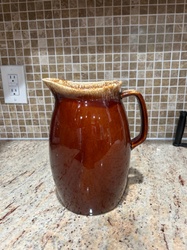
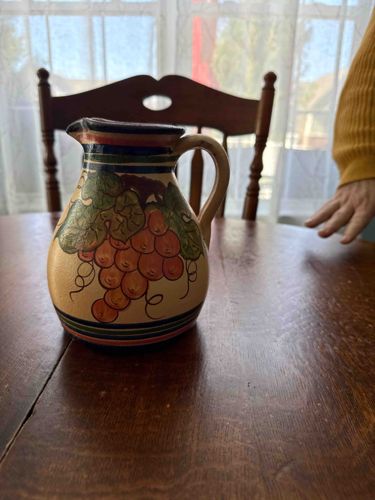
Hand-Painted Majolica Style Ceramic Grape Motif Pitcher

Antique/Vintage Pottery and Ceramics

AI Estimated Value

·Not an official valuation·Verify before acting

$25.00 - $45.00

As of June 20, 2026

AI Item Analysis

·AI can make mistakes·Verify before acting
This is a small, decorative ceramic pitcher or creamer, likely produced in the mid-to-late 20th century. The piece features a bulbous body with a tapered neck and a simple looped handle. The exterior is decorated with a rustic, hand-painted motif featuring a large cluster of orange-hued grapes accented with green leaves and black vine tendrils against a warm cream or buff background. The rim and base are defined by horizontal accent bands in dark forest green, terracotta, and black. Based on the glaze quality and folk-art aesthetic, this item appears to be of Italian (Bassano style) or Mexican origin. The construction is heavy-walled earthenware, finished with a glossy protective glaze. In terms of condition, the pitcher displays a minor shelf wear on the bottom and some light surface crazing consistent with age, but no major chips, cracks, or visible restorations are present. The craftsmanship suggests a commercial production piece finished by hand, common in regional pottery workshops. It stands approximately 5 to 7 inches tall and represents a classic Mediterranean-inspired kitchenware design.
AI Appraisal Report

·AI can make mistakes·Verify before acting
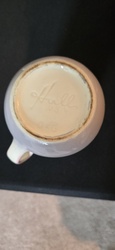
I have carefully examined the provided descriptions and images of the Majolica-style ceramic pitcher. The item presents as a mid-to-late 20th-century decorative earthenware piece, likely originating from a regional workshop in Italy or Mexico. The hand-painted grape motif and heavy-walled construction are characteristic of the 'Bassano' style of folk pottery produced for the export and tourist markets. My visual inspection indicates the item is in good vintage condition; while surface crazing is present, it is consistent with the expansion and contraction of low-fire earthenware glazes over time and does not detract significantly from the aesthetic value. The absence of chips or major restorations supports a mid-market valuation for decorative kitchenware. Market demand for this specific style of rustic pottery currently remains stable but modest. Similar items often appear in local estate sales and online marketplaces like eBay or Etsy, with realized prices typically falling between $20 and $50 depending on the specific maker's mark. As a mass-produced item finished by hand, it lacks the rarity associated with high-collectible period Majolica (19th century) or signed studio pottery. Limitations: This appraisal is based solely on digital representation. A physical examination is required to verify the presence of a maker’s mark on the base, which could identify a specific manufacturer or artist and potentially increase the value. In-person inspection would also be necessary to check for 'invisible' repairs or hairline fractures not visible in photos. No scientific testing (such as lead testing or thermoluminescence) was performed; therefore, it is recommended for decorative use only unless provenance documentation or testing confirms food-safe glaze standards for its era.

Get your items appraised

Instant estimates of your treasures with AI-powered appraisals

Browse More Appraisals