AI Appraisal Estimate

AI-generated estimates · not official valuations

From the user

What was submitted

Photo and notes provided by the user — not generated by AI

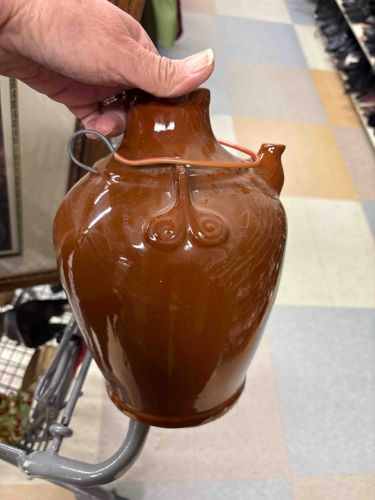
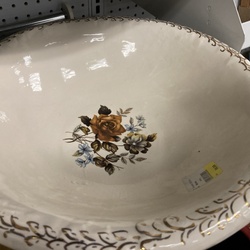
Submitted item photo
Submitted photo · June 12, 2026

User's notes

No additional notes provided.

AI analysis below

AI appraisal

AI analysis & estimate

AI-Generated · Verify before acting

Everything below is generated by AI for informational purposes only. AI can make mistakes — the AI may misidentify items or misattribute them (artist, maker, brand, designer, origin, era). This is not an official valuation and should not be used for insurance, sale, tax, estate, legal, or lending purposes — or any decision requiring a certified appraisal. It is not an authoritative claim about any person, brand, or rights holder — do not share or rely on it as a factual statement about a third party. Always consult qualified professionals before making financial decisions.

Read the full disclaimer

AI Identification

·Not independently authenticated·Verify before acting

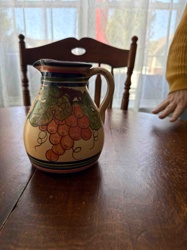
Vintage Brown Glazed Ceramic Pig Jug with Wire Handle

Antique/Vintage Pottery and Ceramics

AI Estimated Value

·Not an official valuation·Verify before acting

$45.00 - $75.00

As of June 12, 2026

AI Item Analysis

·AI can make mistakes·Verify before acting
This item is a novelty stoneware or ceramic jug, likely designed to resemble a stylized pig, characterized by its rounded, bulbous body and a short, protruding spout that acts as a snout. The vessel is finished in a thick, monochromatic reddish-brown glaze, often referred to as an 'Albany slip' or a similar treacle glaze common in folk-style pottery. It features unique decorative elements, specifically two molded scroll-like 'eyes' or decorative lugs near the shoulder that add a whimsical folk-art character. The jug is equipped with a thin, metallic wire handle looped through small eyelets at the neck, which appears to be a later addition or a functional replacement given the orange coating on the top portion. The base is slightly flared for stability. Its construction suggests it was mass-produced but styled after traditional 19th-century farm jugs. While the exact maker's mark is not visible from this angle, the high-gloss finish and the presence of wire assembly suggest a mid-to-late 20th-century production, possibly inspired by classic Appalachian or Southern pottery traditions. Condition-wise, the glaze shows significant light reflection indicating a well-preserved surface, though common age-related wear such as minor crazing or base scuffs would be typical for this material.
AI Appraisal Report

·AI can make mistakes·Verify before acting
I have examined the digital representation of the vintage brown glazed ceramic pig jug. The piece displays a characteristic Albany-style slip glaze, which mimics 19th-century stoneware; however, the uniform application and highly reflective surface suggest a mid-to-late 20th-century 'American Country' revival piece rather than a period antique. The 'scroll eyes' are a charming folk-art touch, though the wire handle with its orange coating appears to be a modern functional replacement or a secondary addition, which slightly detracts from the vintage integrity. The condition appears excellent with no visible chips or structural cracks in the glaze, though slight shelf wear on the unglazed base is assumed. Market demand for whimsical kitchenware remains steady, but the lack of a prominent maker's mark (such as McCoy or Hull) limits its value to the decorative folk-art category rather than a high-end collector tier. Comparables for unmarked novelty pig jugs from the 1950s–1970s typically sell within the $40 to $80 range at regional auctions. Limitations: This appraisal is based solely on visual inspection of the provided image. I cannot verify the clay body composition or identify internal stress fractures. A full authentication would require an in-person examination to inspect for a recessed maker's mark on the base, analyze the wire attachment points for genuine oxidation versus modern coating, and confirm the weight and density of the ceramic. Provenance documenting its purchase history would be necessary to increase the valuation beyond a 'decorative' classification.

Get your items appraised

Instant estimates of your treasures with AI-powered appraisals

Browse More Appraisals