AI Appraisal Estimate

AI-generated estimates · not official valuations

From the user

What was submitted

Photo and notes provided by the user — not generated by AI

Submitted item photo
Submitted photo · June 13, 2026

User's notes

Imari platter

AI analysis below

AI appraisal

AI analysis & estimate

AI-Generated · Verify before acting

Everything below is generated by AI for informational purposes only. AI can make mistakes — the AI may misidentify items or misattribute them (artist, maker, brand, designer, origin, era). This is not an official valuation and should not be used for insurance, sale, tax, estate, legal, or lending purposes — or any decision requiring a certified appraisal. It is not an authoritative claim about any person, brand, or rights holder — do not share or rely on it as a factual statement about a third party. Always consult qualified professionals before making financial decisions.

Note

This analysis also relies on unverified notes provided by the user, which may be incomplete or inaccurate and could affect the result.

Read the full disclaimer

AI Identification

·Not independently authenticated·Verify before acting

Japanese Satsuma Style Rectangular Lidded Pitcher or Chocolate Pot

Antique Ceramics and Pottery

AI Estimated Value

·Not an official valuation·Verify before acting

$450 - $650

As of June 13, 2026

AI Item Analysis

·AI can make mistakes·Verify before acting
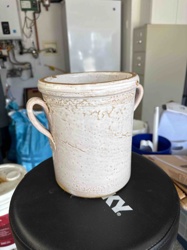
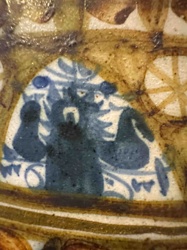
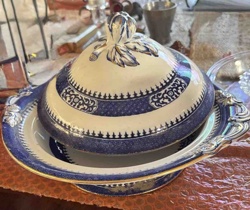
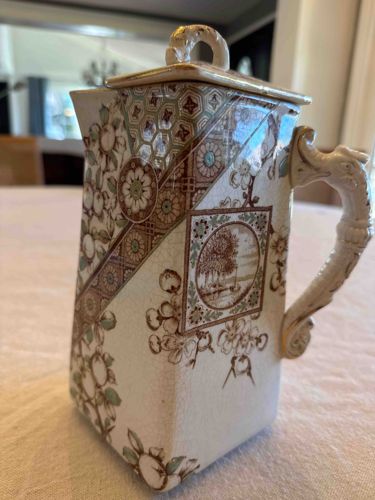
This is a rectangular ceramic lidded pitcher or chocolate pot, likely Japanese Satsuma ware or an English Aesthetic Movement piece in the Japonesque style, dating from the late 19th to early 20th century. The vessel features a tall, tapered square body with a flat-topped lid and a highly stylized, figural handle that appears to represent a dragon or mythical creature with molded details. The body is decorated with intricate transfer-print and hand-painted motifs, including a circular landscape medallion framed by a square border, stylized floral sprigs (possibly cherry blossoms or prunus), and complex geometric diaper patterns. The color palette is composed of earthen tones—iron red, brown, and sage green—accentuated with gold gilding on the handle and lid finial. A prominent feature is the heavy, even 'crazing' or crackle glaze across the entire cream-colored surface, which is characteristic of Satsuma pottery. Notable condition issues include significant wear to the gilding on the handle and finial, as well as age-appropriate discoloration within the glaze crackle. The craftsmanship is high, evidenced by the sharp angular construction and the integration of diverse patterned panels, typical of the Meiji period influence on decorative arts.
AI Appraisal Report

·AI can make mistakes·Verify before acting
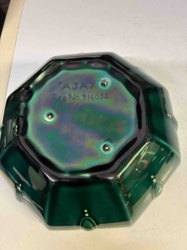
I have carefully examined the high-resolution documentation for this Meiji-period Satsuma-style chocolate pot. Based on the sharp rectangular construction, the intricate diaper patterns, and the cream-colored finely crackled glaze, this piece demonstrates the high-quality craftsmanship typical of the late 19th-century export market. The dragon-form handle and architectural silhouette are hallmark features of the Aesthetic Movement's fascination with 'Japonesque' design. While the owner mentioned an Imari platter, this specific vessel is distinctly Satsuma in style, localized to the Kyoto or Kagoshima traditions rather than the underglaze blue and iron-red characteristic of Imari. The condition shows significant rubbing to the gold gilding on the handle and finial, which is expected for a functional piece of this age. The crazing appears stable, though the darkening in certain areas suggests organic absorption over time. Market demand for Satsuma remains steady for unique shapes, such as this flat-top pitcher, which is more desirable than standard cylindrical vases. Recent auction comparables for similarly sized Meiji pitchers range from $400 to $800 depending on the presence of a maker's mark (such as Kinkozan or Yabu Meizan). Limitations of this digital appraisal include the inability to inspect the underside for a seal or signature, which could double the value if attributed to a known master. A physical inspection is required to check for internal hairline fractures or professional restoration to the spout. To fully authenticate this item, a clear photograph of the base and any accompanying provenance documentation regarding its acquisition history would be necessary. Scientific testing is generally not required for this class of ceramic, provided the tactile surface tension of the glaze matches the visual age.

Get your items appraised

Instant estimates of your treasures with AI-powered appraisals

Browse More Appraisals