AI estimate as of October 22, 2025 · verify with a professional before acting
AI-Generated · Verify before acting
Everything on this page is generated by AI for informational purposes only. AI can make mistakes — the AI may misidentify items or misattribute them (artist, maker, brand, designer, origin, era). This is not an official valuation and should not be used for insurance, sale, tax, estate, legal, or lending purposes — or any decision requiring a certified appraisal. It is not an authoritative claim about any person, brand, or rights holder — do not share or rely on it as a factual statement about a third party. Always consult qualified professionals before making financial decisions.
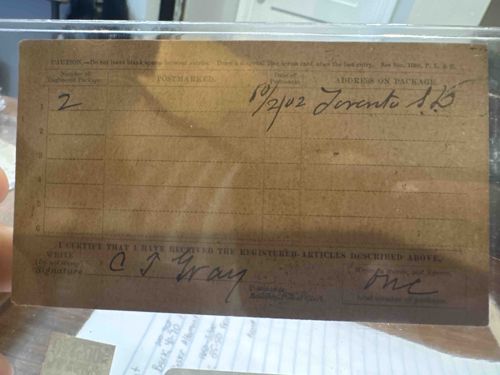
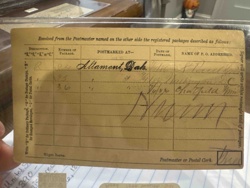
This item is a vintage registered mail receipt card, likely made from a robust, light brown or tan cardstock, indicating its purpose for official postal use. Its rectangular shape and compact size suggest it was designed to be handled and filed easily. The card features pre-printed fields and lines in black ink, including 'Number of Registered Package', 'POSTMARKED', 'DATE OF DELIVERY', and 'ADDRESS ON PACKAGE', as well as a section at the bottom for an acknowledgment of receipt: 'I CERTIFY THAT I HAVE RECEIVED THE REGISTERED ARTICLES DESCRIBED ABOVE'. Handwritten entries on the card include a '2' under 'Number of Registered Package', a date which appears to be '10/2/02' under 'DATE OF DELIVERY', and an address clearly reading 'Toronto S.B.' under 'ADDRESS ON PACKAGE'. Below the main section, a signature 'C J Way' is visible, along with the word 'one' which likely indicates the number of packages received. The overall condition shows signs of age, with expected yellowing or browning of the paper, and some minor surface wear, consistent with an item of its likely age and utility. The paper material appears somewhat stiff, typical of period government forms. The clear, legible handwriting suggests careful completion at the time of transaction. The date '10/2/02' strongly indicates a mailing or delivery date of October 2nd, 1902, placing its style and age firmly in the early 20th century. The item does not display any significant damage such as tears or major creases, making it well-preserved for its age, hinting at its potential value to collectors of postal history or ephemera.
AI Appraisal Report
I have examined the provided image of this Vintage Registered Mail Receipt Card. Based on visual assessment, the item appears authentic, consistent with early 20th-century postal ephemera. The cardstock, pre-printed fields, and handwritten entries (specifically the '10/2/02' date and 'Toronto S.B.' address) align with period documents. The handwriting is clear and legible, suggesting careful completion at the time of transaction. Condition is remarkable for its age, displaying typical yellowing/browning and minor surface wear but no apparent tears or major creases, making it quite well-preserved. This contributes positively to its value.
In terms of market conditions, vintage postal receipts and similar ephemera generally have a niche but consistent collector base, particularly those interested in postal history or local history. While not exceedingly rare, a specific date like 1902 and recognizable place names like 'Toronto S.B.' can increase desirability. Comparables for well-preserved, early 20th-century registered mail receipts typically fall within the $20-$70 range, with factors like condition, legibility, and specific postal markings influencing the higher end.
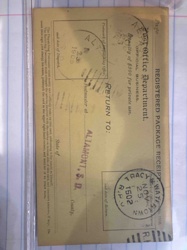
Factors impacting value include its excellent condition for age and the identifiable date and location. However, it is a relatively common type of document. Rarity is moderate; while a specific one like this is unique, the form itself is not. Without an in-person examination, I cannot definitively verify the paper's exact texture, ink consistency, or detect any subtle alterations or repairs that wouldn't be visible in the image. Full authentication would ideally involve physical inspection to confirm paper composition and ink aging, as well as checking against known examples of registered mail receipts from that specific Canadian postal district. Provenance documentation, such as where it was acquired or its history, would also strengthen its authenticity and value, though it is often lacking for such commonplace items.