AI estimate as of October 2, 2025 · verify with a professional before acting
AI-Generated · Verify before acting
Everything on this page is generated by AI for informational purposes only. AI can make mistakes — the AI may misidentify items or misattribute them (artist, maker, brand, designer, origin, era). This is not an official valuation and should not be used for insurance, sale, tax, estate, legal, or lending purposes — or any decision requiring a certified appraisal. It is not an authoritative claim about any person, brand, or rights holder — do not share or rely on it as a factual statement about a third party. Always consult qualified professionals before making financial decisions.
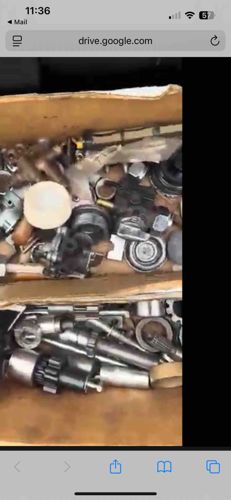
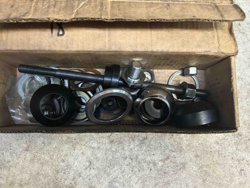
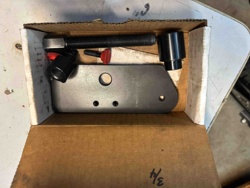
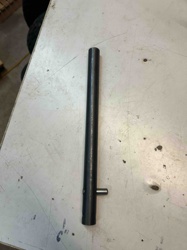
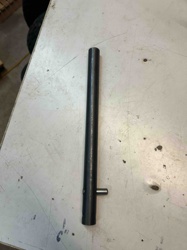
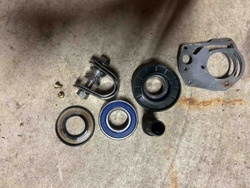
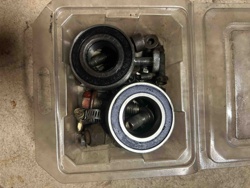
This item consists of a diverse collection of mechanical components, likely comprising a variety of automotive, industrial, or general machinery parts, all contained within a cardboard box. The parts exhibit a range of materials, predominantly metals such as steel, aluminum, and possibly brass, with some components showing plastic or rubber elements. Colors vary from metallic grays and silvers to blacks, with some brown or tarnished finishes indicating age or exposure. The construction of the individual pieces suggests precision manufacturing, including machined surfaces, threaded sections, gears, and various connection points. Notable features include several cylindrical shafts, some with splines or gears, various nuts and bolts, circular discs, possibly seals or spacers, and other intricate sub-assemblies. One large, light-colored circular disk (possibly made of a composite material or plastic) is prominent in the upper section. Several parts show signs of wear, including scratches, scuffs, and some superficial corrosion or patina, consistent with used or salvaged components. No discernable manufacturer's marks, signatures, or stamps are clearly visible in the image. Given the mix of component types, it is difficult to assign a specific style period; however, the appearance suggests parts that could range from mid-20th century to contemporary, with an emphasis on functional engineering rather than aesthetic design. The collection appears to be a mixed lot of spare, used, or salvaged parts, indicating a functional rather than decorative purpose. The quality of individual components suggests standard industrial or automotive grades of craftsmanship.
AI Appraisal Report
I have examined the provided image of this Assortment of Mechanical Parts. The collection presents as a mixed lot of used or salvaged components, primarily metallic, exhibiting various stages of wear including scratches, scuffs, and some superficial corrosion. The construction indicates standard industrial or automotive manufacturing, prioritizing function over aesthetics. Based on visual assessment, the condition of individual parts ranges from fair to good for used items, with no catastrophic damage immediately evident. Authenticity, in the sense of verifying specific origins or functions, cannot be definitively determined from the image alone. These are generic mechanical components rather than specialized or collectible artifacts.
Market conditions for such mixed lots are typically dictated by the scrap metal value, the potential utility of individual components as spare parts, or the educational/hobbyist market. Comparables would include 'parts bins' at salvage yards, eBay listings for 'mixed industrial parts,' or bulk lots sold to fabricators. Demand for such a diverse, unsorted collection is generally low, unless a specific, valuable component is identifiable within the mix, which is not the case here. Rarity is not a factor; these appear to be common mechanical elements. Factors significantly impacting value include the lack of identifiable high-value components, the used condition, and the sheer volume of generic parts. Without clear identification of specific model numbers, manufacturers, or intended applications, the parts' value is limited to their material content or their utility as generic spares.
For full authentication and a more precise valuation, an in-person examination would be crucial. This would allow for a detailed inventory of each part, assessment of material composition (e.g., specific alloys), identification of any hidden manufacturer's marks, and a thorough check for internal wear or damage that is not visible in the image. Provenance documentation, such as purchase records or details on their original application, would also be invaluable, though unlikely for such a mixed lot.