AI estimate as of September 12, 2025 · verify with a professional before acting
AI-Generated · Verify before acting
Everything on this page is generated by AI for informational purposes only. AI can make mistakes — the AI may misidentify items or misattribute them (artist, maker, brand, designer, origin, era). This is not an official valuation and should not be used for insurance, sale, tax, estate, legal, or lending purposes — or any decision requiring a certified appraisal. It is not an authoritative claim about any person, brand, or rights holder — do not share or rely on it as a factual statement about a third party. Always consult qualified professionals before making financial decisions.
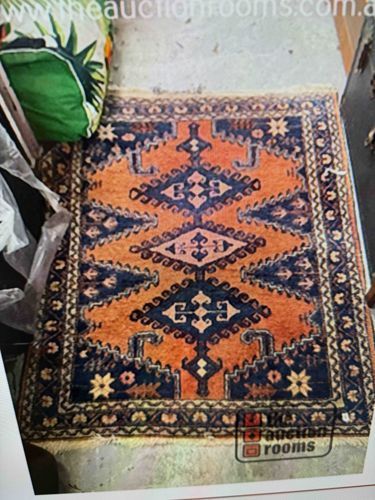
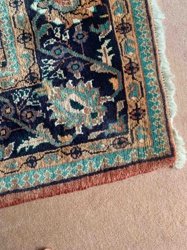
This is a small, hand-knotted tribal rug, likely made of wool, featuring a bold geometric design. The primary colors are a rich, rusty orange for the field and a deep navy blue for the intricate patterns. Complementary colors, such as cream or light beige, are visible in some of the smaller details and the fringe. The rug has a central medallion-like design composed of stacked diamond and angular motifs in navy blue, bordered by smaller stylized elements that could represent birds, animals, or tribal symbols. The field is densely populated with smaller, scattered geometric shapes and possibly floral-inspired elements in navy and hints of cream. A prominent border frames the central design, consisting of a series of interlocking geometric patterns and individual star-like motifs. The construction appears to be a traditional hand-knotted technique, showcasing the characteristically slightly uneven lines and variations that come with handcrafted textiles. The fringe is visible along at least one short edge, appearing natural or off-white. In terms of condition, the rug exhibits visible wear consistent with age and use, including some fraying on the edges and possible slight pile loss in areas. The colors appear somewhat muted or patinated, which is common for older wool rugs, indicating natural aging rather than significant fading. There are no overt signs of major damage or repairs visible in the provided image, but a closer inspection would be required to confirm. The style suggests it could be a nomadic or tribal piece, possibly from an Anatolian, Persian, or Caucasian origin, dating perhaps to the mid-20th century or earlier. The craftsmanship appears to be of good quality, typical for a durable hand-knotted rug intended for everyday use.
AI Appraisal Report
Based on my visual examination of the image provided, this Tribal Geometric Wool Rug presents as a genuine hand-knotted piece, likely of wool construction. The visible slightly uneven lines and variations are characteristic of artisanal craftsmanship, suggesting authenticity as a handcrafted item rather than machine-made. The primary colors of rusty orange and navy blue, complemented by cream elements, align with traditional tribal aesthetics. The wear, evident as some fraying on edges and potential pile loss, is consistent with natural aging and use for a mid-20th-century or older textile, contributing to its patinated charm rather than detracting significantly from its value.
Market conditions for tribal rugs of this scale and style remain steady, with a consistent demand for authentic, visually appealing pieces. Comparables typically include nomadic or village rugs from Anatolian, Persian, or Caucasian regions. While this rug doesn't appear to be of exceptionally rare origin or age, its aesthetic appeal, decent condition for its presumed age, and the quality of the hand-knotting support its marketability. Factors positively impacting its value include its authentic tribal character, strong geometric design, and serviceable condition.
It is crucial to note the limitations of remote appraisal: definitive authentication of fiber content (e.g., specific wool type, presence of silk), precise knot count, dye analysis (natural vs. synthetic), and the extent of any repairs or hidden damages cannot be fully verified from images alone. An in-person examination would allow for tactile assessment of pile density, structure, and a thorough inspection for subtle repairs, moth damage, or structural weaknesses. Provenance documentation, if available, could further corroborate its origin and age, potentially enhancing its historical and financial value.