Southwestern Zapotec-Style Handwoven Wool Textile
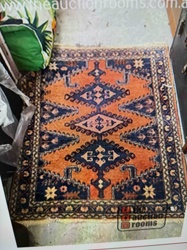
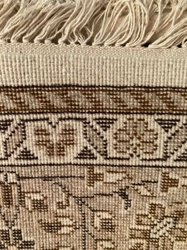
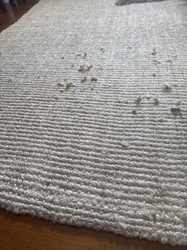
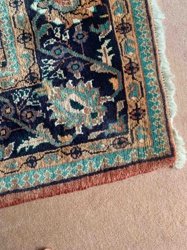
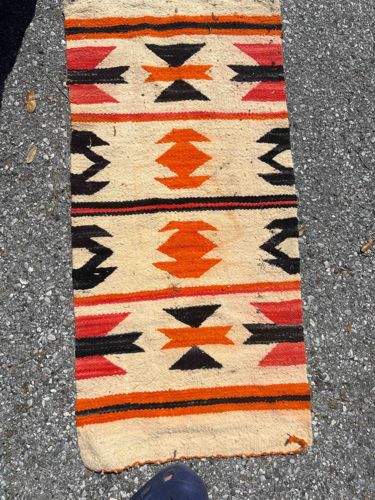
This is a rectangular, handwoven wool textile featuring a distinctive Southwestern or Zapotec geometric design. The item is constructed using a flat-weave tapestry technique with a color palette consisting of cream, vibrant orange, red, and black. The central design field displays several stacked serrated diamond and 'bow tie' shapes, characteristic of Mid-Century to modern Mexican weaving traditions from the Oaxaca region. The edges are finished with a simple selvage, and the weaving appears dense and medium-weight. Regarding condition, there are visible signs of wear consistent with age and use, including slight fraying along the upper and lower corners, some minor surface pilling, and light staining or discoloration in the cream-colored sections. The weave exhibits the natural irregularities of hand-spun wool, such as variable yarn thickness and minor tension variations. While no maker's marks are visible, the stylistic elements and natural abrash (color variation) suggest it was produced in the mid-to-late 20th century. This piece serves as a functional table runner or decorative wall hanging, showcasing traditional folk art craftsmanship.
AI-Generated Appraisal Disclaimer
Estimated Value
$150 - $250
Basic Information
Category
Textiles & Rugs
Appraised On
March 19, 2026
Estimated Value
$150 - $250
Item Description
This is a rectangular, handwoven wool textile featuring a distinctive Southwestern or Zapotec geometric design. The item is constructed using a flat-weave tapestry technique with a color palette consisting of cream, vibrant orange, red, and black. The central design field displays several stacked serrated diamond and 'bow tie' shapes, characteristic of Mid-Century to modern Mexican weaving traditions from the Oaxaca region. The edges are finished with a simple selvage, and the weaving appears dense and medium-weight. Regarding condition, there are visible signs of wear consistent with age and use, including slight fraying along the upper and lower corners, some minor surface pilling, and light staining or discoloration in the cream-colored sections. The weave exhibits the natural irregularities of hand-spun wool, such as variable yarn thickness and minor tension variations. While no maker's marks are visible, the stylistic elements and natural abrash (color variation) suggest it was produced in the mid-to-late 20th century. This piece serves as a functional table runner or decorative wall hanging, showcasing traditional folk art craftsmanship.
Get Your Items Appraised
Instant estimates of your treasures with AI-powered instant appraisals