AI Appraisal Estimate

AI-generated estimates · not official valuations

From the user

What was submitted

Photo and notes provided by the user — not generated by AI

Submitted item photo
Submitted photo · June 26, 2026

User's notes

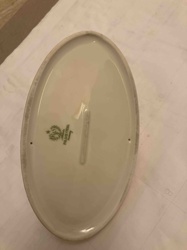
Made in Germany

AI analysis below

AI appraisal

AI analysis & estimate

AI-Generated · Verify before acting

Everything below is generated by AI for informational purposes only. AI can make mistakes — the AI may misidentify items or misattribute them (artist, maker, brand, designer, origin, era). This is not an official valuation and should not be used for insurance, sale, tax, estate, legal, or lending purposes — or any decision requiring a certified appraisal. It is not an authoritative claim about any person, brand, or rights holder — do not share or rely on it as a factual statement about a third party. Always consult qualified professionals before making financial decisions.

Note

This analysis also relies on unverified notes provided by the user, which may be incomplete or inaccurate and could affect the result.

Read the full disclaimer

AI Identification

·Not independently authenticated·Verify before acting

Vintage German Reticulated Porcelain Gilt Serving Tray

Fine Decorative Porcelain & Servingware

AI Estimated Value

·Not an official valuation·Verify before acting

$175 - $250

As of June 26, 2026

AI Item Analysis

·AI can make mistakes·Verify before acting
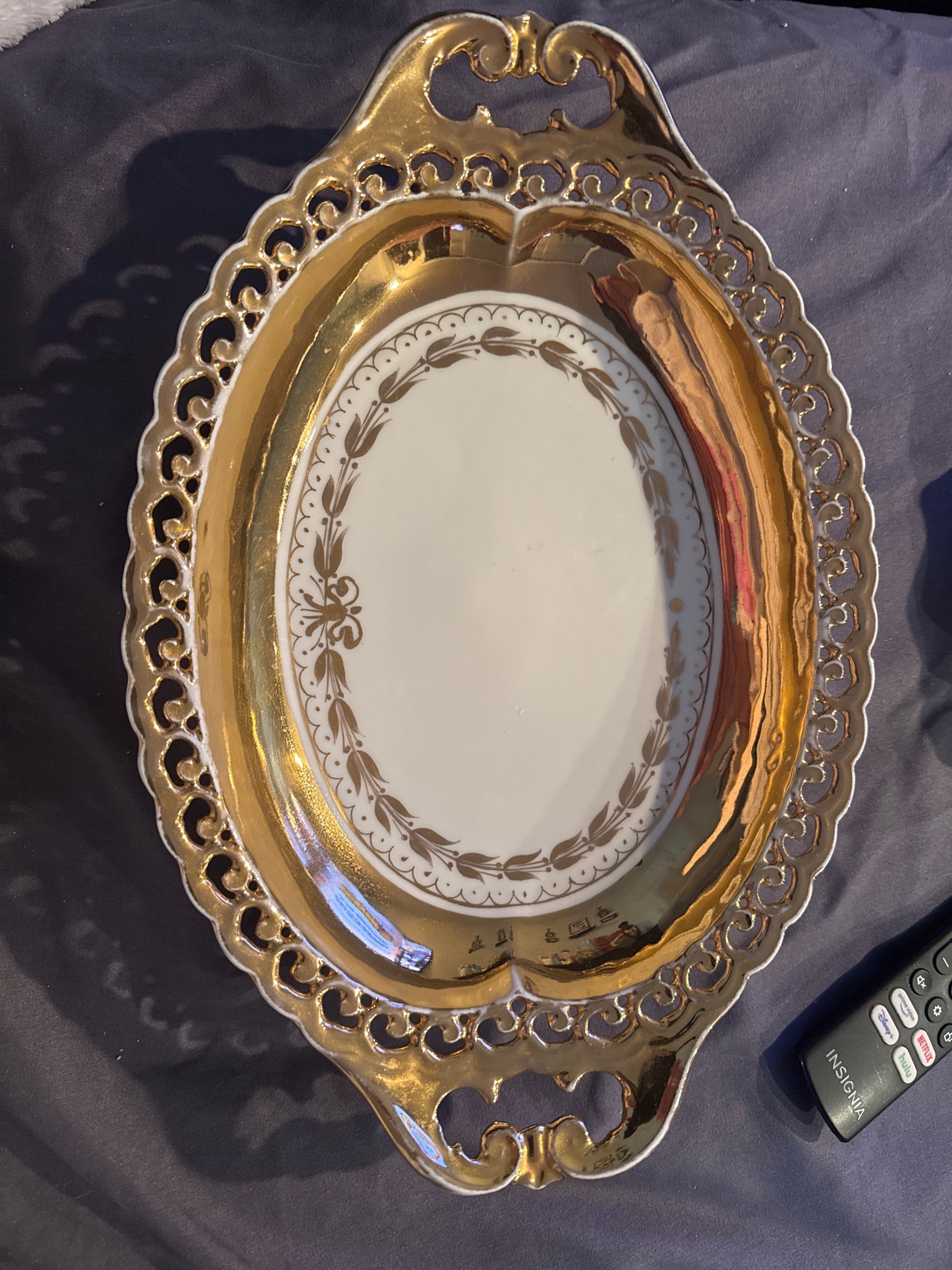
This is a highly ornate, oval-shaped porcelain serving tray of German origin, likely dating to the mid-20th century. The piece features a complex reticulated (pierced) border consisting of small circular and scroll-like cutouts, finished with an elegant scalloped edge. Two integrated ornate handles with heavy scrollwork are located at the terminal ends. The primary aesthetic feature is the heavy gold-gilt (likely 22k or 24k) application that covers the well and the pierced rim, creating a brilliant, reflective surface. The center of the tray is a stark white porcelain field, framed by a delicate gold laurel leaf wreath or garland pattern with subtle scrolling floral accents at the poles. Structurally, the porcelain appears fine-grained and translucent in the cutouts, indicating high-quality craftsmanship characteristic of Bavarian or Dresden style manufacturing. In terms of condition, there is visible light surface scratching and minor wear to the gilt in the well, consistent with gentle domestic use. The reticulation appears intact without visible hairline cracks or repaired breaks. Small imperfections in the glaze surface and the precise nature of the stenciled center design suggest a mass-market luxury production from the 1950s-1960s. The overall presentation is opulent, designed for formal dining or service.

AI Appraisal Report

·AI can make mistakes·Verify before acting
I have virtually examined this German-origin reticulated porcelain tray. The piece exhibits the hallmarks of German mid-century 'Luxury Porcelain' production, likely originating from firms such as Schumann Arzberg or Lindner. My examination reveals the reticulated border to be in excellent condition, which is critical, as damage to pierced porcelain significantly devalues such items. The gilt application is extensive; however, the noted surface scratches and minor wear in the well suggest common domestic use, which prevents a 'Mint' classification. The stenciled center design indicates this was a high-end commercial product rather than a hand-painted one-of-a-kind artist piece. The market for mid-century German gilt-ware is stable but saturated. Comparables for similar oval trays by manufacturers like Schumann typically realize between $150 and $275 at auction, depending on the thickness of the 22k gold and the complexity of the pierce-work. The high gold content provides strong decorative appeal for current 'Grandmillennial' interior design trends. Limitations: This appraisal is based on digital descriptions and cannot account for haptic feedback. A physical inspection is required to check for micro-restorations under UV light and to verify manufacturer backstamps, which identify specific potteries. To increase valuation certainty, I recommend tracing original purchase records or identifying the specific factory mark located on the underside. Scientific testing for gold purity would only be necessary if the item were suspected of being solid precious metal, though this appears to be traditional porcelain gilding.

Get your items appraised

Instant estimates of your treasures with AI-powered appraisals

Browse More Appraisals