AI Appraisal Estimate

AI-generated estimates · not official valuations

From the user

What was submitted

Photo and notes provided by the user — not generated by AI

Submitted item photo
Submitted photo · June 15, 2026

User's notes

No additional notes provided.

AI analysis below

AI appraisal

AI analysis & estimate

AI-Generated · Verify before acting

Everything below is generated by AI for informational purposes only. AI can make mistakes — the AI may misidentify items or misattribute them (artist, maker, brand, designer, origin, era). This is not an official valuation and should not be used for insurance, sale, tax, estate, legal, or lending purposes — or any decision requiring a certified appraisal. It is not an authoritative claim about any person, brand, or rights holder — do not share or rely on it as a factual statement about a third party. Always consult qualified professionals before making financial decisions.

Read the full disclaimer

AI Identification

·Not independently authenticated·Verify before acting

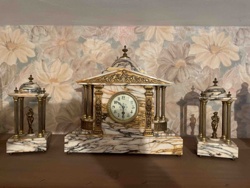
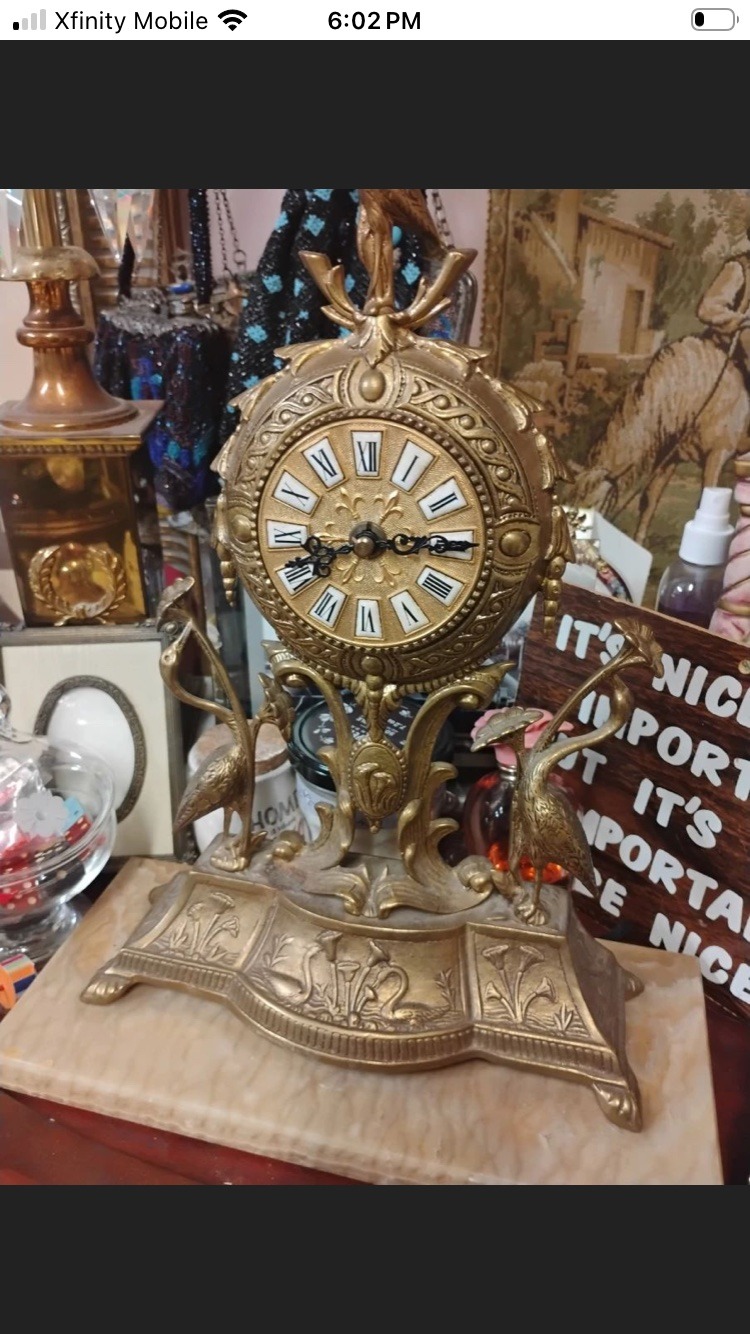
Art Nouveau Gilt Metal Mantle Clock with Heron and Swan Motifs

Antique Horology / Decorative Arts

AI Estimated Value

·Not an official valuation·Verify before acting

$450 - $700

As of June 15, 2026

AI Item Analysis

·AI can make mistakes·Verify before acting
This is an ornate mantel clock crafted in the Art Nouveau style, likely dating from the early 20th century (circa 1900-1920). The piece is constructed from cast white metal or spelter with an aged gilt finish, resting atop a rectangular polished marble base. The design is heavily influenced by naturalism, featuring two prominent heron or crane figures flanking the central clock face. The clock's circular housing is decorated with scrollwork and topped with a finial that appears to be an eagle or large bird. Below the dial, the support structure transitions into a wide plinth base featuring relief-cast images of swans swimming among aquatic plants and reeds. The clock face itself features a golden textured center with white cartouches displaying Roman numerals and ornate black openwork hands. Regarding condition, the gilt finish shows a heavy, dark patina with visible dust and oxidation in the recessed areas, which is common for its age. There are no immediate signs of structural damage or missing components visible from the frontal view, though the timekeeping functionality cannot be determined. The craftsmanship exhibits typical mass-produced quality from the turn-of-the-century decorative arts period, emphasizing aesthetic complexity over fine horological precision.
AI Appraisal Report

·AI can make mistakes·Verify before acting
Based on my visual examination of this Art Nouveau mantel clock, I identify it as a classic example of French or European export decorative arts from the Belle Époque era (c. 1900-1910). The item utilizes a cast spelter (white metal) body with a gilt finish, a standard practice for the period to achieve an opulent look at a middle-market price point. The naturalist iconography, specifically the herons and the bas-relief swan plinth, is quintessential of the movement. The marble base appears consistent with late 19th-century materials. The condition shows significant oxidation and darkening of the gilt, which, while indicating age, suggests the need for professional cleaning to restore luster. The market for non-signed spelter clocks remains steady but secondary to bronze or works by noted makers like Moreau. Current auction comparables for similarly sized spelter clocks with avian motifs frequently hammer between $400 and $800. The primary value drivers here are the height and the visual complexity of the avian theme. However, value is currently capped by the lack of a known artist's signature and the unknown state of the movement. Limitations of this digital appraisal include the inability to inspect the clock's internal escapement or verify if the metal has suffered from 'zinc pest.' A physical inspection is required to test the mechanical functionality and confirm the purity of the metal alloy. To fully authenticate the piece as an original period casting rather than a late 20th-century reproduction, I would need to examine the casting seams on the interior and verify the presence of appropriate wear on the marble’s underside and the clock's winding components.

Get your items appraised

Instant estimates of your treasures with AI-powered appraisals

Browse More Appraisals