Late 19th Century Ebonized Mantle Clock
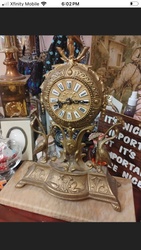
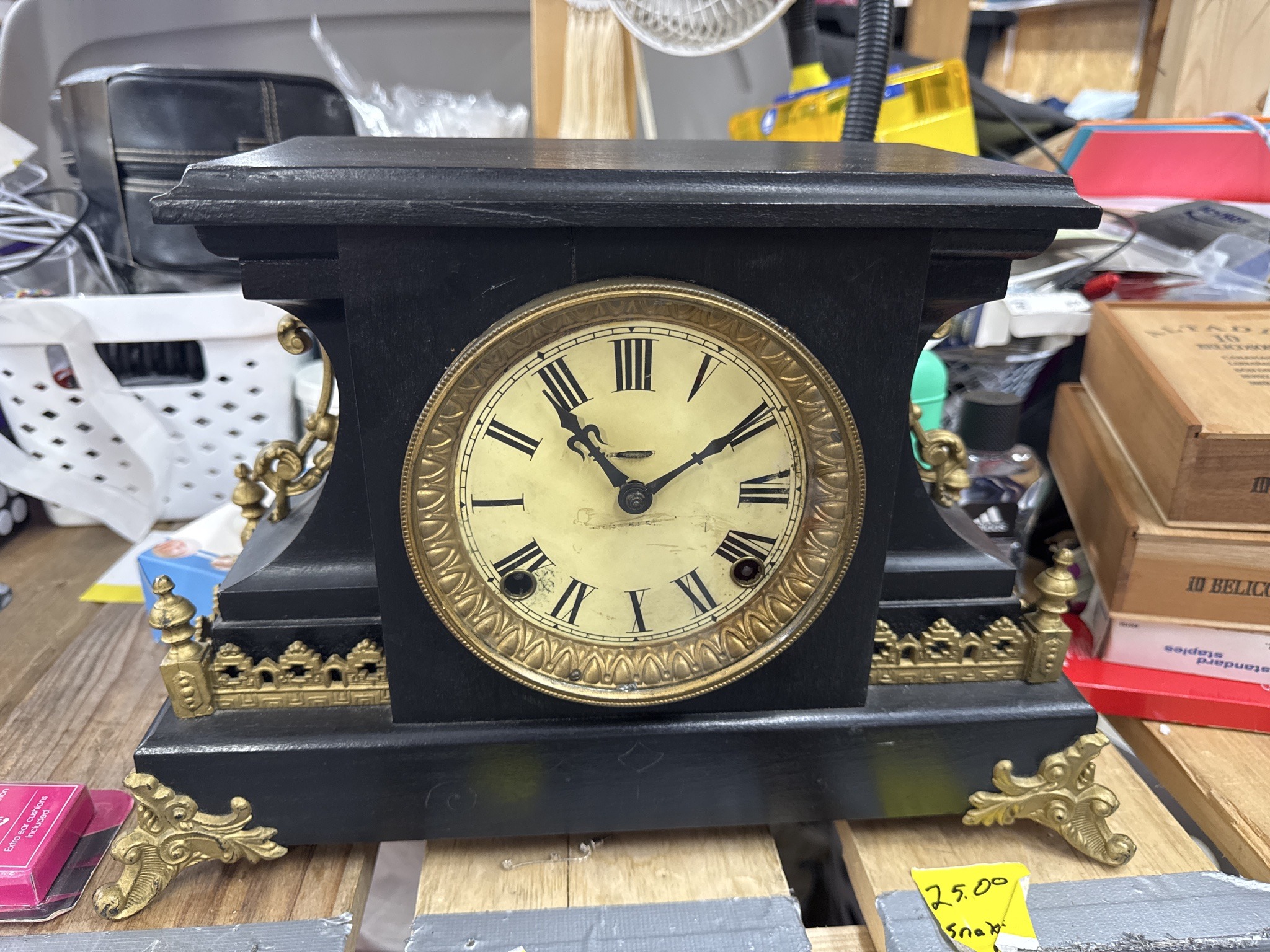
This is a Victorian-era mantle clock, likely American or French in origin, dating back to approximately 1880-1900. The case is constructed of wood with a matte black ebonized finish, featuring a classical architectural form with a flat top and stepped base. It is heavily adorned with cast brass or gilt-metal mounts, including ornate acanthus leaf feet, decorative side scrolls, and a gothic-style gallery frieze along the lower tier. The circular dial is cream-colored with black Roman numerals and a decorative fleur-de-lis minute hand, protected by a glass crystal and a chased metal bezel with a gadrooned border. Notable features include dual winding arbors on the face, indicating a pendulum-driven movement with a striking chime mechanism. In terms of condition, the ebonized finish shows significant surface wear, scuffing, and minor chipping along the edges. The dial displays heavy patination, discoloration, and possible mechanical stress marks near the center. The metal hardware shows a moderate patina and dust accumulation consistent with age. There is no visible maker's mark on the dial, which is common for trade clocks of this period, though a stamp may exist on the internal movement. The overall craftsmanship reflects a mass-produced but high-quality decorative piece from the late Industrial Revolution.
AI-Generated Appraisal Disclaimer
Estimated Value
$350 - $550
Basic Information
Category
Antique Horology / Decorative Arts
Appraised On
April 23, 2026
Estimated Value
$350 - $550
Item Description
This is a Victorian-era mantle clock, likely American or French in origin, dating back to approximately 1880-1900. The case is constructed of wood with a matte black ebonized finish, featuring a classical architectural form with a flat top and stepped base. It is heavily adorned with cast brass or gilt-metal mounts, including ornate acanthus leaf feet, decorative side scrolls, and a gothic-style gallery frieze along the lower tier. The circular dial is cream-colored with black Roman numerals and a decorative fleur-de-lis minute hand, protected by a glass crystal and a chased metal bezel with a gadrooned border. Notable features include dual winding arbors on the face, indicating a pendulum-driven movement with a striking chime mechanism. In terms of condition, the ebonized finish shows significant surface wear, scuffing, and minor chipping along the edges. The dial displays heavy patination, discoloration, and possible mechanical stress marks near the center. The metal hardware shows a moderate patina and dust accumulation consistent with age. There is no visible maker's mark on the dial, which is common for trade clocks of this period, though a stamp may exist on the internal movement. The overall craftsmanship reflects a mass-produced but high-quality decorative piece from the late Industrial Revolution.
Get Your Items Appraised
Instant estimates of your treasures with AI-powered instant appraisals