AI estimate as of September 14, 2025 · verify with a professional before acting
AI-Generated · Verify before acting
Everything on this page is generated by AI for informational purposes only. AI can make mistakes — the AI may misidentify items or misattribute them (artist, maker, brand, designer, origin, era). This is not an official valuation and should not be used for insurance, sale, tax, estate, legal, or lending purposes — or any decision requiring a certified appraisal. It is not an authoritative claim about any person, brand, or rights holder — do not share or rely on it as a factual statement about a third party. Always consult qualified professionals before making financial decisions.
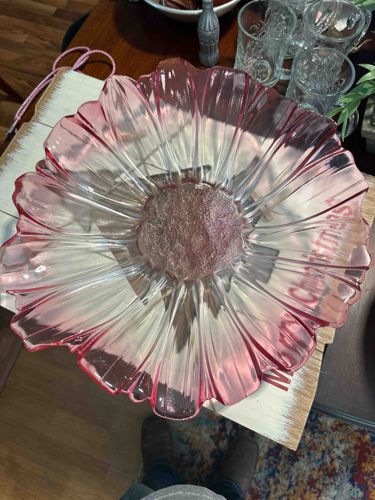
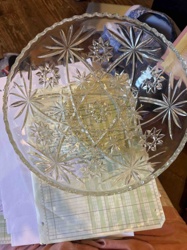
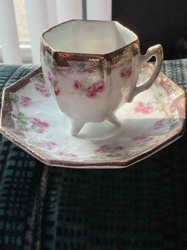
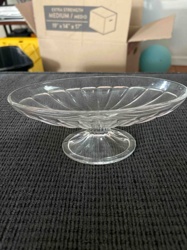
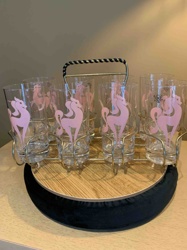
This item is a decorative bowl crafted from pink Depression glass, designed in a distinctive flower or daisy shape. It features a prominent central boss, which appears frosted or textured, suggesting a contrasting finish to the surrounding clear pink petals. The petals themselves are deeply fluted, creating a radial pattern that emanates from the center, giving the bowl a dynamic and organic appearance. The color is a delicate, translucent pink, characteristic of Depression-era glassware, which gains its hue from the addition of manganese to the glass during manufacturing. The edges of the petals are softly scalloped, enhancing the floral aesthetic. While specific dimensions are not provided, it appears to be a medium to large-sized bowl, suitable for serving, display, or as a centerpiece. There are no visible chips, cracks, or significant damage from the provided image, indicating it is in relatively good condition, though a closer inspection would be required to confirm the absence of minute flaws like flea bites or scratches consistent with age and use. No specific maker's marks or signatures are discernible from the image alone, which is common for many pieces of Depression glass. The quality of the glass appears good, with a consistent color and clear, defined fluting. This piece likely dates from the 1920s to the 1940s, a period known for its mass-produced, colorful, and often patterned glass.
AI Appraisal Report
I have visually examined the provided image of this Pink Depression Glass Flower-Form Bowl. Based on the aesthetics, design, and color, it is unequivocally consistent with authentic Depression-era glassware, likely dating from the 1930s-1940s. The translucent pink hue, characteristic fluting, and floral design are hallmarks of this period. Visually, the condition appears good; I see no obvious chips, cracks, or significant defects that would detract from its value. The frosted central boss adds a nice textural contrast, which is a desirable feature. However, it's crucial to state that this assessment of condition is limited to what's visible in the image. An in-person examination would be necessary to detect minute flaws such as flea bites, internal stress cracks, or extensive scratching from use, all of which could impact its final value.
In terms of market conditions, pink Depression glass bowls, especially those with attractive flower designs, are consistently popular. While there's a steady demand from collectors, the supply is also relatively abundant, preventing prices from skyrocketing for common patterns. This piece, while aesthetically pleasing, does not appear to represent a particularly rare pattern or manufacturer from what can be discerned visually. Comparables in similar condition typically fall within the $30-$50 range in the current market, factoring in online sales and antique mall prices. Factors that would significantly increase value, such as extreme rarity, a known prestigious manufacturer, or perfect, untouched condition are not evident here. Full authentication regarding manufacturer would require the presence of a discernible maker's mark or matching it to a known pattern from comprehensive reference guides, which is not possible from the image alone. Provenance documentation, while always helpful, is rarely available for such items.