AI Appraisal Estimate

AI-generated estimates · not official valuations

From the user

What was submitted

Photo and notes provided by the user — not generated by AI

Submitted item photo
Submitted photo · June 10, 2026

User's notes

Austrian

AI analysis below

AI appraisal

AI analysis & estimate

AI-Generated · Verify before acting

Everything below is generated by AI for informational purposes only. AI can make mistakes — the AI may misidentify items or misattribute them (artist, maker, brand, designer, origin, era). This is not an official valuation and should not be used for insurance, sale, tax, estate, legal, or lending purposes — or any decision requiring a certified appraisal. It is not an authoritative claim about any person, brand, or rights holder — do not share or rely on it as a factual statement about a third party. Always consult qualified professionals before making financial decisions.

Note

This analysis also relies on unverified notes provided by the user, which may be incomplete or inaccurate and could affect the result.

Read the full disclaimer

AI Identification

·Not independently authenticated·Verify before acting

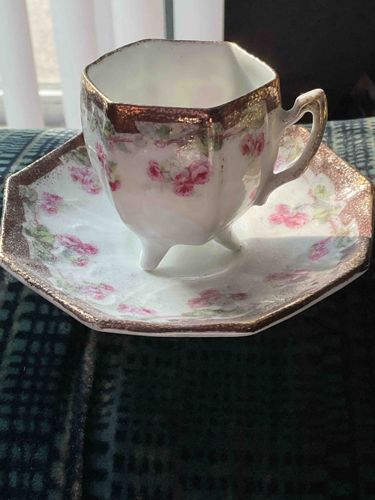
Austrian Footed Teacup and Octagonal Saucer Set

Dinnerware and Serveware

AI Estimated Value

·Not an official valuation·Verify before acting

$45 - $75

As of June 10, 2026

AI Item Analysis

·AI can make mistakes·Verify before acting
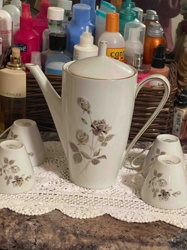
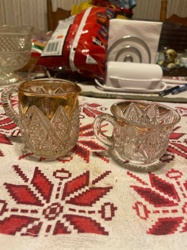
This is a decorative teacup and saucer set, likely of Austrian origin as per the context. The set is made of porcelain or fine china, predominantly white with intricate hand-painted floral and gilding details. The teacup features a distinctive octagonal shape with paneling that flares outwards towards the rim. It is elevated by three delicate, flared feet, giving it a unique, somewhat whimsical appearance. The handle is an elegant, C-shaped loop, also adorned with gilding. The rim of the cup is heavily gilded with a textured, almost speckled gold finish, which extends partially down the exterior panels and into the interior. Scattered across the white porcelain are vibrant pink and red roses intertwined with green foliage, suggesting a naturalistic, possibly botanical, motif. The saucer mirrors the octagonal shape of the cup and features a matching gilded rim and floral decoration. The gilding on both pieces exhibits some wear and minor discoloration, indicative of age and use, but still retains much of its original luster. There are no visible chips, cracks, or repairs, though a detailed inspection would be needed to confirm hairline fractures or crazing. The craftsmanship appears to be of high quality, characterized by the delicate painting and precise shaping. Given the style, this set likely dates to the late 19th or early 20th century, a period known for ornate porcelain artistry, particularly from Central European manufacturers. There are no discernible maker's marks visible in the provided images, which would be crucial for more precise identification.
AI Appraisal Report

·AI can make mistakes·Verify before acting
Based on my visual examination of the provided images, this teacup and saucer set is a fine example of late 19th or early 20th-century Austrian porcelain. The octagonal shape, delicate three-footed base on the cup, and hand-painted floral motifs are characteristic of the ornate styles popular during that era. The craftsmanship appears to be of high quality, with detailed gilding and vibrant enamel work. Based on the images, the set is in very good antique condition, with no visible chips or cracks. The noted wear to the gilding is consistent with its age and does not significantly detract from its appeal. The market for individual, unmarked Austrian teacup sets is fairly active but generally modest. Similar unmarked or lesser-known maker sets from this period typically sell in the $40 to $80 range at auction or on secondary marketplaces, depending on condition and decorative appeal. This particular set's unique footed and octagonal design gives it a slight edge in desirability over more common forms. The primary factor limiting the value is the absence of a discernible maker's mark. Without a mark from a renowned manufactory like Royal Vienna, Augarten, or a known Bohemian producer, the set is valued as a decorative antique rather than a piece from a specific, highly collected maker. For a definitive assessment and full authentication, a physical, in-person examination would be required to inspect for any hidden marks, hairline cracks, or restorations under UV light. Without such inspection, my assessment is based solely on the visual evidence provided.

Get your items appraised

Instant estimates of your treasures with AI-powered appraisals

Browse More Appraisals