AI Appraisal Estimate

AI-generated estimates · not official valuations

From the user

What was submitted

Photo and notes provided by the user — not generated by AI

Submitted item photo
Submitted photo · June 23, 2026

User's notes

No additional notes provided.

AI analysis below

AI appraisal

AI analysis & estimate

AI-Generated · Verify before acting

Everything below is generated by AI for informational purposes only. AI can make mistakes — the AI may misidentify items or misattribute them (artist, maker, brand, designer, origin, era). This is not an official valuation and should not be used for insurance, sale, tax, estate, legal, or lending purposes — or any decision requiring a certified appraisal. It is not an authoritative claim about any person, brand, or rights holder — do not share or rely on it as a factual statement about a third party. Always consult qualified professionals before making financial decisions.

Read the full disclaimer

AI Identification

·Not independently authenticated·Verify before acting

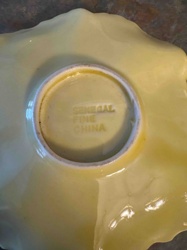
Holland Mold Speckled Chartreuse Ceramic Dish

Ceramic Dish

AI Estimated Value

·Not an official valuation·Verify before acting

$25-50

As of June 23, 2026

AI Item Analysis

·AI can make mistakes·Verify before acting
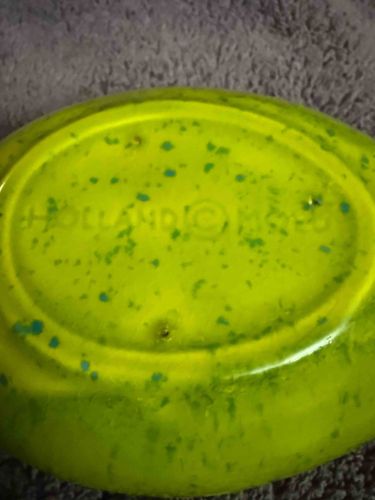
The item is a ceramic dish, identifiable primarily from its underside. It features a vibrant chartreuse green base color, heavily speckled with irregular flecks of darker teal or blue-green. The material appears to be glazed earthenware or stoneware, giving it a glossy finish. The dish has an oval or possibly boat-shaped form, with a raised, recessed oval section on the bottom, typical for stability and often where maker's marks are placed. Within this recessed area, the words 'HOLLAND MOLD' are clearly embossed, accompanied by a copyright symbol. The text suggests this item was created from a mold produced by Holland Mold, a renowned American company that supplied ceramic molds to hobbyists and small businesses from the mid-20th century. There are no significant visible condition issues such as chips, cracks, or repairs, though some minor manufacturing imperfections like small glaze skips or pinholes (visible near the 'D' and 'R' in 'HOLLAND MOLD') are present, which are characteristic of ceramic production, especially hobbyist pieces. The vibrant color and speckled glaze are indicative of mid-century modern aesthetic trends, likely dating the piece to the 1950s-1970s. The craftsmanship, while not factory-perfect, is generally good for a hobbyist piece, suggesting a well-executed pour and glaze application. The unique speckled effect adds visual interest and texture to the piece.
AI Appraisal Report

·AI can make mistakes·Verify before acting
Based on my visual examination of the provided image, this Holland Mold Speckled Chartreuse Ceramic Dish presents in very good condition. The hallmark 'HOLLAND MOLD' with a copyright symbol is clearly embossed on the recessed underside, firmly establishing its authenticity as a piece made from a Holland Mold blank. The vibrant chartreuse base with teal/blue-green speckles is characteristic of mid-century aesthetics (likely 1950s-1970s). I observe no significant damage such as chips, cracks, or repairs. Minor manufacturing imperfections like small glaze skips or pinholes are present, which are typical for hobbyist-poured and glazed ceramic items and do not detract significantly from its value. In terms of market conditions, Holland Mold pieces were produced in large quantities by hobbyists, making many examples relatively common. Comparable items, especially decorative dishes, often sell in the $20-$60 range depending on size, form, and condition. The unique speckled chartreuse glaze adds visual appeal and might command the higher end of this range for a collector appreciative of mid-century decor. Demand for specific Holland Mold pieces varies; while general demand is moderate, brightly colored and well-executed examples like this one maintain steady interest among vintage pottery enthusiasts. Its rarity is low to moderate. Value-impacting factors include the excellent color retention, good glaze application for a hobbyist piece, and lack of damage. The primary limitation in authenticity verification from an image alone is the inability to conduct a tactile inspection for unseen repairs, glaze stability, or a precise assessment of weight and ceramic body. A physical in-person examination would allow for a more thorough condition assessment, including confirmation of the absence of hidden hairline cracks or restoration, which could impact the value. Provenance documentation, while not usually essential for hobbyist ceramics, would provide additional historical context but not significantly alter the monetary appraisal for this type of item.

Get your items appraised

Instant estimates of your treasures with AI-powered appraisals

Browse More Appraisals